The post Sustainably Managed Forests & Wildlife Conservation appeared first on Project Learning Tree.
]]>Now, think about our environment. If a forest is not managed properly, natural resources might become depleted and overused and ecosystems can get out of balance, leading to habitat loss, or invasive species.
That’s why sustainable forest management and conservation – defined as “a careful preservation and protection of something (especially: planned management of a natural resource to prevent exploitation, destruction, or neglect)- are so vital to the health of forest ecosystems, especially when forests are home to 80% of the world’s terrestrial biodiversity!
And it’s never too late to celebrate Wildlife Conservation Day (December 4)! You can help young people and the community better understand conservation through Project Learning Tree hands-on activities, like “Monitoring Forest Health” from Green Jobs: Exploring Forest Careers.
In this activity for older students, learners will explore just what goes into keeping forests healthy so the plants, animals, and insects that rely on these diverse ecosystems can thrive. It’s a great way for learners to see how soil scientists, wildlife biologists, foresters, and other natural resource professionals monitor forests and work together to create a forest management plan.
A forest management plan addresses any health issues and ensures the long-term sustainability of the forest. (Check out the “If You Were the Boss / Si Fueras el Jefe” activity from PLT’s Explore Your Environment: K-8 Activity Guide / Explora tu Ambiente: Guía de Actividades K-8 to learn more about all the factors and impacts considered when creating a plan.)
Wildlife conservation is a key piece of this multi-faceted plan.
Here’s an over-simplified example:
 Let’s say a massive forest fire came through an overly dense forest and destroyed 90% of the trees in a forested area. That equates to a significant loss of habitat for wildlife like birds, bats, raccoons, deer, and bears that rely on mature living trees for food and shelter. Some of those animals perished in the fire, while others were displaced. They may migrate to another nearby forest (or a heavily populated area), and now, that area has more animals than the habitat can support, and there is not enough food to go around.
Had that forest been better managed (i.e. controlled burning or thinning of overgrown stands), the fire might have been less devastating and could have been beneficialto wildlife by creating more shelter and boosting berry growth (like huckleberry!).
Had that forest been better managed (i.e., through controlled burning or thinning of overgrown stands), the fire might have been less devastating and could have been beneficial to wildlife by creating more shelter and boosting berry growth (like huckleberry!).
Sustainable forest management is an important way to retain and restore ecological balance that allows wildlife to thrive even in the face of catastrophes like wildfire.
Looking for more resources to learn about conservation, sustainable forestry, and our environment? Visit shop.plt.org to access Project Learning Tree’s hands-on instructional materials.
The post Sustainably Managed Forests & Wildlife Conservation appeared first on Project Learning Tree.
]]>The post People of PLT | Becoming a Better Naturalist appeared first on Project Learning Tree.
]]> I’ve said it before, and I’ll say it again. When you first meet a PLT State Coordinator, there’s always something special about them. Warm, fun, full of life, enthusiastic, and welcoming. They’re excited to be with you and share their passion for environmental education.
This month, meet one of our newer PLT State Coordinators, Jonathan Smith, who leads the PLT program in Mississippi and embodies all these wonderful traits.
Jonathan is the Education and Outreach Coordinator for the Mississippi Forestry Association. His passion for nature began early in life, and he aspires to continue becoming a better naturalist each and every day. In high school he volunteered at the Mississippi Museum of Natural Science, and he then went on to earn his bachelor’s degree in Wildlife, Fisheries, and Aquaculture from Mississippi State University.
Now he gets to share his love of nature with others.
“Environmental-based outreach education is a passion of mine, and PLT provides an excellent avenue to conduct that education.” Jonathan leads professional development workshops where he shares how to lead PLT activities. For him, the best part is seeing educators realize how easy it is to incorporate PLT. “I get to see teachers express how they can use what is presented in the activity guide in their classrooms.”
What Engages Learners?
Jonathan says, “Find the best way to engage your students. Each student will respond differently to a PLT activity, so find out what engages your student or draws them in while you’re teaching, then use that by incorporating different PLT activities.” For one learner, they may love the hands-on component of an activity, and another enjoys being creative while learning about nature.
“My favorite PLT activity would have to be either ‘Birds and Bugs’ or ‘Web of Life’ (from Explore Your Environment: K-8 Activity Guide). They are my favorites because I get to incorporate different aspects of the ecology and the environment in fun and entertaining ways.” In these two activities learners are truly active participants – moving around the room or outdoor space – while learning!
It’s especially helpful to check out the At-a-Glance and Topic indices in the Explore Your Environment: K-8 Activity Guide. Depending on what your learners are interested in, you can find activities to meet those interests. Do some students love working together in teams? Are there a few students who love public speaking? Are there others who are tech wizards? Want to get learners physically active or help them get in touch with their inner artist?
The beauty of PLT activities is that there is something for everyone.
Find Your Inspiration
 For Jonathan, his inspiration comes in the form of nature and the others he works alongside.
While he inspires educators to bring nature to life in the classroom, Jonathan is personally inspired by the PLT facilitators he works with in Mississippi. “If I had to give a shoutout to someone, I’d pick Butch Bailey of the Mississippi State University Extension Service. He’s been a PLT facilitator since before I was brought on as the new state coordinator and has PLT workshops down to a science.”
Who inspires you? Is there another educator you work with who inspires you to incorporate different teaching methods or just always has a friendly smile on their face and makes you feel instantly at ease?
Personally, I’m inspired by our entire network of PLT State Coordinators. Getting to know Jonathan and spending time with him at last year’s PLT-WET-WILD conference was a lot of fun. He brings such positive energy, a welcoming spirit, warm smile, and laughter to every room he enters. In this photo from last year’s conference, Jonathan (pictured laying in the front) helped us get our silly and playful sides ready for an excursion in San Antonio. We’re lucky to have him leading the way with PLT in Mississippi!
Want to learn more about your state’s PLT program?
Visit plt.org/yourstate to get connected with a PLT State Coordinator near you!
The post People of PLT | Becoming a Better Naturalist appeared first on Project Learning Tree.
]]>The post People of PLT: Yasmeen Hossain, Oregon PLT State Co-Coordinator appeared first on Project Learning Tree.
]]> When you are teaching a group of students, you may or may not have insight into their backgrounds and experiences. But something we all have in common is that in one shape or form, we all have been touched by trauma. Everyone’s experience with trauma is different, which is why it is crucial to strive towards creating a supportive, safe space for people to learn.
This month’s People of PLT highlights the work that Yasmeen Hossain, Oregon PLT State Co-Coordinator and Associate Director of the Oregon Natural Resources Education Program, is doing to help educators incorporate a trauma-informed approach into environmental education.
What is Trauma-Informed Teaching?
Yasmeen shares, “In my experience there is no one whose life has not been affected by trauma in some capacity, whether their own experiences, those of loved ones, adversity impacting the community they live in, countries, regions or even the entire world (which was the case with the COVID pandemic). Trauma is pervasive. It is also often likened to an invisible wound. If someone has a broken arm that is in a cast, it signals to us that they are wounded. With trauma it is often not as noticeable. This is why it is important to apply a trauma-informed approach in all situations and in all interactions, including in educational settings.
Students, educators, staff, volunteers, students’ families–everyone can benefit from a trauma-informed approach.
In brief, trauma-informed education is a system-wide approach that recognizes the prevalence of trauma, how it impacts learning and teaching and aims to respond to trauma, prevent re-traumatization, and foster resilience.”
How Can Educators Better Support Learners Who May Be Experiencing Trauma?
This is an extremely complex and important topic, and while we’re only scratching the surface in this article, Yasmeen has a few helpful recommendations to get started.
“Often a trauma response stems from feeling overwhelmed, threatened, and that we have no control over our well-being. A trauma-informed approach aims to prevent and counteract this perception.”
A Language Shift
She suggests using inviting language instead of directive language.
With directive language, you’re telling, as though learners must do something and have no say. Examples of directive language include: “You should do this activity, you have to divide into groups, you will write an essay”.
Whereas, Yasmeen says, “Inviting language tells our brains that we have a choice in the matter. For example, “I encourage you to write an essay. I invite you to watch this documentary”. It is a small shift in language for the educator that can make a big difference for students.”
Expand Your Knowledge
The more you learn about trauma-informed teaching, the better you can support your learners.
In the PLT workshops that Yasmeen hosts, she utilizes a trauma-informed lens to not only plan the agenda but in the language and materials she uses to how she interacts with participants and leads activities. In certain workshops, such as ones about climate change or wildfire, Yasmeen incorporates the topic of trauma, sharing tools and strategies with educators to effectively lead these types of thematic lessons with their students.
We suggest checking out this free downloadable resource that Yasmeen created, Trauma-Informed Toolkit: A Resource for Educators. In it, she references PLT’s activity “Living with Fire / Viviendo con Fuego” from the Explore Your Environment: K-8 Activity Guide / Explora tu Ambiente: Guía de Actividades K-8 and the Nature of Fire activity collection as a case study of how to embed a trauma-informed approach into an existing lesson. You’ll also find helpful information about various types of trauma and toxic stressors, symptoms of trauma, trauma responses (i.e., fight or flight), and helpful ways to bring the nervous system back to normal (i.e., breathwork, being in nature, journaling, etc.).
Finally, we encourage you to seek out professional development workshops that specifically discuss trauma-informed approaches to education. The more you know and learn, the more empowered and comfortable you will be to bring those practices to your lessons or programs.
Additional Resources
Below is a (not exhaustive!) list of several resources to help you understand the various types of trauma and trauma-informed approaches to teaching.
- The National Child Traumatic Stress Network
- Tips for Addressing Climate Anxiety in Youth
- Trauma-Informed Practices
- What is Trauma-Informed Teaching and a Trauma-Responsive School?
The post People of PLT: Yasmeen Hossain, Oregon PLT State Co-Coordinator appeared first on Project Learning Tree.
]]>The post An Intergenerational Approach to PLT’s Lifetime of Learning appeared first on Project Learning Tree.
]]>But leave it to a retired teacher from California to keep inspiring and educating far and wide, exhibiting the true meaning of a lifetime of learning.
Lola Coleman taught science and other subjects to middle and high school students in Southern California for nearly 20 years, even serving as a professional development facilitator for both Project Learning Tree and Project WILD. When she retired from teaching during the first year of COVID, she had hoped to volunteer in Los Angeles, Compton, and Lynwood Unified School Districts and connect students to nature through PLT. However, when that didn’t pan out, she set to work volunteering with a different audience, senior citizens.
Today, Lola co-leads an online-based Wellness Forum with senior-agers (as she fondly calls group members). They meet regularly via Zoom to talk about various aspects of wellness, from physical and emotional to environmental.
In April, Lola reached out to me via email with the subject line of “PLT for Seniors”. I was immediately intrigued. Over the course of their last several meetings, Lola and her co-facilitator, Gretchen, have been discussing the eight dimensions of wellness. Lola shared that she still reads The Branch newsletter and inquired to see if she could use some PLT materials with her group to celebrate Earth Day as their focus would be on environmental wellness.
Yes, yes, a resounding yes!
Lola invited me to participate in their Earth Day celebration and let me tell you, I feel beyond blessed to have had the opportunity! I left with a heart full and a reminder of why I absolutely love what I do.
Environmental Wellness at Every Age
Lola began the meeting by inviting everyone to take a few moments to just breathe. Deep centering breaths. As we did this, I was reminded by how this simple exercise grounds us all. Sometimes I have my own kiddos do this at home, and it has an immediate calming effect.
Before diving into the PLT activity, Lola set the stage, sharing a brief history of how Earth Day came to be and how events like the Cuyahoga River, once one of the most polluted rivers in the U.S, catching fire over 13 times spurred the creation of the Clean Water Act and the Environmental Protection Agency. “We celebrate Earth Day because it’s our home. We wouldn’t keep our house dirty, so why would we do that to our planet?” Lola said.
Lola encouraged the group to be mindful of all aspects of their lives because in doing so, it helps us achieve harmony with our environment. When we think about the impacts of our daily habits, like driving versus walking somewhere or tossing your food waste in the garbage versus composting or putting it into the green waste bin, we can lessen our negative impacts on the environment.
These little things can add up to make a positive difference!
Connecting to Our Environment
Lola led the group in the Personal Places activity from PLT’s Places We Live guide, fostering an incredible discussion about how intertwined we are with our environment and what special place each person has that holds meaning in their heart.
I loved listening to everyone’s stories and learning about what places inspire them.
One woman regularly passes by the Compton Community Garden, founded by Dr. Sheridan Ross. She loves how Dr. Ross took a vacant lot in a food desert, brought it to life with a beautiful garden that now nourishes the community, and teaches children about the value of our land and the environment. She hopes it inspires youth to learn more about our planet.
In addition, several individuals shared how the land they own today was originally owned by their ancestors who escaped slavery. It breaks their hearts knowing that younger generations don’t want to care for that land.
This activity and discussion sparked a deeper conversation into how communities can come together to connect with the environment.
- How do we inspire young people to conserve and care for land, especially land that has been passed down generationally?
- How can we turn vacant lots in urban areas and food deserts into community gardens like Dr. Ross did?
- What can we do to make our planet better for our children when they grow up?
- How do we harness what each person knows and use that to work together and help each other?
The takeaway from this powerful discussion was that it takes collective education and action to drive change. Lola shared how the seven principles of Kwanzaa can help communities make positive impacts – unity, self-determination, collective work and responsibility, cooperative economics, purpose, creativity, and faith.
When we come together for the greater good, amazing things happen.
Consider bringing students to an assisted living residence and leading the Improve Your Place activity from Explore Your Environment: K-8 Activity Guide. Together, students and seniors can plant a vegetable garden and learn from one another while in nature.
Invite grandparents to participate in some fun nature activities that you can do in your backyard.
Whether you’re an educator, caregiver, parent, student, natural resources professional or anywhere in between, I encourage you to look for ways to cultivate intergenerational conversations, relationships, and work together on behalf of our environment.
The post An Intergenerational Approach to PLT’s Lifetime of Learning appeared first on Project Learning Tree.
]]>The post Family-Friendly Outdoor Learning Activities appeared first on Project Learning Tree.
]]>Not only will they provide a fun break from screen time, but kids can continue developing their observational skills and appreciation for the natural world around them. When children spend time outside, it can improve their creativity, imagination, and overall physical and mental health, among many other positive things.

Walking in the Forest
Play detective on your next walk in the woods and discover how plants grow, age, decay, and more.
View all “Walking in the Forest” Family Activities →

Learn About Forests
Engage youth in learning about sustainable forest management. Includes tips and tools for forest sector professionals working with youth.
View all “Learn About Forests” Activities →

Exploring a Local Park
Get in touch with trees in your local park and use these family activities to take a closer look.
View all “Exploring a Local Park” Family Activities →

In Your Own Backyard
Uncover nature’s diversity in your own backyard. Look, listen, and meet your natural neighbors.
View all “Backyard” Family Activities →

Teaching with i-Tree
Learn about the many ecosystem services that trees provide.
View all “Teaching with i-Tree” Family Activities →
These outdoor learning activities not only provide opportunities for physical activity but also foster a deeper connection with the environment. Whether in your backyard, local park, or nearby trail, these activities are perfect for families to enjoy together while promoting learning and appreciation for nature.
For more outdoor activities, check out these resources:
- Over half the 96 activities in PLT’s PreK-8 Environmental Education Activity Guide take students outdoors.
- PLT’s secondary module Exploring Environmental Issues: Focus on Forests gets high school students outside exploring forests in their own communities.
- PLT’s Environmental Experiences for Early Childhood engages children ages 3 to 6 in outdoor exploration and play.
The post Family-Friendly Outdoor Learning Activities appeared first on Project Learning Tree.
]]>The post World Migratory Bird Day: Reflections on Home appeared first on Project Learning Tree.
]]>
To celebrate World Migratory Bird Day this month, we have a special guest contributor, Naamal De Silva, Vice President of Together for Birds at American Bird Conservancy (ABC). Naamal and the team at ABC worked closely with PLT to develop an incredible learning resource and activity collection, Together for Birds.
We hope you enjoy this guest-authored article and that it inspires thoughtful conversations with the children in your life.
What makes a home? What does your home look, feel, and smell like? Is it a refuge, making you feel safe or cozy? Is your home your apartment or house? Do you feel most at home in a garden, at the library, by a lake, or at your grandparents’ farm?
We all deserve safe and comfortable homes, close relationships, and nourishing food. When we have those things, we are more likely to be happy and more likely to thrive, whether at school or work. This is true for people, and it is just as true for birds. As you think about or walk around your neighborhood or schoolyard, consider what different homes look like for humans. Can you spot any places that are homes for birds? As you walk or stay still and observe, do you hear more birds in certain places? Do you see any trees, bushes, chimneys, or ledges that might be safe places for birds to spend the day and night or to build a nest?
And considering your own home again, is it where your parents grew up? If not, why did your family move from one home to another?
People often move from one place to another to be closer to family because their home place has become unsafe or because they are seeking work to feed themselves and their families. It is not too different for birds. The birds that stay in one place year-round might roost in the same tree each night or might move a short distance. Other birds, called migrants, move far greater distances in search of food and nest sites.
In the northeast United States, where I live, we are in the middle of spring migration, where billions of birds are flying hundreds or thousands of miles from homes in the Caribbean, Central, and South America to the places in the United States and Canada where they will find mates, create new homes, raise babies, and find more abundant food. In these cooler places, trees are blooming, and there will be more and more insects, seeds, and nectar over the next few months. As these abundant sources of food dwindle in the fall, these billions of birds from over 300 species will return once more to homes in warmer subtropical and tropical places. Most birds use celestial cues to fly along remarkably consistent “flyways.”
You can check out how many birds are flying above your home using Bird Cast. According to that database, over 7 million birds have flown over Washington, D.C, so far this spring. I think that is amazing! This map shows the likely timing of peak migration in the continental United States – when the largest number of birds will be flying over your region. Turning lights off can help migrating birds find their way.

You can celebrate all these remarkable birds on May 11 and again in October during World Migratory Bird Day. This year, the focus is on insects–they are declining throughout the world due in part to the loss of their own homes in native trees and wild grasses and among dead leaves and on creek beds. Like birds and people, they get sick because of the overuse of toxic pesticides and for a number of other interconnected reasons. The good news is that, together, we can protect insects, birds, and each other in many ways, from planting native species in our schoolyards and gardens to advocating for more trees in cities to volunteering with local environmental organizations. There are also simple ways that you prevent birds from colliding into windows. My own organization, American Bird Conservancy, works to protect migrating birds throughout their journeys and in all the places they call home.
I believe that caring for birds begins with noticing them. The more we pause, ask questions, and observe, the more likely we are to fall in love with their songs, feathers, and remarkable perseverance. This noticing goes even further–the more we take this time for reflection, especially if it is out in a garden or a forest or by a lake or the ocean, the better we are likely to feel. So this year, as we celebrate the marvels of migration, I encourage you to pause, to look or listen, and to ask questions.
American Bird Conservancy works for birds, and we are inspired by birds in so many ways. We would love to hear what inspires you: what birds, memories, books, and wild places? Take this brief survey to tell us about your inspiration!
Finally, I’ll leave you with some books:
Books for Adults
Dawn Songs: A Birdwatcher’s Field Guide to the Poetics of Migration, by Jamie K. Reaser and J. Drew Lanham, proceeds go to American Bird Conservancy’s Conservation and Justice Fellowship program
The Nature Fix, by Florence Williams
Slow Birding: The Art and Science of Enjoying the Birds in Your Own Backyard, by Joan E. Strassmann
Backyard Bird Chronicles, by Amy Tan
Spark Birds, edited by Jonathan Franzen, from Orion
Alfie and Me, by Carl Safina
Books for Kids
Migration: Exploring the Remarkable Journeys of Birds, by Melissa Mayntz
Lights Out: A Movement to Help Migrating Birds, by Jessica Stremer, illustrated by Bonnie Pang
Follow the Flyway: The Marvel of Bird Migration, by Sarah Nelson, illustrated by Maya Hanisch
How to Find a Bird, by Jennifer Ward, illustrated by Diana Sudyka
The Little Book of Backyard Bird Songs, by Andrea Pinnington and Caz Buckingham
Outside In, by Deborah Underwood, illustrated by Cindy Derby
Birds, by Carme Lemniscates
Crows: Genius Birds, by Kyla Vanderklug, Science Comics
Bird Boy, by Matthew Burgess, illustrated by Shahrzad Maydani
It’s not a book, but I’d also recommend the game Wingspan, especially for older kids and adults
Continue Exploring the Wonder of Birds
PLT’s resources provide engaging ways for children to discover birds and nature. Here are some fun activities to do with the learners in your life:
 Ages 1-6 | Trees & Me: Activities for Exploring Nature with Young Children
Activities within Trees & Me encourage children to slow down and take notice of nature and what’s around them, using their five senses.
- The Shape of Things – As part of this activity, little learners make their own binoculars out of paper towel tubes, perfect for spotting beautiful birds outside.
- Sounds Around – One of the experiences of this activity is creating a forest concert. Encourage children to close their eyes and use their listening ears. From birds chirping and squirrels chattering to the wind rustling leaves and cars driving down the road, you might hear a variety of sounds. Children get to create their own forest music using their bodies and voices to mimic the sounds they hear in nature.
- Tree Textures – What makes the perfect home for a bird? In this activity, children get to make their very own bird nest using different materials.
 Grades K-5 | Together for Birds Activity Collection
PLT and ABC came together to create a special downloadable activity collection to invite students to investigate ways that birds and other living things depend on their habitat (home) to live. Here are the activities:
- Trees as Habitats – Students inventory the birds and other organisms living in, on, or around trees and learn how trees help them get the things they need to live.
- Birds and Bugs – Students discover the value of protective coloration as they become birds in search of colored bugs.
- Neighborhood Naturalist – Students will explore a nearby habitat–their backyard, schoolyard, or other outdoor setting–to look for signs of animals living there.
 Grades K-8 | Explore Your Environment: K-8 Activity Guide
Check out a few of the many activities within our K-8 guide that help students experience nature.
- Charting Biodiversity – In this activity, students in grades 3-5 discover how plants and animals are adapted for survival, from where they live to how they move and their physical characteristics.
- Life on the Edge – Students in grades 6-8 model processes that can lead to species, like birds, becoming endangered. They will conduct research about a particular species and create a “public relations campaign” to raise awareness on behalf of that animal or plant.
Try these and many more activities with your students to introduce them to the incredible natural world!
From now until May 18, 2024, we’re offering a special 20% discount on select PLT e-books: Trees & Me, Explore Your Environment, and Green Jobs: Exploring Forest Careers. Use coupon code EARTHDAY24 at checkout.

The post World Migratory Bird Day: Reflections on Home appeared first on Project Learning Tree.
]]>The post People of PLT | Advancing Environmental Education in Nebraska appeared first on Project Learning Tree.
]]>This Earth Month, in our People of PLT feature, we’re celebrating not one, but two amazing PLT facilitators from Nebraska whose enthusiasm for environmental education is visible to all who work with them.
Meet Dena Harshbarger, Ph.D., PLT Facilitator & Professor at University of Nebraska, Kearney, College of Education
 Before she began fostering the next generation of teachers, Dena Harshbarger, Ph.D., spent 18 years in the classroom as a 4th and 6th grade teacher. Today, Dena is a professor at the University of Nebraska, Kearney (UNK), where she teaches elementary education methods courses to preservice teachers. She loves sharing her passion for teaching and classroom experience with her students, so much so that last year the Nebraska State Forest Service honored her for her dedication to environmental education!
In 2022, Dena became a PLT Facilitator after Jack Hilgert, Nebraska PLT State Coordinator, reached out to her about offering a workshop for her elementary science methods students. “I was trained in Project WILD and Project WET when I was an undergraduate student at UNK in 1992. As a result, I have always been an advocate for environmental education and using the outdoors as an extension of the classroom.”
Incorporating PLT into her preservice coursework was a natural fit. “I strive to find ways to create inquiry-based learning opportunities in which students can discover and ponder the world around us. PLT perfectly aligns with my focus on constructivism and experiential learning. I enjoy getting UNK preservice teachers excited about using PLT in their future classroom.” In fact, Dena’s favorite days are when she sees her preservice students teach elementary students during their field experiences. It brings her back to her classroom days and fills her with pride seeing these future teachers in action – “It’s a full circle moment for me.”

One of the things Dena loves most about PLT is how engaged students (including her preservice teachers) are during activities. Her favorite PLT activity is Every Tree for Itself from the Explore Your Environment: K-8 Activity Guide. “The students are physically and mentally engaged in the lesson as they actively discover how available resources impact a tree’s growth and survival rate. This type of multimodal learning opportunity deepens students’ understanding and increases recall and retention.”
“Today, many children spend less time outdoors and have a more sedentary lifestyle. My goal for elementary and UNK students alike is to gain background knowledge through experiential learning, so they are informed citizens. PLT provides opportunities in which PreK-12 students can explore the world around them and develop an appreciation of nature.” By training future teachers how to use PLT, Dena hopes that when they do enter the classroom, they’ll feel comfortable using nature as a tool to teach about multiple subjects, know how to create safe spaces to teach outdoors, and be more inclined to use PLT in their lessons.
Meet Hannah Rennard-Ganley, PLT Facilitator & Director of Education and Outreach at Keep Omaha Beautiful
 As the Director of Education and Outreach at Keep Omaha Beautiful, Hannah Rennard-Ganley teaches educators how to engage students in urban nature. “I love helping people understand that nature exists within the city, how people are part of that ecosystem, and how they can help improve the environment starting right in their own backyard (or schoolyard, business, park, playground)!”
Hannah’s long-time love of all things PLT began nearly two decades ago when she became a facilitator in 2007 (or according to her “a million years ago and 10,000 jobs ago”!). She’s led PLT professional development events in Missouri, Illinois, and now Nebraska. It’s her goal to connect educators to great resources, like PLT, that can be used in formal and informal settings.
“I became a facilitator because I’m passionate about providing great resources to educators, and PLT is a great resource for educators in both informal and formal educational settings. I like empowering educators to feel comfortable teaching about the environment. So often people forget about the urban forest when they are teaching kids about nature. Facilitating workshops for educators allows me to help educators look at the nature within the city in a new way – the whole world outside becomes their classroom – while also providing hands-on, relevant activities.”
Like Dena, Hannah loves just how engaging and fun PLT activities are. Here are her top three favorite activities:
- Bursting Buds from Explore Your Environment | “I like Bursting Buds because it can be done at so many different levels. Little kids can understand the parts of a tree and spring renewal from the observations, and older students can learn the anatomy of a tree and participate in detailed dissection.”
- The Shape of Things from Trees & Me: Activities for Exploring Nature with Young Children | “Going for a shape walk forces students to slow down and make observations of the world around them. It can also be repeated many times, and kids observe different things each time they do it. And the leaf dance makes everyone laugh!”
- Parts to Play from Trees & Me | Hannah thinks the Tree Costumes activity, where children dress like a tree, is fantastic. “Any time you get little kids to dress in costume, they learn so much and have a blast. I really enjoy making Kindergarten ‘forests’!”
Tips for Getting Started with PLT Lessons
When it comes to training current and future educators, there is a delicate balance of teaching to state and national standards and also keeping students with differing backgrounds and abilities engaged with what they’re learning. There are multiple competing priorities for educators today that Dena frequently hears: “I don’t have time to do PLT” or “How do educators use PLT if they are obligated to teach to the fidelity of their program?”.

Dena says, “PLT does not need to be an “add-on” to your existing curriculum. The PLT lessons include cross-curricular components that potentially deepen understanding and make concepts applicable to real-world phenomena. Finding time to weave a PLT lesson into your existing curriculum or standards-based instruction will potentially accomplish many learning objectives with one lesson. Students can read, write, and discuss environmental concepts in a meaningful way.”
Both Hannah and Dena recommend starting small.
Dena suggests selecting “one or two lessons that would work well with your goals/learning objectives.” Plus, she shares how you can adapt and break apart activities into short and easy-to-implement formats. Hannah agrees. “Don’t be afraid to fit PLT into the time you have. I have built whole semester long units around PLT activities. I’ve also used a fraction of an activity for a quick 15-minute “brain break” during other educational programs. One of the fantastic things about PLT is that there is such a variety in the activities that you can make it fit the time you have.”
Sometimes, educators worry about taking students outside for lessons. Dena recommends you “explicitly teach and model expectations for outdoor activities prior to going out or distributing materials.” Setting expectations up front helps set the stage for success.
Always Be Learning
The beauty of PLT’s professional development is that you’re not only learning how to use nature to teach, but you can be inspired by other educators. Hannah says, “Take as many classes as you can! I am super familiar with PLT curriculum and activities, but I LOVE watching how other people teach them. I feel like I learn something new every time I see someone teach. And when I take classes, I participate in activities that I don’t always teach so it opens up new options.”
But most of all, Dena says, “Get excited and enjoy watching the students get excited about learning using this ‘TREE’-mendous resource and program!”
Ways to Get Involved with PLT
Educator Professional Development: If you’re interested in taking a PLT professional development course, check out events happening near you.
Preservice/Higher Education: PLT is an amazing resource for those working with preservice teachers and natural resource students. Contact your PLT State Coordinator to bring PLT into your preservice or higher education program.
Become a PLT Facilitator: We’re always looking for individuals who want to share their passion for PLT and environmental education with others! Connect with your PLT State Coordinator to learn more about becoming a PLT workshop facilitator.
The post People of PLT | Advancing Environmental Education in Nebraska appeared first on Project Learning Tree.
]]>The post The Power of Forests: Celebrating International Day of Forests appeared first on Project Learning Tree.
]]>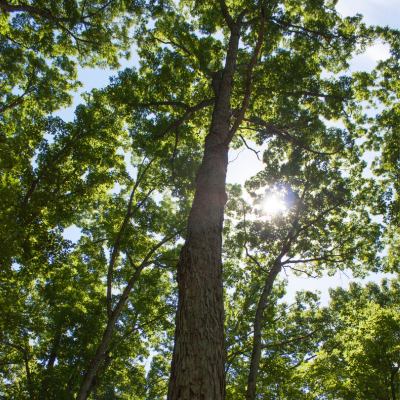 Forests provide the very materials that make up our daily lives. From the air we breathe to the products we use each day, forests are essential ecosystems that sustain us. Recognizing the immense value of forests, the United Nations General Assembly declared March 21st as the International Day of Forests, a day to celebrate and raise awareness about our vital forest ecosystems. Every year, this special day is adorned with a new theme, and for this year, the spotlight is on “Forests and Innovation.”
So, why the emphasis on innovation? Because forests are shaping the future.
Imagine a world where most of the materials we use in our daily lives come from sustainable sources, reducing our impact on the environment. Thanks to innovative breakthroughs, materials derived from forests and trees are being developed as eco-friendly substitutes for plastics, building materials, fabrics, and various other everyday items.
Healthy Forests = Healthy People
Let’s take a closer look at some not-so-commonly thought-of items that come from forests!
 Breakfast
You might be surprised how many components of your morning routine originate in forests. The wood tables we eat breakfast on, the apple cider we drink, the maple syrup we pour, and even the chocolate we enjoy can be traced back to trees and forests. Beyond flavors, trees also provide essential functional ingredients, like natural cellulose fiber from trees that keep shredded cheese from clumping in your omelet.
 Bathroom
Forests are an integral part of our self-care and personal grooming routines too. Tree resins and plant celluloses are core ingredients found in toothpaste, deodorant, nail polish, mascara, lipstick, shampoo, henna hair dye, and many other daily-use products. Take a moment to appreciate the diverse natural origins of the items in your bathroom cabinet.

Clothing
Did you know much of the fabric you wear could come straight from a forest? Thanks to modern eco-friendly innovations in textiles, fabrics like lyocell, modal, and viscose are made from dissolving wood pulp and tree leaves. Additionally, natural rubber latex extracted from rubber trees forms the basis for rain boots, elastic, and stretchable clothing. With the right materials, trees can provide the raw resources for your entire outfit.
 Shelter
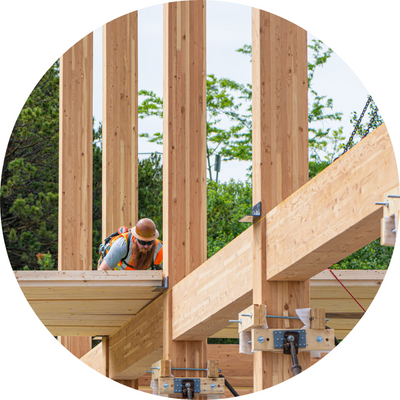
Forests form the foundation for the homes we live in. Wood framing, doors, furniture, lumber, plywood, particle board, and wooden flooring originate from trees. Sustainable forestry practices can provide renewable resources for our shelter needs.
Paper Products
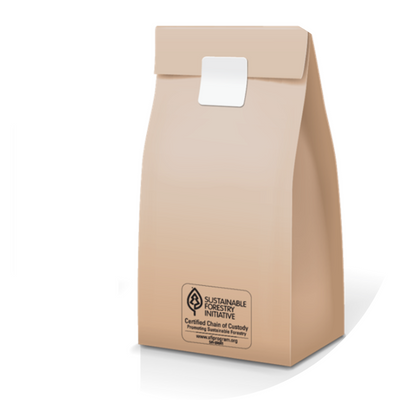
Paper and cardboard come directly from trees and forests, providing us with notebooks, packaging, tissues, paper towels, newspapers, magazines, books, and more. As our reliance on paper products grows, sustainable forest management becomes increasingly important.
 Musical Instruments
Many instruments like acoustic guitars, violins, drums, and pianos depend on wood from trees like spruce, maple, ebony, and rosewood for their resonant sound. While learning your favorite tune, consider the forest origins of your musical companion.

Food Packaging
Beyond paper, cellulose derived from tree pulp is commonly used for food packaging, straws, and disposable cups, providing an innovative renewable, and compostable solution to plastic pollution.
 Medicine
From the bark to the leaves, the trees in our forests have been integral to traditional medicine. Cellulose ether, extracted from wood, serves diverse roles in pill production and as a thickening agent in liquid medicines. Additionally, ongoing research unveils forest-derived compounds for treating various illnesses. Take a moment to appreciate the natural roots of the remedies in your medicine cabinet.
The Impact of Forests Beyond Everyday Uses
The positive influence of forests extends far beyond the consumer products and materials they provide. Forests offer beautiful natural recreational spaces, clean our air and water supplies, and improve community health and well-being. Most importantly, as natural carbon sinks, forests play a crucial role in combating climate change. Trees absorb carbon dioxide and release oxygen, helping regulate Earth’s delicate climate balance. Protecting and sustainably managing forests is a vital part of ensuring a livable climate for future generations.
Celebrate International Day of Forests with Project Learning Tree (PLT) Resources
It’s clear that our forests provide a good deal more to our lives than what meets the eye! So, the next time you use a forest-derived product, remember the untold story of innovation and sustainability that lies within.
Free Family Activity
Use this free PLT activity We All Need Trees to help children discover different products we get from trees and how much we depend on forests in our daily lives.
Explore Your Environment: K-8 Activity Guide
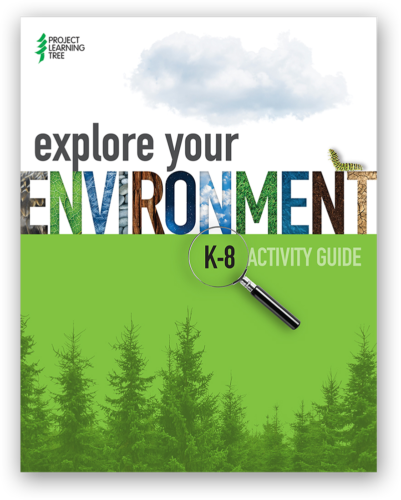
Encourage students to be creative and come up with innovative design ideas in the Peek at Packaging activity from PLT’s Explore Your Environment: K-8 Activity Guide. Additionally, students in grades 6-8 can explore the environmental, social, and economic criteria of forest certification and examine the steps involved in making a certified forest product using PLT’s activity What’s in a Label? found in the Explore Your Environment: K-8 Activity Guide.
Forest Literacy Framework
PLT’s Forest Literacy Framework also serves as a helpful and complementary resource that organizes 100 forest concepts for grades K-12 into four key themes:
- What is a forest?
- Why do forests matter?
- How do we sustain our forests?
- What is our responsibility to forests?
On International Day of Forests and beyond, let’s continue to explore, appreciate, and conserve our forests for the well-being of the planet and generations to come!
The post The Power of Forests: Celebrating International Day of Forests appeared first on Project Learning Tree.
]]>The post Join Us at the 2024 Project Learning Tree, Project WET, and Project WILD Conference! appeared first on Project Learning Tree.
]]>
On Your Mark, Get Set, Be Inspired!
Are you ready to be part of something extraordinary? We are thrilled to announce a milestone event that promises to shape the future of environmental education in classrooms and communities across the nation. For the first time in over 25 years, Project Learning Tree, Project WET, and Project WILD are joining forces for a groundbreaking joint conference!
We are inviting all professional development leaders to join us May 13-17, 2024 in beautiful San Antonio, Texas for a week filled with experiential learning, inspiring speakers, and plenty of opportunities to connect (and reconnect!) with individuals passionate about environmental education.
Every journey begins with a single step, and yours starts here! We invite you to be part of a movement that has been at the forefront of environmental education for decades, reshaping the way educators connect students with nature through the power of place-based learning. Together, PLT, Project WET, and Project WILD reach over 30,000 educators annually with an estimated reach of over 2.5 million students across the country.

Who Should Attend the Conference?
- Individuals who lead PLT-WET-WILD programs in their state
- Facilitators of PLT-WET-WILD professional development workshops
- Decision makers who determine professional development opportunities for their school or district (administrators, science/environmental education curriculum leads, and professional development facilitators)
This conference is your gateway to unleashing the full potential of PLT, Project WET, and Project WILD in your educational community. It’s where innovation meets inspiration and where collaboration sparks transformation.
Together, we will transform environmental education for the 21st century. Secure your spot at the 2024 Project Learning Tree, Project WET, and Project WILD Conference, and let’s create a greener future for us all!
 WAITLIST ONLY – Special Pre-Conference Educator Workshop (May 13, 2024) – Become Certified to Teach PLT, WET and WILD!
If you are a Texas-based K-8 formal educator, non-formal educator (i.e., museum-based educator, nature center volunteer, etc.), pre-service teacher, or afterschool program leader, you won’t want to miss this! We are excited to bring a special combined Project Learning Tree, Project WET, and Project WILD professional development workshop that promises to energize and motivate you!
Be a part of creative exploration and investigation as it unfolds before your eyes when you use the natural environment, including trees, water, and animals, to teach students about STEM, language arts, social studies, and more.
During this experiential workshop, you’ll:
- Gain confidence to both teach outdoors and incorporate nature inside the classroom
- Build lasting connections with other educators from Texas
- Become certified to teach activities from PLT, WET and WILD
- Roll up your sleeves and have fun!
Register for the PLT-WET-WILD Educator Workshop Today!
Registration at this time is full; however, you can join our waitlist. Individuals on the waitlist will be notified in late April if additional spots open.
The post Join Us at the 2024 Project Learning Tree, Project WET, and Project WILD Conference! appeared first on Project Learning Tree.
]]>The post Giant Capitol Christmas Tree a Big Reason to Celebrate Green Jobs During the Holidays appeared first on Project Learning Tree.
]]>The “People’s Tree,” a 63-foot-tall Norway spruce, arrived in Washington, DC, in late November to grace the Capitol West Lawn thanks to dozens of people who work in forestry and other green jobs.
Getting the 39-year-old, 8,000-pound tree to the Capitol involved a 1,000-mile expedition from West Virginia. There were also close to 60 regular-sized Christmas trees for other locations and offices on the Capitol and more than 14,000 handmade ornaments along for the ride.
View this post on Instagram
Every year, a national forest provides a tree to light up the West Lawn of the US Capitol building for the holidays. West Virginia’s Monongahela National Forest, in partnership with nonprofit partner, Choose Outdoors, transported the 2023 US Capitol Christmas Tree from West Virginia to Washington, DC, with support from sponsors, including the Society of American Foresters (SAF).
Green jobs key to delivering holiday magic
“This wonderful holiday tradition would not be possible without all the people who work in green jobs. We were so pleased to see SAF talk about working in forestry and other green jobs as part of their US Capitol Christmas Tree Forestry FAQs,” said Linda Carnell, Assistant State Forester, Education and Communication, West Virginia Division of Forestry.
The SAF FAQ described how green jobs offer a wide variety of career opportunities based on interest areas and skill sets. Green jobs include positions like foresters, park rangers, wildland firefighters, wildlife biologists, policymakers, public outreach professionals, recreation managers, loggers, and lumber mill workers. Jobs can be seasonal or full-time in both indoor and outdoor settings.
“We were also really pleased to see SAF reference Project Learning Tree’s Exploring Forest Careers. The Green Jobs: Exploring Forest Careers guide includes four hands-on, instructional activities to help youth research forestry jobs and practice managing and monitoring forest resources,” said Carnell, who also serves as the West Virginia Project Learning Tree (PLT) State Coordinator.
The growth of “green jobs”—defined by the Bureau of Labor Statistics as jobs that produce goods or services that benefit the environment or conserve natural resources, or jobs that use more environmentally friendly processes or fewer natural resources—have outpaced jobs in other employment categories by almost 250% over the last decade.
Coming together across West Virginia to celebrate the People’s Tree
 The USDA Forest Service took the People’s Tree on a two-week tour across West Virginia, so that residents of the state could give the tree a proper send-off and also learn about green jobs.
“We were so excited to work with so many different entities to make this happen—towns, cities, communities, schools, 4H clubs. Connecting with so many people, especially kids, about green careers was fantastic,” said Carnell. “Kids respond well when they understand what green jobs are all about. We tell them ‘Yes, you can be in hi-tech and use a satellite and a computer to do your job while you work in the woods’.”
PLT West Virginia created a special U.S. Capitol Christmas Tree activity collection to do with youth around the state. It featured several activities found in the Explore Your Environment: K-8 Activity Guide, including Tree Cookies, Every Tree for Itself, and Our Federal Forests.
Tools, info, and activities to learn about green jobs
Did you know PLT activities also include details about different green jobs? It’s our goal to introduce students to the green job possibilities out there, and we’d love your support in doing so!
Check out some of the green jobs resources that people learned about during the tree’s trip across West Virginia. Explore green jobs that support forests and learn more about career readiness supports through PLT. You can also take a one-time free trial of the PLT Green Jobs Quiz. PLT and SAF are also pleased to announce an online short course – Teaching Youth and Communities About Forests – to help you strengthen your outreach and education efforts to youth and adults. Register Now!
For additional inspiration, get a copy of Black Faces in Green Spaces: The Journeys of Black Professionals in Green Careers.
A holiday tradition dating back to 1964
Massachusetts Senator John McCormack planted a 24-foot-tall Douglas fir on Capitol grounds in 1964. This was the first tree that started the ritual tree lighting on the West Lawn. Sadly, the tree died after three years from wind and root damage.
Today, Jim Kaufmann, Director of the Capitol Grounds for the Architect of the Capitol, chooses the People’s Tree. The USDA Forest Service assesses the environmental impact of harvesting the tree by investigating if the tree is close to any endangered species or water sources and if it provides shelter for wildlife.
In 1970, the Monongahela National Forest supplied the first People’s Tree. In 2024, the Capitol Christmas Tree will come from Alaska.
The post Giant Capitol Christmas Tree a Big Reason to Celebrate Green Jobs During the Holidays appeared first on Project Learning Tree.
]]>