The post Sustainably Managed Forests & Wildlife Conservation appeared first on Project Learning Tree.
]]>Now, think about our environment. If a forest is not managed properly, natural resources might become depleted and overused and ecosystems can get out of balance, leading to habitat loss, or invasive species.
That’s why sustainable forest management and conservation – defined as “a careful preservation and protection of something (especially: planned management of a natural resource to prevent exploitation, destruction, or neglect)- are so vital to the health of forest ecosystems, especially when forests are home to 80% of the world’s terrestrial biodiversity!
And it’s never too late to celebrate Wildlife Conservation Day (December 4)! You can help young people and the community better understand conservation through Project Learning Tree hands-on activities, like “Monitoring Forest Health” from Green Jobs: Exploring Forest Careers.
In this activity for older students, learners will explore just what goes into keeping forests healthy so the plants, animals, and insects that rely on these diverse ecosystems can thrive. It’s a great way for learners to see how soil scientists, wildlife biologists, foresters, and other natural resource professionals monitor forests and work together to create a forest management plan.
A forest management plan addresses any health issues and ensures the long-term sustainability of the forest. (Check out the “If You Were the Boss / Si Fueras el Jefe” activity from PLT’s Explore Your Environment: K-8 Activity Guide / Explora tu Ambiente: Guía de Actividades K-8 to learn more about all the factors and impacts considered when creating a plan.)
Wildlife conservation is a key piece of this multi-faceted plan.
Here’s an over-simplified example:
 Let’s say a massive forest fire came through an overly dense forest and destroyed 90% of the trees in a forested area. That equates to a significant loss of habitat for wildlife like birds, bats, raccoons, deer, and bears that rely on mature living trees for food and shelter. Some of those animals perished in the fire, while others were displaced. They may migrate to another nearby forest (or a heavily populated area), and now, that area has more animals than the habitat can support, and there is not enough food to go around.
Had that forest been better managed (i.e. controlled burning or thinning of overgrown stands), the fire might have been less devastating and could have been beneficialto wildlife by creating more shelter and boosting berry growth (like huckleberry!).
Had that forest been better managed (i.e., through controlled burning or thinning of overgrown stands), the fire might have been less devastating and could have been beneficial to wildlife by creating more shelter and boosting berry growth (like huckleberry!).
Sustainable forest management is an important way to retain and restore ecological balance that allows wildlife to thrive even in the face of catastrophes like wildfire.
Looking for more resources to learn about conservation, sustainable forestry, and our environment? Visit shop.plt.org to access Project Learning Tree’s hands-on instructional materials.
The post Sustainably Managed Forests & Wildlife Conservation appeared first on Project Learning Tree.
]]>The post Everything is Here for a Reason – Celebrating Biodiversity appeared first on Project Learning Tree.
]]>Let’s celebrate the variety of trees, other plants, fungi and countless animals, from bears to beetles, that contribute to our biodiverse planet.
Why Biodiversity Matters
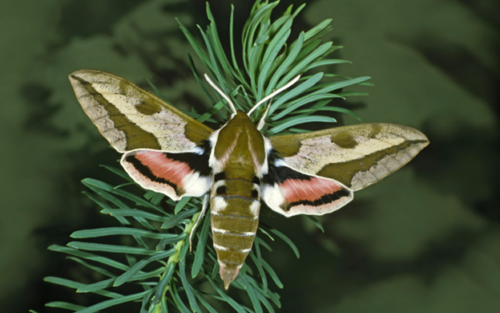
Sometimes my kids ask me why certain insects, like pesky mosquitoes, are around. My first response usually is, “Well, that’s a great question! I’m glad you asked!”
The answer is: Biodiversity matters. A lot! Every plant and animal, including insects, is a strand in the vast and complex web of life. Every species that exists today is connected to and dependent upon countless other species. Every ecosystem relies on constant interactions between living and non-living elements. Human well-being literally depends on the diversity of life.
Just think about it.
Plants need soil for water and nutrients, plus sunlight which allows them to manufacture food through photosynthesis. Those plants rely on animals like birds and bees to pollinate their flowers and disperse their seeds. They rely on decomposers like beetles and worms to cycle nutrients and keep soil fertile. In turn, the birds and bees need those plants for food and shelter. We rely on those animals and plants. We are all interdependent!
The loss of just one species can set off a chain reaction that affects all the others in an ecosystem. Whether species decline occurs due to habitat loss, disease, climate change, the introduction of invasive species, or something else, it’s important to do what we can to maintain Earth’s biodiversity.
Activities to Learn All About Biodiversity
Build a Bottle Biosphere
What better way to inspire future engineers than to design a model biodome using a bottle! In this STEM-based activity, students learn how living and non-living components impact one another in an environment.
Plant a Garden
Starting a garden is a great way to teach learners of all ages about biodiversity. We all know plants need air, water, and nutrients found in soil to sprout and mature. But what insects and animals rely on those plants? This activity is a fun way to get your hands dirty and investigate the biodiversity your garden supports. Are there certain types of bugs that flock to your tomato plants but leave strawberries alone? Do you tend to find hummingbirds in one specific area of the garden? Which pollinators are attracted to which plants?
Nature Journaling
Encourage students to be creative and channel their inner artist through nature journaling. This is a great way for learners of all ages and abilities to discover biodiversity. Spend some time outdoors—whether it’s your backyard, a schoolyard, or a park. Invite learners to draw what they see, from the variety of plants to birds, squirrels, bugs, and more that live there.
Watch a TED-Ed Video
Watch this short video, it’s a great primer to help learners understand why biodiversity is so crucial.
Be a Community Scientist: Take a Biodiversity Inventory
Free apps like iNaturalist, Seek, or Merlin Bird ID make it fun to identify various species of flora and fauna near you. Learn about the interconnectivity of native species and head outdoors for a nature walk to take photos or record birdsongs and then upload – it’s super simple! Not only can the app help you identify the species you document, but you are also adding to the data scientists use to understand biodiversity and how it is changing.
PLT Activities to Celebrate Biodiversity
Grades K-2
You can find these activities in Explore Your Environment: K-8 Activity Guide / Explora tu Ambiente: Guía de Actividades K-8
- Backyard Naturalist / Naturalista del Patio
- Trees as Habitats / Los Árboles como Hábitats
Grades 3-5
Find these three activities in Explore Your Environment / Explora tu Ambiente and in our digital activity collection, Biodiversity Blitz.
- Charting Biodiversity / Graficando la Diversidad
- Discover Diversity / Descubre la Diversidad
- Web of Life / Telaraña de la Vida
PLT’s e-unit Energy in Ecosystems is another incredible compilation of activities that investigate the ways in which organisms depend on each other to survive in ecosystems.
Grades 6-8
These activities for older learners are also in the Explore Your Environment / Explora tu Ambiente guides.
- Field, Forest, and Stream / El Campo el Bosque y el Arroyo
- Forest in the City / Bosque en la Ciudad
- If You Were the Boss / Si Fueras el Jefe
- Invasive Species / Especies Invasoras
- Life on the Edge / La Vida al Límite
Whatever activities you do, have fun exploring and celebrating biodiversity!
The post Everything is Here for a Reason – Celebrating Biodiversity appeared first on Project Learning Tree.
]]>The post Recommended Summer Reading for Forest Lovers appeared first on Project Learning Tree.
]]>From informative nonfiction reads to entertaining tales, these books focused on forests will help keep curious minds sharp over the summer months. Our recommended reading list includes picture and chapter books for kids, teens, and adults so that everyone in the family can connect with forests and trees.
- Educators will find riveting reads for students and parents to supplement environmental education and Project Learning Tree US and Canada lessons.
- Sustainability and natural resources professionals will discover new books to help classrooms and communities care about and for trees, encouraging and emphasizing the need for forest literacy in every environment.
- Green job seekers and mentors will uncover incredible human accomplishments and the essential role of trees through research and personal stories to help their green jobs journey.
These must-reads focused on forests and trees are a mix of new favorites and classics, with something for every age and type of reader!
Plus, by buying titles utilizing PLT and the Sustainable Forestry Initiative’s Amazon Smile account, you also help to support environmental education, forest literacy, green career pathways support, and advance our efforts to support the next generation of conservationists.
Happy reading from PLT!
GRADES:
GRADES K-2 (Ages 5-8)

1) The Hike
Grades PreK-K
Three young girls set out to explore the nearby woods. On their adventure, they realize hiking can be unpredictable. They spot wildlife, take detours, and enjoy the natural world. The book features illustrations of many plants and animals along with scientific terms to help young readers with learning. Get a copy of the book.

2) The Memory Tree
Grades PreK-K
Teaching young children about the loss of a loved one can be a difficult topic. In this picture book, a fox lives a long and happy life in the forest, but he is now ready to sleep and closes his eyes forever. As the fox’s friends begin to share memories and tell stories, a tree starts to grow taller and stronger with every memory. Get a copy of the book.

3) A Log’s Life
Grades PreK-3
Many animals rely on this oak tree, but it is struck down during a large storm and becomes a log. Children discover numerous changes the tree undergoes until it finally becomes part of the soil. Learn about tree life cycles and get outside to investigate trees and logs at home or school! Get a copy of the book.
4) Who Will Plant a Tree?
Grades PreK-3
This book describes the various ways seeds can spread and the roles different creatures play in the process. It’s a great book to introduce lessons on the anatomical features of seeds and how they help with distribution. The full-page illustrations in this book are detailed and have an old-world feel about them. Get a copy of the book.

5) Pablo’s Tree
Grades PreK-3
Each year on his birthday, a young Mexican-American boy looks forward to seeing how his grandfather decorated the tree planted the day the boy was adopted. Authored by Pat Mora, this book embraces new traditions and values, as well as exhibits familiar family relations that are warm and heartfelt. Get a copy of the book.
 6) My Forest is Green
Grades PreK-3
A young boy, who loves art and poetry, explores an urban forest near home and interprets what he sees with his art. He creates rhythmic language to describe the seasons and colors, but decides his forest is mostly green. The picture book will bring out the artist in every child and encourage a closer look at nearby nature. Get a copy of the book.
7) We Planted a Tree
Grades PreK-3
We Planted a Tree is a short poetic story about two families in different parts of the world that plant a tree. The book explains theoretical concepts and the many benefits of planting with engaging cartoon-style illustrations. Get a copy of the book.
 8) I Can Name 50 Trees Today! – All About Trees
PreK-3
A great book to read aloud with beginner readers and to introduce young learners to important basic concepts. In this picture book, readers explore some of the world’s trees, learning how to identify species from their leaves, seeds, fruit, and more. Get a copy of the book.
Try these books in conjunction with the following PLT activities:
Explore Your Environment: K-8 Activity Guide
A Tree’s Life
Adopt a Tree
Trees as Habitats
Here We Grow Again
Have Seeds, Will Travel
Trees & Me: Activities for Exploring Nature with Young Children
Activity 7: Best Buds
Activity 8: My Tree and Me

Trees & Me: Activities for Exploring Nature with Young children
Grades PreK-2 (ages 1-6)
Experience trees throughout the summer and help children ages 1-6 connect with their community! PLT’s latest resource, Trees & Me: Activities for Exploring Nature with Young Children, helps families and teachers connect young kids to nature through outdoor and indoor activities.
Families, childcare providers, and early educators can easily adapt activities as necessary to meet each child’s unique needs, the environment where they live, and the materials available. Learn more or purchase the guide.
GRADES 3-5 (Ages 8-11)
 1) The Apple Tree
Grades K-3
This story is about a young boy who plants an apple seed, and as soon as it sprouts, the boy can see what the apple tree is meant to be. The little apple tree isn’t so sure and becomes frustrated and begins to doubt its calling. The story is presented in both English and Tsalagi (the language of the Kituwah People).
Get a copy of the book.
 2) A Day in a Forested Wetland
Grades K-3
This nonfiction picture book takes readers on a field trip through the aquatic habitat of a forested wetland. Readers of this book will see which animals are active during the day in a forested wetland and which come out at night. This story contains a “Creative Minds” section that includes information to provide points of discussion for parents and lesson options for teachers. Get a copy of the book.
3) Tall Tall Tree
Grades K-4
Tall Tall Tree begins with a letter from a wise and respected northern spotted owl. The beautiful and scientifically-accurate illustrations take children on a virtual field trip into the dense redwood forest. Not only will readers experience incredible redwood trees, but they will also get a sneak peek into the hidden world of the forest canopy–which readers will learn is abundant with life. Get a copy of the book.
 4) The Tree Lady
Grades K-5
In this picture book, readers will learn how the first woman to graduate from the University of California with a degree in science transformed San Diego into the green, garden-filled oasis it is today. Get a copy of the book.
5) Can You Hear the Trees Talking?
Grades 3-5
Young readers will discover the secret life of trees in this nature-inspired science book. The story shares what trees feel, how they communicate, and how they take care of their families, along with simple activities for kids to try on their own. Get a copy of the book.
 6) The Magic of Trees
Grades 3-5
In this illustrated nature and science book, readers will learn about the complex “wood wide web” of roots and the important role every part of the tree plays in its own growth and the habitat of the whole forest or woodland. Get a copy of the book.
Try these books in conjunction with the following PLT activities:
Explore Your Environment: K-8 Activity Guide
Web of Life
Tree ID
Charting Biodiversity
Discover Diversity

Pocket Guide: Seeds to Trees
Grades PreK-2 (ages 3-6)
Trees start small but pack a big wallop—and so does PLT’s Pocket Guide: Seeds to Trees!
Pack the guide with you on your trip to the park, schoolyard, camping, or daycare—at just 4 by 6 inches, the Guide is small enough to fit into a pocket or backpack.
The Guide has activities for you to do with ages 3-6 in convenient settings and with the materials you have at hand. We ensure that kids find the activities fun to do while you can feel confident that you are providing factual, age-appropriate information.
GRADES 6-8 (Ages 11-14)
1) Wishtree
Grades 3-5 and 6-8
This book’s narrator is a “two hundred and sixteen rings old” oak tree named Red. Red is a community wishing tree—and every May 1, adults and children alike bring their wishes written on pieces of colorful paper or fabric to tie to Red’s branches—hoping they come true. Red has overheard many conversations and has lots of stories to tell. Get a copy of the book.
 2) Song of the Trees
Grades 6-8
Song of the Trees is the first book in a series detailing the Logan Family saga. This 80-page short novel tracks the tough choices of the Logan family in rural Mississippi and how they make decisions about the things they own and care about in the face of the Great Depression. Get a copy of the book.
3) Forest World
Grades 6-8
This novel tells the story of a young Cuban-American boy. Though separated by only 90 miles, Miami and the small island country of Cuba couldn’t seem further apart. At 11 years old, Edvar’s mom puts him on a plane headed for the remote forests of Cuba to meet a father he has never known and a sister he never knew existed. With no phone, no internet, and a family of strangers, Edvar is in for one long summer. Get a copy of the book in English or en Español.
 4) Ellie’s Log
Grades 6-8
After a large tree crashes to the ground during a winter storm, a young girl and her new friend explore the nearby forest. Together, they learn how trees provide habitat for plants and animals, both high in the forest canopy and low among mossy logs.
Get a copy of the book.

5) The Boreal Forest: A Year in the World’s Largest Land Biome
Grades 6-8
Author L.E. Carmichael explores the boreal forest wilderness on a tour of the forest throughout the four seasons. The book combines lyrical storytelling with research to provide a year-long tour of the planet’s largest biome. Get a copy of the book.
Try these books in conjunction with the following PLT activities:
Explore Your Environment: K-8 Activity Guide
Decisions, Decisions
If You Were the Boss
Life on the Edge

Sensational Trees Activity Collection
Grades K-2 (ages 5-8)
Sensational Trees is one of three PLT activity collections for educators. It features three PLT activities for educators of students in grades K-2 that invite young learners to investigate trees using their senses.
Buy Sensational Trees or explore Biodiversity Blitz and Trillions of Trees for grades 3-5.
TEENS AND ADULTS
 1) The Man Who Planted Trees
This book shares the inspiring story of a man’s quest to reforest the world by cloning the oldest, largest trees on the planet—and create a Noah’s ark of tree genetics. Many said it was impossible, but twenty years later, the team successfully closed some of the world’s oldest trees—among them giant redwoods and sequoias. Get a copy of the book.
2) The Hidden Life of Trees
Peter Wohlleben shares his deep love of woods and forests and their amazing processes of life, death, and regeneration. Readers will learn about trees sharing nutrients with those who are sick, creating an ecosystem that mitigates the impact of extreme heat and cold, and more. Get a copy of the book.
 3) American Canopy: Trees, Forests, and the Making of a Nation
This novel takes readers on a story of the relationship between Americans and trees across history. Learn about the Liberty Trees, the creation of New York’s Central Park, spotted owls and the old-growth forests they inhabited, and more.
Get a copy of the book.
4) A Life in the Bush
A 22-year-old headed off into the largest tract of preserved bush in the world: Ontario’s Algonquin Park. When he got there, he found what he would call home for the rest of his life. This is a story of a family raised in the woods, the tough physical demands, and the freedom that comes from living apart from town and city.
Get a copy of the book.
5) Kiss the Ground
Readers will discover how incredible the soil beneath our feet is and how soil has the power to reverse climate change, feed the world, and benefit health and wellness. Get a copy of the book.
 6) Careers in Forest, Wildlife, Fisheries, and Range Resources
This book offers inspiring natural resource professionals an introduction to the professions of forestry, fisheries, wildlife, and range management. The author helps readers transform their desire for an exciting and meaningful career into a purposeful and efficient path to obtaining the appropriate education, training, and experience. Get a copy of the book.
 7) A Guide to Green Jobs in Canada: Voices of Indigenous Professionals
A Guide to Green Jobs in Canada: Voices of Indigenous Professionals features first-person stories from 12 First Nations and Inuit leaders working in the forest and conservation and parks sectors across Canada. Indigenous role models describe what inspired them to pursue green careers and share lessons learned from lived experiences. Their stories reflect the values and perspectives of Indigenous professionals at various stages of their careers. The guide was developed in Canada by PLT Canada, but is a relevant and informative resource in the U.S. Download or order the guide for free.
Are you in Canada and interested in becoming a green career mentee or mentor?
Learn more about PLT Canada’s latest mentorship cohort.


 8) The Journeys of Black Professionals in Green Careers
Black Faces in Green Spaces: the Journeys of Black Professionals in Green Careers aims to inspire young Black Americans to pursue forest and conservation careers by telling the stories of the Black trailblazers who have taken the career path and who have advice and resources to share.
Download or purchase a printed guide and explore supporting resources, including: job training, mentorship and employment opportunities, access to networking webinars, and invitations to local events.

Do you have a favorite tree and forest-related read that we missed? Let us know in the blog comments at the bottom of the page and on social media!


The post Recommended Summer Reading for Forest Lovers appeared first on Project Learning Tree.
]]>The post Elevating Indigenous Knowledges in Environmental Education: Why it Matters and How to Start appeared first on Project Learning Tree.
]]>As a student growing up in a small farming community in Minnesota, I didn’t look like the other students in my class, nor did I look like the teachers around me. I was often called out by teachers whenever the topic of ‘Native Americans’ came up in class and often ridiculed (by staff and students alike) for being different. While things have improved in many respects, the reality is that for most Indigenous students in North America in the public school system, they’re likely to complete their primary and secondary education without ever having a teacher who looks like them or shares the same cultural background or perspectives and they often still experience the same kinds of problematic tokenism and harassment that I did over 20 years ago.
More and more Indigenous people are pursuing degrees in education and helping to address this gap, but non-Indigenous teachers can also help by incorporating ITECK into their lessons and elevating Indigenous knowledges in–and out of–the classroom. The inclusion of Indigenous knowledges in lessons helps to destigmatize traditional knowledge, helps promote sustainable land stewardship and use practices, and acknowledges its value and contributions to the world of science.
This is not an easy thing to do! And the difficulty of doing it–and doing it in a culturally responsive way–is the biggest challenge to being more inclusive. After nearly seven years in formal and informal education advocating for the inclusion of Indigenous knowledges in every subject, I hope to be able to share some helpful suggestions to start you on your path towards elevating Indigenous knowledges in the work you do.
How to Get Started
Learn
 Who are the Indigenous Peoples around you today, and who were they historically? The history of colonization globally has left few Indigenous communities untouched, and although its impacts vary greatly, some of its defining characteristics include the dispossession of traditional lands, forced assimilation through ‘education,’ the criminalization of traditional language, cultural practices, and religion, and vast population reduction as a result of disease exchange. However, Indigenous Peoples are still here–they are resilient, thriving, contemporary peoples with their own stories and knowledges to share. So, do some research about your local Indigenous communities through their sources: tribal websites, tribal museums, community authors, and speakers.
I encourage my students to utilize the Native Land Digital website to learn more about where Indigenous Peoples are and have been located and treaty history. Through this deep dive into your local Indigenous communities, you will hopefully be able to find some resources–even community members!–to draw on to be more inclusive.
Connect
Relationship building is central to working with Indigenous Peoples. The first step in this process can be attending community events open to the public, such as powwows, feasts, and other cultural celebrations. If you’re unsure how to do this respectfully, this resource can help! Introduce yourself to some folks and make connections to show you are committed to the inclusion you hope to foster. Reach out to community members who are already doing similar work and start a conversation about how you can collaborate to achieve similar goals. This step is often the hardest for people because it’s difficult to be vulnerable: we don’t want to offend people, so we hesitate even to start a conversation to avoid this. However, we can never move on to the collaboration if we don’t start the conversation.
Ask
It’s completely normal to feel uncomfortable incorporating Indigenous knowledges into your lessons if you are non-Indigenous. When done respectfully and with the input of community, you eventually get over this. But, in the meantime, lean on your relationships and ask community members who are knowledge holders to step into that place of sharing if they are comfortable doing so. Key to this is honoring that knowledge sharing appropriately through gifting and/or compensation: in many Indigenous communities in North America, a small gift of tobacco is a sign of respect and gratitude to a community member who has agreed to share knowledge. Other small gifts- homemade jelly or jam, a coffee mug, a book–are also appreciated. Whenever possible, consider monetary compensation to offset travel costs and the time the individual has given you and your students. Whether a gift or monetary compensation, it is appropriate to ask the individual if they have a specific request to ensure you meet their expectations.
Collaborate
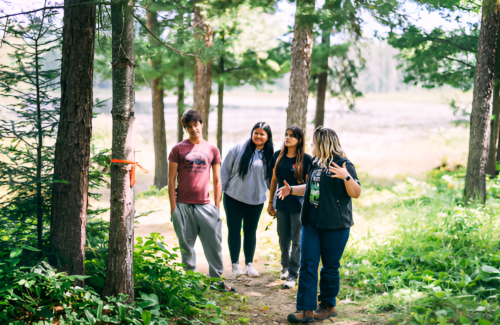 Work with community members to incorporate Indigenous knowledges into your lessons in a culturally responsive and appropriate way. This can include having community members directly contribute to the writing of lessons or reviewing lessons after they have been written to ensure they are appropriate. Consider how these lessons can benefit not just your own students. Making lessons open-access and sharing with others:
- widely increases awareness
- improves representation for Indigenous students
- opens the door for other educators to be more inclusive in their own work, and
- increases the positive impact of elevating Indigenous knowledges.
In this step, always consider permissions: do you have permission from the knowledge holder to share what you are, in the way you are? Even when something is published, it’s a good idea to ask permission again to use that information differently than it was originally intended.
If you are working with PLT lessons as a base, I find that it’s particularly easy to adapt the 400 Acre Wood lesson from the PreK-8 Environmental Education Activity Guide (If You Were the Boss in the Explore Your Environment: K-8 Activity Guide) to reflect local fauna, especially those that are particularly important to the local Indigenous Peoples of your region, giving you the opportunity to bring in discussions of relationships with animals and Indigenous language use through the incorporation of traditional words for animals.
Return
Return the favor AND again and again!
What do you have to offer the community you now have a relationship with? How can you share your knowledge to benefit the goals of that community? How can you support the work that they are prioritizing?
Be there, return the favor, and do it again and again and again. This kind of work is not a one-off: relationship building is a lifelong process, a commitment to support, share, and care for one another. Encourage the growth and deepening of the relationships you have built in the community through continued conversations and collaboration in the years to come. Careers shift; people move. If you stay close enough to these communities you have been working with, consider how to continue that work and stay in relationships. And if it’s not possible, think about how you can foster the development of a relationship between a colleague and that community to continue the collaboration in your place.
I won’t pretend this work is easy, quick, or always successful. Communities don’t always say yes, relationships don’t always pan out, and these things always take longer than you hope they will (and often longer than the timeline a funder has given you to do it!). But, if you’ve decided this is meaningful to you, your students, and your community, missteps are part of the process; they help you learn along the way. I can promise that the first time you teach a culturally responsive lesson to your students and you see the smile and pride that radiates from the ‘one Native kid’ in the group, it will all be worth it.
Additional Resources
- Beyond Conservation: Working Respectfully with Indigenous People and Their Knowledge Systems
- Indigenous Knowledges and Perspectives on Climate Adaptation
- 7 Tips on Building Relationships with Indigenous Peoples
- How to Build Good Relations with Indigenous Peoples: An Interview Series (Part 1)
- Collaboration is Key to Indigenous Relationships
Editor’s Addition: Native American Heritage Month, Thanksgiving, and Year-Round Resources for Educators
 The Sustainable Forestry Initiative (SFI) and Project Learning Tree (PLT) are committed to continuing our own education and establishing mutually respectful relationships with Indigenous Peoples (also known as reconciliation) through our work. We’re passionate about providing resources to create a better understanding of the importance of forests and the many communities that rely on forests for the spiritual, cultural, environmental, and economic benefits they bring. We’ve compiled a non-exhaustive list of resources for educators to help you get started or continue your personal and your students’ learning journeys. The best resources are those developed by Indigenous peoples, themselves. Other representations of Indigenous Peoples and/or the language used can be imperfect, so we encourage you to consider those a starting point to be researched and reflected upon.
The post Elevating Indigenous Knowledges in Environmental Education: Why it Matters and How to Start appeared first on Project Learning Tree.
]]>The post People of PLT | Getting to Know a True Force of Nature appeared first on Project Learning Tree.
]]>
Have you ever met someone who just has that “It factor”? Someone with a magnetic personality, who’s warm, friendly, fun to be around, and draws in everyone around them.
If you haven’t noticed, the Project Learning Tree network sure has a lot of shining stars from educators inspiring learners through PLT activities to amazing facilitators leading PLT professional development events. But at the heart of our network are our PLT State Coordinators. These are the rockstar individuals leading PLT within their state, sharing their passion for nature-based education and introducing young people to the environment.
This month, we’re getting to know our Oklahoma PLT State Coordinator, Tony Pascall. Tony is the Education Coordinator for Oklahoma Forestry Services where he not only juggles multiple projects, but in his spare time he’s teaching himself how to actually juggle! “I’m up to 25ish catches in a row!”
Before becoming a PLT State Coordinator three years ago, Tony taught middle school math and STEM in Title 1 schools in Detroit and Dallas for several years. After graduating with a degree in Ecology from North Carolina State, he joined Teach for America with the intention of going back to become a plant biologist.
But instead, he caught a bug—the teaching bug—and fell in love with it. “The entire time I worked to incorporate my love of nature and the outdoors into my teaching. I brought my students outdoors for math labs, and even had an outdoor adventure club, where I brought some students hiking and camping! Most of my favorite moments in my formal teaching career come from this club, where I got to watch students fall in love with – and ultimately to learn to conserve – their environment.”
It’s all about the people
PLT isn’t just professional development and environmental education resources. It’s also a community of people passionate about educating the next generation and encouraging students to think broadly and dream big. “The environmental education community is very welcoming, and I love how much everyone reaches out to help one another. I’ve been able to work with several different organizations to put on shared educator workshops and student events, and every time I meet new people and learn something new.”
And the best place to meet these awesome people? A local PLT professional development event, that’s where! Tony’s favorite thing about these events is “Meeting cool educators! I love seeing what other folks are up to, how they already incorporate nature education into their teaching, and showing off PLT’s awesome standards-aligned activities. We always generate great ideas to adapt activities for different folks, and there is an awesome spirit of collaboration at PD events.”
Tony is all about creating a welcoming space for educators and students alike. And his local community recognizes his commitment and dedication for doing so. Earlier this summer, Tony was named as the 2024 Informal Science Teacher of the Year by the Oklahoma Science Teaching Association.
 Give space for nature
We always like to ask our People of PLT what suggestions they have for educators on how to incorporate PLT into their lessons. Tony shared some great advice at a workshop earlier this year with a group of middle school teachers. He said, “‘You can’t teach awe and appreciation for nature, but you can give space for it.’ They put it on the back of their camp t-shirts this year! I think PLT can help teachers build in more time for understanding of the world around them in their classes. My advice is to slow down and let there be time to notice.”
Start with one activity
Back in Tony’s classroom days, he loved using the outdoors as a way to get students more interested in the material he was teaching. “When I taught 7th grade math, I used to say, “You can draw a graph about anything!” I chose to teach outdoors and about our environment because my students were usually more engaged and more curious when learning about the natural world.
If you’re able to take your students outdoors safely, start small and try one lesson outside. See how things go and as you become more comfortable, increase outdoor time to once a month or once a week. “I believe everyone deserves to understand and love their place. I think that once you get kids looking closely at what is right outside their door, they quickly get curious and start asking questions and making connections.”
Teach language arts? Try the “Poet-Tree” activity from the Explore Your Environment: K-8 Activity Guide and encourage your students to get creative while writing about nature. Teach math? Collect, analyze and graph bugs you collect in the schoolyard during the “Birds and Bugs” activity from the K-8 guide. Whatever subject you’re teaching, there is a PLT activity you can do that uses nature as a learning tool.
Tony’s favorite PLT activity is “If You Were the Boss” from Explore Your Environment and Green Jobs: Exploring Forest Careers. “I love that the kids can make choices, then see how what they decided effects things like wildlife, how many trees are cut down, and how much money they will need to spend. I like giving everyone a chance to revise their choices if they didn’t like the outcomes the first time through. I think it gives kids a cool sense of agency.”
Get connected
Want to get meet other educators using PLT in your state? Interested in learning more about becoming a PLT facilitator to lead professional development events? Visit plt.org/yourstate to get connected with your local PLT Coordinator.
The post People of PLT | Getting to Know a True Force of Nature appeared first on Project Learning Tree.
]]>The post Connecting Students, Indigenous Knowledge, and Minnesota Forests appeared first on Project Learning Tree.
]]>
Often the best ideas emerge from a combination of diverse viewpoints, good timing, and personal experience. Here is a story of how the Minnesota Department of Natural Resources used this trifecta to create a series of Project Learning Tree (PLT) lessons to help teachers connect students in grades K-8 to forests using Indigenous knowledge and perspectives.
Alphabet soup of diverse viewpoints
The beginning of any partnership story often begins with a hefty serving of alphabet (acronym) soup. It’s an important backstory for understanding how and why this project came about.
The Sustainable Forestry Initiative (SFI) is a non-profit organization which advances forest sustainability through its work across the areas of conservation, community engagement, education, and through its third-party certification standards for sustainable forest management. Minnesota is one of SFI’s largest certificate holders, with nearly all state-managed land certified as well-managed. Committees in each state, called SFI State Implementation Committees (SICs), do on-the-ground outreach and collaboration to ensure that local forests are managed properly and that communities are aware of the value of certified sustainable forests.
In 2017, PLT joined SFI to increase the reach of forest-focused environmental education throughout North America and around the world. The Minnesota Department of Natural Resources (DNR) has sponsored PLT programming in the state since 1978, and two DNR staff participate with the Minnesota SIC: the forest certification consultant and Minnesota’s PLT coordinator.

Good timing
In 2017, the Minnesota Department of Education (MDE) began adding Indigenous-based learning benchmarks in science, language arts, and social studies for students to achieve before graduation.
In 2018, the Minnesota SIC was looking for ways to strengthen relationships between tribes and people who want to manage forests sustainably.
We wondered: How could SFI invest in the next generation of forest users and stewards?
At the same time, opportunity knocked: PLT was updating their forest-based lessons. Could we add local Indigenous content to these lessons?
The Minnesota SIC group agreed: This is a great opportunity to work with tribes and create lessons that ALL Minnesota teachers could use. Connecting children with Indigenous knowledge and engaging lessons could nurture the next generation of forest stewards, especially in tribal communities. And we were off to the races…

Personal experience
Imperative to our success was getting tribal support. The SIC connected me with a friend of a friend in Grand Rapids, who used her personal relationship with Ojibwe tribal educators to sponsor a conversation in 2019 between their tribe and our SIC. Together we listened to each other’s personal stories, discussed challenges, and slowly built some trust.
The tribal leaders we worked with understandably insisted that we find the right person to write the lessons. We needed someone who is a tribal member, has a teaching license, and understands forests and outdoor education. We found the perfect candidate in Larissa Harris-Juip, a former DNR naturalist, teacher on the Fond du Lac Reservation, and current doctoral candidate.
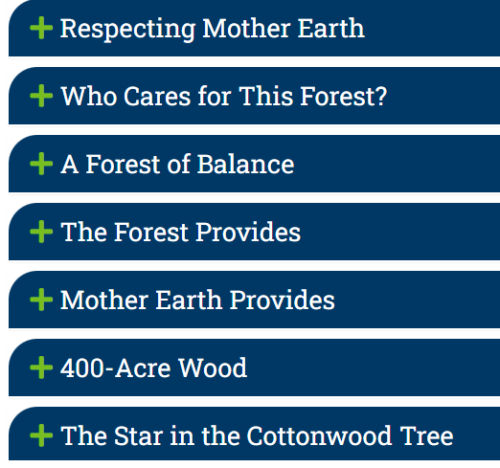
The SIC paid Larissa to research and enhance seven PLT forestry lessons. One lesson, Respecting Mother Earth, uses stories told by elders to share how communities used specific Minnesota trees to produce maple syrup, poles for homes, fuel for fires, snowshoe frames, medicines, canoes, and other important tools. When taking something from nature, many Native American traditions include leaving a mindful offering, a common practice in cultures around the world to honor the natural resources we use and rely on. This lesson shares traditional stories and teaches students how to make kinnickinnick (traditional tobacco made from the inner bark of red osier dogwood trees). This lesson also helps children meet key science benchmarks by learning about Indigenous technology to solve problems.
When working with partners, trust is key – and trust takes time
Many educators are rightly concerned that they teach about Indigenous Peoples with knowledge and respect. Here are some things to keep in mind while collaborating with Indigenous community partners:

- If you are unsure how an Indigenous person would like to be referred to, be respectful and ask.
- No one appreciates being stereotyped. This bears repeating, especially if you are in a position to influence others. Use thoughtful, intentional language and consider what communities need, as well as who is best positioned to partner with you all.
- Indigenous Peoples and Indigenous culture are alive and thriving. It’s OK to share stories from long ago but be cautious not to depict these communities as only existing in the distant past.
- Recognize and learn about Indigenous influences on language and technology. We use it every day!
- Take care not to use language that could be possessive (ex. America’s Native people) or describes Indigenous Peoples as a monolith (ex. identify the community’s tribal band or nation, like Dakota or Ojibwe).
- Learn about the land you live on, including the culture and languages of the original inhabitants, treaty history and, in some places, the forcible removal and relocation of Native communities. Learn how relative newcomers have treated Indigenous people over the last two centuries, and what communities are doing today to celebrate Native heritage and contributions to the natural resources sector.
- Bookmark our other tips and suggestions in “Native American Heritage Month Resources for Educators” and let us know in the comments and on social media how you plan to use the activity and project ideas with your students.
Acknowledgments
Thank you to the SIC members who helped make these lessons a reality: Minnesota SIC Chair Rick Horton, University of Minnesota Extension Educator Charlie Blinn, Minnesota forestry advocate Kathleen Preece, and Jerry Richards of West Fraser.
Thanks also go to Becky LaPlant of the Blandin Foundation, DNR Tribal Liaison Bradley Harrington, MDE Tribal Liaison Jane Harstad, the Minnesota Tribal Education Committee, and Annette Drewes, former DNR clean water specialist and current forest restoration collaboration manager in Bemidji for their support and review of the project and materials.
Much appreciation goes to Larissa Harris-Juip for her thorough and thoughtful work writing and curating the lessons. We also want to thank Gerald White (Leech Lake Band of Ojibwe), Shirley Nordrum (Thunderbird Woman), University of Minnesota Extension, and Lowana Greensky, and Fond du Lac Band of Ojibwe for their guidance and understanding.
The post Connecting Students, Indigenous Knowledge, and Minnesota Forests appeared first on Project Learning Tree.
]]>