The post Sustainably Managed Forests & Wildlife Conservation appeared first on Project Learning Tree.
]]>Now, think about our environment. If a forest is not managed properly, natural resources might become depleted and overused and ecosystems can get out of balance, leading to habitat loss, or invasive species.
That’s why sustainable forest management and conservation – defined as “a careful preservation and protection of something (especially: planned management of a natural resource to prevent exploitation, destruction, or neglect)- are so vital to the health of forest ecosystems, especially when forests are home to 80% of the world’s terrestrial biodiversity!
And it’s never too late to celebrate Wildlife Conservation Day (December 4)! You can help young people and the community better understand conservation through Project Learning Tree hands-on activities, like “Monitoring Forest Health” from Green Jobs: Exploring Forest Careers.
In this activity for older students, learners will explore just what goes into keeping forests healthy so the plants, animals, and insects that rely on these diverse ecosystems can thrive. It’s a great way for learners to see how soil scientists, wildlife biologists, foresters, and other natural resource professionals monitor forests and work together to create a forest management plan.
A forest management plan addresses any health issues and ensures the long-term sustainability of the forest. (Check out the “If You Were the Boss / Si Fueras el Jefe” activity from PLT’s Explore Your Environment: K-8 Activity Guide / Explora tu Ambiente: Guía de Actividades K-8 to learn more about all the factors and impacts considered when creating a plan.)
Wildlife conservation is a key piece of this multi-faceted plan.
Here’s an over-simplified example:
 Let’s say a massive forest fire came through an overly dense forest and destroyed 90% of the trees in a forested area. That equates to a significant loss of habitat for wildlife like birds, bats, raccoons, deer, and bears that rely on mature living trees for food and shelter. Some of those animals perished in the fire, while others were displaced. They may migrate to another nearby forest (or a heavily populated area), and now, that area has more animals than the habitat can support, and there is not enough food to go around.
Had that forest been better managed (i.e. controlled burning or thinning of overgrown stands), the fire might have been less devastating and could have been beneficialto wildlife by creating more shelter and boosting berry growth (like huckleberry!).
Had that forest been better managed (i.e., through controlled burning or thinning of overgrown stands), the fire might have been less devastating and could have been beneficial to wildlife by creating more shelter and boosting berry growth (like huckleberry!).
Sustainable forest management is an important way to retain and restore ecological balance that allows wildlife to thrive even in the face of catastrophes like wildfire.
Looking for more resources to learn about conservation, sustainable forestry, and our environment? Visit shop.plt.org to access Project Learning Tree’s hands-on instructional materials.
The post Sustainably Managed Forests & Wildlife Conservation appeared first on Project Learning Tree.
]]>The post Everything is Here for a Reason – Celebrating Biodiversity appeared first on Project Learning Tree.
]]>Let’s celebrate the variety of trees, other plants, fungi and countless animals, from bears to beetles, that contribute to our biodiverse planet.
Why Biodiversity Matters
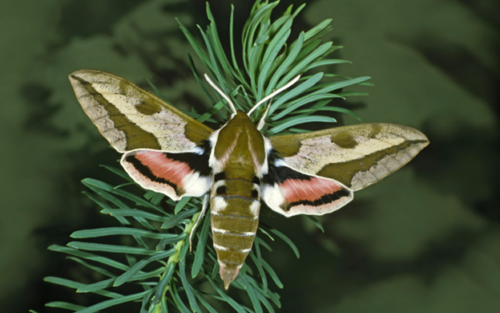
Sometimes my kids ask me why certain insects, like pesky mosquitoes, are around. My first response usually is, “Well, that’s a great question! I’m glad you asked!”
The answer is: Biodiversity matters. A lot! Every plant and animal, including insects, is a strand in the vast and complex web of life. Every species that exists today is connected to and dependent upon countless other species. Every ecosystem relies on constant interactions between living and non-living elements. Human well-being literally depends on the diversity of life.
Just think about it.
Plants need soil for water and nutrients, plus sunlight which allows them to manufacture food through photosynthesis. Those plants rely on animals like birds and bees to pollinate their flowers and disperse their seeds. They rely on decomposers like beetles and worms to cycle nutrients and keep soil fertile. In turn, the birds and bees need those plants for food and shelter. We rely on those animals and plants. We are all interdependent!
The loss of just one species can set off a chain reaction that affects all the others in an ecosystem. Whether species decline occurs due to habitat loss, disease, climate change, the introduction of invasive species, or something else, it’s important to do what we can to maintain Earth’s biodiversity.
Activities to Learn All About Biodiversity
Build a Bottle Biosphere
What better way to inspire future engineers than to design a model biodome using a bottle! In this STEM-based activity, students learn how living and non-living components impact one another in an environment.
Plant a Garden
Starting a garden is a great way to teach learners of all ages about biodiversity. We all know plants need air, water, and nutrients found in soil to sprout and mature. But what insects and animals rely on those plants? This activity is a fun way to get your hands dirty and investigate the biodiversity your garden supports. Are there certain types of bugs that flock to your tomato plants but leave strawberries alone? Do you tend to find hummingbirds in one specific area of the garden? Which pollinators are attracted to which plants?
Nature Journaling
Encourage students to be creative and channel their inner artist through nature journaling. This is a great way for learners of all ages and abilities to discover biodiversity. Spend some time outdoors—whether it’s your backyard, a schoolyard, or a park. Invite learners to draw what they see, from the variety of plants to birds, squirrels, bugs, and more that live there.
Watch a TED-Ed Video
Watch this short video, it’s a great primer to help learners understand why biodiversity is so crucial.
Be a Community Scientist: Take a Biodiversity Inventory
Free apps like iNaturalist, Seek, or Merlin Bird ID make it fun to identify various species of flora and fauna near you. Learn about the interconnectivity of native species and head outdoors for a nature walk to take photos or record birdsongs and then upload – it’s super simple! Not only can the app help you identify the species you document, but you are also adding to the data scientists use to understand biodiversity and how it is changing.
PLT Activities to Celebrate Biodiversity
Grades K-2
You can find these activities in Explore Your Environment: K-8 Activity Guide / Explora tu Ambiente: Guía de Actividades K-8
- Backyard Naturalist / Naturalista del Patio
- Trees as Habitats / Los Árboles como Hábitats
Grades 3-5
Find these three activities in Explore Your Environment / Explora tu Ambiente and in our digital activity collection, Biodiversity Blitz.
- Charting Biodiversity / Graficando la Diversidad
- Discover Diversity / Descubre la Diversidad
- Web of Life / Telaraña de la Vida
PLT’s e-unit Energy in Ecosystems is another incredible compilation of activities that investigate the ways in which organisms depend on each other to survive in ecosystems.
Grades 6-8
These activities for older learners are also in the Explore Your Environment / Explora tu Ambiente guides.
- Field, Forest, and Stream / El Campo el Bosque y el Arroyo
- Forest in the City / Bosque en la Ciudad
- If You Were the Boss / Si Fueras el Jefe
- Invasive Species / Especies Invasoras
- Life on the Edge / La Vida al Límite
Whatever activities you do, have fun exploring and celebrating biodiversity!
The post Everything is Here for a Reason – Celebrating Biodiversity appeared first on Project Learning Tree.
]]>The post Fostering Social and Emotional Learning Through Nature Education appeared first on Project Learning Tree.
]]>But beyond those “testable” topics, most teachers and nonformal educators would also list other ways they hope their students grow.
- Are my students able to interact with their classmates in productive, positive ways?
- Do they know how to set goals, and achieve those goals?
- Do they have the ability to manage the sometimes difficult, often changing emotions that are part of growing up?
Teachers know that skills like these can be equally important—if not more so—than content knowledge when it comes to the learning outcomes of the young people in their care. These types of skills fall under the category of Social and Emotional Learning (SEL), and nature-based education can play a critical role in helping students grow in these ways.
Nature Education & SEL

Let’s look at some examples from PLT activities to think about specific ways that nature education can contribute to K-12 students’ social and emotional learning.
Creative Connections
We’ll start with one of my favorite PLT activities, “Poet-Tree” from the Explore Your Environment: K-8 Activity Guide. In this activity, students have an opportunity to talk about a favorite wooded place and how they feel when they are there, followed by spending some time making close observations of an outdoor spot near their school, writing and sharing poetry about what they observed, and then creating a class poetry book that includes their work. In doing so, students are connecting with their emotions, expressing themselves, listening to their classmates, and contributing to something for their classroom community—all foundations of SEL—while also learning about grammar, literature, and ecosystems.
You can also practice poetic reflection with your family with PLT’s Connecting Kids to Nature activity page for Poet-Tree.
Collaboration & Communication
Now let’s consider a high school example from a lesson rooted in natural science and forestry skills— “Monitoring Forest Health” from the Green Jobs: Exploring Forest Careers guide (with a variation also found in Focus on Forests Guide). I love this lesson because students collect “real world” qualitative and quantitative data about a forest study plot. But in my opinion, the best part comes near the end, when students share their data with the class, and then discuss and debate together while they analyze the data to come to conclusions about the health of that forest.
In this process students are considering diverse opinions, practicing self-control, and resolving conflict, not to mention the cooperative work that was required to gather the data in the first place. That’s some powerful opportunity for social and emotional growth!
Check out PLT’s “Monitoring Forest Health” activity for yourself!
Practice Incorporating SEL
 I could go on to give more examples of how PLT and nature education support SEL in students, but instead I am going to challenge you to explore on your own.
Flip through your favorite PLT guide or other nature-based curriculum and look for places where students are working together, expressing themselves, reflecting on how nature makes them feel, or thinking about what it takes to make responsible decisions. Check out the “At-a-Glance” index on pages 420-421 of the Explore Your Environment: K-8 Activity Guide. Under STEM Skills you can find key skills connected to SEL (i.e., collaboration, communication, creativity)! And then keep those activities in mind as tools for helping grow well-rounded students that become responsible and successful adults.
We’d love to hear about your favorite PLT activities you’ve used for social and emotional learning! Share them with us on social media, tagging @ProjectLearningTree on Facebook and Instagram.
The post Fostering Social and Emotional Learning Through Nature Education appeared first on Project Learning Tree.
]]>The post Hands-on Activities & Advice for New Environmental Educators appeared first on Project Learning Tree.
]]>Not only does PLT provide easy-to-teach, hands-on activities suitable for a variety of settings—PLT also offers a range of resources to support and mentor new environmental educators.
January is National Mentoring Month, a time to recognize the importance of mentoring and the impact it can have. For new educators, drawing on others’ wisdom and experience helps lead to more successful and rewarding teaching. PLT’s cadre of State Coordinators serve as mentors to educators in their state by providing ideas and tips for incorporating environmental education and outdoor learning into their teaching.

Getting Started
A good place to start is with one of PLT’s fun, flexible, student-centered activities that invite students to explore the world around them. With step-by-step directions, background information, academic standards, and student pages, PLT activity guides can save you time—and make teaching easier.
Get started with a list of sample activities from PLT’s Trees & Me: Activities for Exploring Nature with Young Children, Explore Your Environment: K-8 Activity Guide, and more.

In addition to a whole suite of activity guides, PLT has a highly engaged and geographically diverse network of educators with an enormous collective wealth of knowledge and expertise that can provide support and encouragement on your teaching journey. This network allows you to connect with others in your area to ask questions and share resources, providing informal mentoring to new educators.
PLT also offers in-person and online trainings to help strengthen teaching skills and enhance student learning. Educators often rate PLT trainings as the best professional development experiences.

For information about these and other PLT resources and events, your State Coordinators are always happy to answer your questions and to help you connect to mentor teachers in your area.
 PLT Activities for New Environmental Educators
All PLT activities are tested and proven effective. The following work well with many learners and settings – and practically teach themselves!
For Grades K-2:
Use these activities from PLT’s Explore Your Environment: K-8 Activity Guide to get started teaching students:
- Have Seeds, Will Travel – Students learn about plant reproduction and seed dispersal by observing, collecting, and classifying seeds. This STEM activity can be done either inside or outside the classroom. See Explore Your Environment for details.
- The Closer You Look – In this art-based activity, students draw a tree from memory and compare it to their observations of a real tree, helping them to identify characteristics of tree parts.
- Trees as Habitats – Students make “telescopes” out of paper tubes to help them observe a tree, and then play a game of Bingo to look for signs of plants and animals living in or around it.
Use these activities from PLT’s Trees & Me: Activities for Exploring Nature with Young Children to get started teaching young children ages 1-6:
- The Shape of Things — Children search for the shapes and colors that define both our natural and built environments.
- Sounds Around — Children explore the sounds of nature and imitate them using their voices and instruments that they make together.
- Home Tweet Home — Children discover how plants and animals depend on trees.

For Grades 3-5
Use these activities from PLT’s Explore Your Environment: K-8 Activity Guide to get started teaching students:
- Discover Diversity – Students imagine they are visitors from outer space, viewing life on Earth for the first time. They describe all the living things they find in a small outdoor plot and become more aware of the abundance and diversity of life.
- Poet-Tree – After observing nearby trees, students create and share poetry to express their thoughts, feelings, and beliefs about trees and forests.
- Web of Life – Students research forest plants and animals to learn what they eat and what eats them, and then use a ball of yarn to model a food web and show how the species are connected.
For Grades 6-8
Use these activities from PLT’s Explore Your Environment: K-8 Activity Guide to get started teaching students:
- Field, Forest, and Stream – Students conduct a field study of three different ecosystems to learn about their similarities and differences.
- Nature’s Skyscrapers – In this math-based activity, students measure a tree’s height, girth, and crown spread, and compare their findings to the largest known living tree in the world.
For Secondary and Post-Secondary
- Who Works In this Forest? – Students are introduced to different forest sector careers and research to learn what it takes to perform these jobs. Explore PLT’s Green Jobs: Exploring Forest Careers guide to learn more.
- Monitoring Forest Health – Students conduct a forest health checkup of a local forest area to learn about the ecological services forests provide. While seven forest health indicators are provided, you may focus on just one to start. Explore PLT’s Green Jobs: Exploring Forest Careers guide to learn more.
- PLT Green Jobs Quiz – Students can take a quiz to learn about their personality and some green job opportunities that might suit them best. Take PLT’s Green Jobs Quiz.
- PLT’s Forest Literacy Framework – PLT’s Forest Literacy Framework translates the language of forests and sustainable forest management into concepts for everyone at any age. The framework offers 100 forest concepts for grades K-12, organized into four themes.
Advice for Bringing Classes Outdoors
Exploring the outdoors is invaluable for learners as it expands understanding and deepens connections to the natural world. Time outside strengthens not only academic learning, but also promotes mental, social, and physical health.
That said, many new environmental educators are daunted by the idea of taking students outside to learn. Here are some tips from Lena Ives, PLT Maine Coordinator, and Michelle Youngquist, PLT Idaho Coordinator:
- Think of the outdoors as simply an extension of indoor teaching spaces.
- Your biggest goal should be a positive experience.
- Start small.
- Practice skills with students inside before doing them outdoors.
- Don’t be afraid to adapt the lesson as go.
- Remember that you don’t have to know all the answers.
- Tap into local resources: get a fellow teacher or resource professional to help with your first excursions.
- Enlist students to help with class management (helping identify boundaries, manage equipment and timing, report questions to the teacher, and so on).
- Take along a tote with cut-up pieces of old yoga mats or camping pads to sit or kneel on when the ground is wet, cold, or pokey.

Mentoring the Next Generation
Mentoring creates opportunities to share tips and resources, transfer skills, and boost the confidence of mentees and mentors alike! Mentorship enables educators and forestry professionals to be more engaged and more effective.
PLT is committed to supporting and mentoring the next generation of environmental educators and forestry professionals through free programs and green career pathway resources, including:

- Green Jobs Quiz – Students discover green jobs best suited to their personality through this online quiz. Sign up for a free trial at PLT.org/GreenJobsQuiz.
- Green Jobs: Exploring Forest Careers –This guide is the perfect tool to help young people ages 12-25 learn about green jobs in forestry and natural resource management. It can be used in a range of settings, from community youth programs and school classrooms to college and career prep. Explore forest careers.
- The Journeys of Black Professionals in Green Jobs – A recent U.S. Census Survey indicates that less than 3% of foresters and conservation scientists identify as African American. This new guide can help young Black Americans discover opportunities for rewarding careers in forestry and conservation. Learn more at plt.org/journeys.
- PLT Green Mentor Program –This program connects young people ages 18-30 with forest professionals across Canada and the United States to build their forest and conservation knowledge and career goals—and gain new perspectives. Learn more at plt.org/mentorship.
The post Hands-on Activities & Advice for New Environmental Educators appeared first on Project Learning Tree.
]]>The post Activities to Teach About Forests in the Place You Live appeared first on Project Learning Tree.
]]> Trees clean our air and our water; they give us shade and more than 5,000 products that people use every day; they provide habitat for wildlife and make our world more beautiful.
To help high school students appreciate trees and forests, and learn about the value of trees in their community, try using Project Learning Tree’s Focus on Forests and Places We Live secondary modules together.
Here are two suggestions for ways to combine lessons from these modules that will spark discussions and higher level thinking about the benefits of trees and forests in the place you live – from aesthetic and health values, to economic and environmental benefits. The lessons will also help individuals understand how they might preserve and protect forests, and conserve green space in their own neighborhoods.
To get these PLT modules, contact your PLT State Coordinator about attending a workshop in your state. To access the Student Pages referenced below for each activity, login or create an account (it’s free!)
What’s the Value of Trees in Your Community?
Here are a few instructional ideas to help your students understand — and calculate — the value of trees in your community.
Ask students to think about the value of trees:
- Use the Tall Tree Tales Student Page included with Activity 5, Green Space in PLT’s Places We Live module. After students complete the worksheet, ask how many statements out of 20 they marked as true.
- Tell them that all of the statements about the benefits of trees are true.
- Discuss how they categorized the benefits of trees and point out that some statements may apply to more than one category, which helps to illustrate the multiple reasons forests, trees, and green spaces should be conserved in communities.
 Explain that various tools exist to assess and demonstrate the approximate dollar value of individual trees:
- Spend time exploring the National Tree Benefit Calculator, and explain the various parameters it measures. The calculator allows anyone to make a simple estimation of the benefits individual trees provide.
- You can also challenge students to try the calculator using the trees on the one-tenth of an acre plot they set up as part of PLT’s Monitoring Forest Health activity. Students might assess the value of each individual tree—or estimate the value of the entire plot!
- Remember to provide students with tree identification guides, DBH tapes, and the Evaluating Tree Benefits Student Page included with Activity 1, Monitoring Forest Health in PLT’s Focus on Forests module to help them with the task at hand.
Debrief the activity by discussing the following questions:
- Were you surprised to find out the many benefits that the trees provided on this small plot of land?
- What other benefits do trees provide that were not included in the National Tree Benefits Calculator?
- Why is it important to manage and care for trees in your community?
- How can citizens improve the quality and quantity of trees in your community?
- How might we communicate to others about the true value of trees and forests and the benefits they provide?
Tough Choices in Your Community
 Try combining Activity 4, Tough Choices in PLT’s Focus on Forests module with Activity 2, Community Character in PLT’s Places We Live module and organize a mock town meeting to discuss a forest-related issue in your local community.
Students will investigate and defend a particular viewpoint as they take on the roles of environmentalists, scientists, local officials, business owners, and residents. They’ll discuss multiple perspectives and remember this engaging, problem-solving activity long after they graduate!
Explain that one way to better understand an environmental issue is to identify and analyze its components:
- Have students review the What Makes Up an Environmental Issue Student Page included with Activity 4, Tough Choices in PLT’s Focus on Forests module.
- Challenge students to brainstorm different land use issues in their community, for example, development of open space, construction of new roads, proposal for a new mall or big box store, creation of a mass transit system, habitat protection, or rezoning of an area.
- Have students vote on a single issue to analyze.
Assign small groups of students to pretend to be the various players in the community involved in making decisions about the topic:
- Use the Analyzing the Issue Student Page as a guide and, for each group’s assigned role, help students complete their “Positions,” “Values,” “Opinions,” and “Possible Solutions.”
- Prepare students to participate in a mock town meeting where this issue will be discussed. Students should attend the meeting prepared to speak on behalf of their assigned position and to present their solution to the issue. If time permits, students can conduct research and develop a PowerPoint presentation or other visuals to illustrate their position.
- Hold the mock town meeting with pre-selected and non-biased “city council member” volunteers. Give each student group an equal amount of time to present their position and proposed solution, and then have the city council meet privately, vote on the best solution, and finally announce (and explain) their decision to the class.
Debrief the activity by discussing the following questions:
- Do you personally agree with the city council’s decision? Why or why not?
- Do you agree with the criteria used by the city council to make their decision? Why or why not?
- Was a compromise achieved?
- How is (or isn’t) this process similar to what happens in real life?
- Why do you think cities and towns have zoning laws and land-use plans? What would happen if they didn’t?
Pulling it All Together
Review and assess what students learned by discussing how knowledge of the actual (monetary) value of trees and forests could be used in real town meetings to influence the outcome of proposed zoning changes and land-use plans— as well as to encourage that trees and green space be conserved in your area.
To get PLT’s Focus on Forests and Places We Live secondary modules, contact your PLT State Coordinator about attending a workshop in your state. To access the Student Pages for each activity, login or create an account (it’s free!)
The post Activities to Teach About Forests in the Place You Live appeared first on Project Learning Tree.
]]>The post Why Teach Outside in Winter? appeared first on Project Learning Tree.
]]> Imagine a group of preschoolers on a short walk in the forest in winter, searching for life among the trees. “Let’s pretend to be a deer walking through the forest.” As the children start to play, a cascade of questions follows as the children show curiosity and concern for how animals can live in the cold forest: “How would they walk?” “What can they eat?” “Where could they sleep?” “How do they stay warm?” Feeling the cold and laboring through the snow can make abstract concepts like winter adaptation come alive for even the youngest learners. Other outdoor activities can be equally engaging for older students.
Getting children outside, especially during winter months, can feel overwhelming, but we encourage you to make the effort. Teaching outside throughout the year can lead to a classroom full of curious, motivated learners who have a deeper connection to the place where they live.
Prepare for the Special Challenges of Winter
 In Maine, where we live, winter air temperatures often hover around zero degrees, so simply being outside can be a safety concern. You’ll want to ensure that your students are prepared with warm outdoor clothing, that you have chosen an appropriate place for your outdoor lessons, and that students and teachers are comfortable learning in this new setting.
Consider factors like snow depth, air temperature, wind chill, and ice safety before every outdoor winter lesson. You may have to reschedule if it is too cold or snowy. Think about how difficult it might be for an emergency vehicle to reach your students if something happened. Always take a radio or cell phone with you so you can call for help in case of an emergency.
If possible, have some donated extra boots and clothing on hand for the few children who do not come prepared. Some older students may not be willing to wear clothing offered by the teacher. When faced with this situation, we arrange for an indoor place where these students can remain while the rest of the class goes outside. Ask a fellow teacher if these students can sit in the back of their classroom. Assign these students indoor bookwork, and include a homework component if they want to receive credit for the lab day. This offers a safe, but challenging, indoor option for unprepared students.
 Make Outdoor Work Part of Your Regular Routine
Start getting your students outdoors at the beginning of the school year. With routines in place, students know what to expect and how to behave, and can focus on the lesson rather than on the fact that they will be going outside. By starting early, you will overcome the typical challenges of outdoor teaching before the snow falls, giving you more mental space to deal with the additional difficulties winter poses.
Secure Support from the Community, Parents, and School
Notify parents well in advance about your outdoor teaching plans. Building support within your school community can go a long way toward enabling outdoor education. You may find a group of colleagues eager to set up a simple outdoor classroom or willing to collaborate on lessons. If you cannot find a support group within your school, parent volunteers or a local environmental organization may be able to assist you. Your PLT State Coordinator can help by conducting a workshop for your school or in your community.
Incorporate Winter Learning Into a Year-long Investigation
Consider incorporating your winter teaching into a year-long project that will provide the continuity needed to get kids comfortable with outdoor learning. A great example is Activity 21, Adopt A Tree found in PLT’s PreK-8 Environmental Education Activity Guide. Observing the same tree—or the same special outdoor spot—over the course of the school year offers opportunities for your students to become more engaged as they make regular scientific observations over time. David Sobel’s book, Childhood and Nature: Design Principles for Educators gives some great examples of how to give each child a special place and turn it into a year-long project.
Lessons to Inspire by Grade Level
 Early Childhood
PLT’s Early Childhood Activity 6, Evergreens in Winter offers a variety of experiences for children to touch, smell, see, hear, and taste the season of winter. Start with something small, for example, using our Connecting Kids to Nature series. Sometimes the best thing for young children is to simply play and explore; unstructured play often offers the best learning. Preschoolers love paths or mazes in the snow. Simply shoveling an interesting path can lead to hours of fun and exploration. If your kids tire of building a snowman, try sculpting an awesome animal with them! Here are some ideas for animal snow sculptures from the National Wildlife Federation.
- Elementary
PLT has many activities that ask children to collect and observe. Be mindful in winter that students will be wearing gloves so limit writing requirements when outside. Consider encouraging students to snap photos of animal tracks or collect twigs for closer examination once back indoors. Remember trees can be identified by many different features, not just by their leaves. Consider asking children to identify trees by their bark using PLT’s PreK-8 Activity 68, Name That Tree. - Secondary
Incorporate teaching outdoors in the winter into a bigger project that has more meaning and motivation than standalone lessons. For example, PLT’s secondary module Focus on Forests Activity 1, Monitoring Forest Health offers students the opportunity to work on forest research plots on the school property throughout the year. Dichotomous keying activities, required in most biology curricula, can be completed using tree identification in all seasons.
The most important thing to remember is proper preparation. Once you’ve done that hard work, you’ll be pleased to see that teaching outside is not only easy, it’s also fun and rewarding for both teachers and students!
Photo Credits:
- Photo 1 – “Class in Winter” taken by Joanne Alex from Stillwater Montessori School in Old Town, ME.
- Photo 2 – “Girl on Snowshoes” taken by Joanne Alex from Stillwater Montessori School in Old Town, ME.
- Photo 3 – “Ice Crystals” taken by Anita Smith, Maine PLT Steering Committee member.
- Photo 4 – “Place Based Winter Preschool” taken by Corie Scribner.
Corie Scribner and Olivia Griset worked together on this article. An elementary school teacher for 15 years, Corie has always been drawn to sharing the natural world with children and her family. She also teaches a nature and play-based kindergarten and leads nature-based classes for local families.
The post Why Teach Outside in Winter? appeared first on Project Learning Tree.
]]>The post 8 Differentiated Instruction Techniques to Reach Diverse Learners appeared first on Project Learning Tree.
]]> resources, and efforts to effectively instruct students of diverse backgrounds and interests? How can teachers ensure that every child has opportunities to develop his or her individual talents? How can teachers create lessons that will be effective for students with different academic skills and readiness levels?
In order to address the range of skills and needs of students in today’s diverse classroom, teachers need to develop and use varied teaching and assessment strategies. Differentiated instruction is one such technique that provides students with different avenues for acquiring and processing content. Differentiation entails identifying both the appropriate entry points for learning as well as the appropriate exit points for students to express their learning (Gardner, 1999).
Project Learning Tree encourages teachers to provide students with multiple options for taking in information, processing ideas, and expressing what they have learned — both in the classroom and outdoors. We include suggestions for differentiated instruction in all our curriculum materials. In the PreK-8 Guide, for example, differentiated instruction methods are noted in the sidebar of each PLT activity, and are identified within each activity by this icon: 
Described below are eight techniques for differentiated instruction methods. Try these techniques to reach every type of learner. The gifted and talented student, the student with disabilities, the student who lacks motivation, and the student who has not yet mastered the English language require customized (or differentiated!) instruction to provide appropriate learning entry and exit points.

1. Key Vocabulary
Educators work with students to help them identify, recognize, develop, and use new terminology. A glossary of vocabulary exists in all of PLT’s curriculum materials and glossary terms are found in bold and italics within the curriculum’s text. Consider matching key vocabulary with one of the other differentiated instruction techniques below to engage all your students. Create a jeopardy or memory/match game to learn and review key vocabulary terms.
2. Prior Knowledge Links
This technique taps into students’ prior experiences and knowledge. Have students interview each other to learn about their own individual experiences in reference to a certain topic. You can also address pointed questions to the entire group, such as:
- Have you ever visited a forest? What was it like? Did you like it? (PreK-8 Activity 8, The Forest of S.T. Shrew)
- Where does rain come from? Where do puddles go when they dry up? (PreK-8 Activity 44, Water Wonders)
- Are trees alive? How do you know? (PreK-8 Activity 79, Tree Lifecycle)
3. Paired and Cooperative Learning
Combine students with varying learning abilities, interests, language proficiencies, or other skill strengths into groups of two or more to provide peer support throughout a lesson. You may want to alter the makeup of working groups according to the activity at hand, e.g. sometimes heterogeneous grouping is appropriate, where at other times, same-language or more homogenous groups may work best.
This group of students (pictured left) is working together to measure tree height and diameter on their school grounds (Activity 1, Monitoring Forest Health in PLT’s Focus on Forests secondary module). Once back in the classroom, they will use a carbon calculator to estimate the amount of carbon stored within the trees (Activity 8, Climate Change and Forests).
 4. Nonlinguistic Representations
Help students learn using modalities other than the printed word, such as singing, role-playing, sketching, taking photographs, etc. Try teaching a few words using American Sign Language and challenge students to communicate their observations without words (for example, see Early Childhood Activity 2, Sounds Around). Create a visual graphic organizer to collect and display data (Early Childhood Activity 5, Signs of Fall), or use picture flash cards to learn a few words in a new language (PreK-8 Activity 13, We All Need Trees).
5. Realia and Hands-on Learning
Provide students with tangible objects to illustrate what is being discussed, and get students to participate through the use or creation of materials to engage multiple learning modalities. For example, have students collect leaves and create representations of animals and insects using the natural shapes they find (Early Childhood Activity 5, Signs of Fall). Use tree parts when discussing a tree lifecycle, or have students count the rings of a cross-section to determine tree age (PreK-8 Activity 76, Tree Cookies).
6. Curricular and Personal Connections
Help students make connections with other content and discipline areas by relating new concepts to previously learned ones. This can be accomplished using group questioning, hands-on realia, or a more formal assessment. For example,
- Have students describe animals or plants that they have seen with unusual characteristics, and discuss how these life forms benefit from them. (PreK-8 Activity 11, Can It Be Real?)
- Have students make a model of a tree using common classroom objects, then label all the tree parts they have learned about. (PreK-8 Activity 61, The Closer You Look)
- What do you do with your trash? Where does it go after it leaves your curb? What are the pros and cons of landfills? (PreK-8 Activity 37, Reduce, Reuse, Recycle)
 7. Oral, Reading, and Writing Skills
Encourage students to integrate the three learning modalities of speaking, reading, and writing. For example, challenge students to visually depict a tree’s lifecycle and present their interpretation to the class (PreK-8 Activity 79, Tree Life Cycle).
 Get students to investigate their school’s energy or water use, and present their findings to their classmates, school administration, or the community.
8. Higher Order Thinking
Challenge students to go beyond comprehension of basic material by moving them toward more abstract reasoning, such as making inferences, predictions, and appropriate connections. This can also be accomplished using group questioning or a more formal assessment. For example,
- What happens when we remove a link in the forest ecosystem? (PreK-8 Activity 13, We All Need Trees)
- What are the advantages and disadvantages of using this particular energy source? (PreK-8 Activity 39, Energy Sleuths)
- How might the change in atmospheric CO2 levels affect the global society? (PreK-8 Activity 84, The Global Climate)
References:
Gardner, H. (1999). Intelligence reframed: Multiple intelligences for the 21st century. NewYork: Basic Books.
For more information, including working with exceptional and gifted students, and English Language Learners (ELLs), see Appendix 7 in Project Learning Tree’s PreK-8 Environmental Education Activity Guide.
The post 8 Differentiated Instruction Techniques to Reach Diverse Learners appeared first on Project Learning Tree.
]]>