The post Jina Jeong: Project Nature appeared first on Project Learning Tree.
]]> Jina Jeong: Project Nature
Grades K-3
Written by: Carol Kim
Illustrated by: Ahya Kim
ISBN: 978-1-4846-7964-7
Recommended Reading
We all know what the research says…time spent in nature is good for you! In the book, Jina Jeong: Project Nature, a young girl named Jina comes to this realization when she’s out for a hike with her family. Unfortunately, upon visiting the nature center, she learns that many children don’t have access to parks and have never been hiking or camping.
This lights a fire in her belly to help more children spend time in nature. Jina dreams of starting a nature club for kids in her city.
Start Small
To achieve big things starts with taking small steps, and Jina’s parents recommend she begin by introducing one friend to the outdoors and growing things from there. Jina identifies fun activities that she thinks will appeal to her friend during their camping trip, like making leaf rubbings and going on a nature scavenger hunt.
While everything didn’t quite go as planned on their trip, Jina and her friend made the best of everything. It took introducing just one person to nature to spark their curiosity and interest! Together they plan to introduce even more friends to the environment.
PLT Activities
This book is a good read-aloud to younger children and a great option for newer chapter book readers. Not only do kids learn about all the fun things you can do in nature, but it’s a wonderful way to encourage learners to take action and be leaders among their peers.
Consider pairing Jina Jeong: Project Nature with activities from PLT’s Connecting for Health and Planet digital activity collection. Students investigate how being outside provides people with many different physical, emotional, social, and learning benefits.
You can also get creative in “The Closer You Look / Entre Más Cerca Veas” from Explore Your Environment: K-8 Activity Guide / Explora tu Ambiente: Guía de Actividades K-8 by doing leaf and bark rubbings while exploring the structure of a tree. Or go on a nature scavenger hunt like Jina and her friend did and play Tree Observation Bingo in “Trees as Habitats / Los Árboles como Hábitats”, also from Explore Your Environment / Explora tu Ambiente.
For older learners, this book might spark an interest in careers where you can work in the forest. Introduce students to different jobs through the “My Green Future/Mi Futuro Verde” activity from Explore Your Environment / Explora tu Ambiente.
The post Jina Jeong: Project Nature appeared first on Project Learning Tree.
]]>The post Take a Gratitude Walk appeared first on Project Learning Tree.
]]>Which is why right now is the perfect time to refuel and recharge yourself (and your learners) by taking a Gratitude Walk.
A Gratitude Walk helps us pause, reflect, and give thanks for every person and every living thing in our natural world.
While Indigenous Nations across North America differ in many ways, one commonality they share is that other beings, not just humans, are considered our relatives in the web of life. This is not only honoring and showing respect to one another but also to the plants, animals, insects, water, and other sources of life on our planet. We are all interconnected and rely on each other.
A Gratitude Walk helps remind us of this.
Give Thanks
Research has shown that expressing gratitude and spending time in nature benefits your mental and physical health. According to UCLA Health, “Taking a moment to be thankful causes physiological changes in your body that initiate the parasympathetic nervous system—the part of your nervous system that helps you rest and digest. Gratitude and the response it causes help bring down your blood pressure, heart rate and breathing to help with overall relaxation.”
Being in nature has similar effects—reducing anxiety and stress levels and boosting creativity and the ability to problem-solve.
Pause & Reflect
A Gratitude Walk is something that learners of every age can do.
Whether you can take learners outside for 5 minutes or 50 minutes, grab a sweater or warm coat and head into nature for a walk.
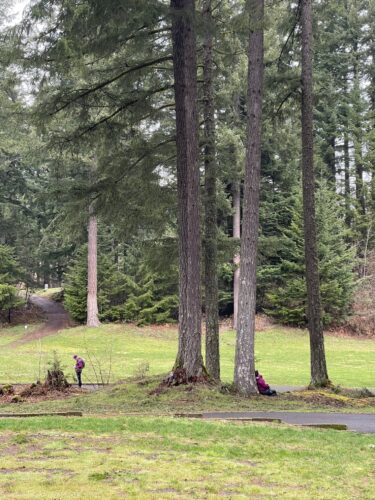 Begin your walk by modeling a slow pace and quiet mind, allowing for time to simply notice. Encourage everyone to use their senses, which might entail closing their eyes momentarily to fully be immersed in listening.
- Notice the sounds you hear. Are leaves rustling in the wind? Do you hear birds chirping? How do the sounds make you feel? Can we thank the wind and birds for their gifts of nature noises?
- Take a deep breath in and notice the smells. Can you smell pine needles? What about crisp, fresh air? Do you smell freshly cut grass? Let us thank the trees and plants for providing sweet scents and clean air for us to breathe.
- What is the weather like? Is it chilly? Is the sun shining warmly on your face, or is there a cool mist falling from the fog? Let us thank the sun for feeding the plants and the rain for bringing us water. Let us be grateful to the four seasons and variety of weather each season provides.
- Can you spot any animals or insects? Let us be grateful to the animals and insects that help pollinate the plants we eat or who bring us delight when we spot them.
Allow an opportunity for your learners to walk quietly and think about what they are grateful for and, if you have time, invite everyone to share or express that gratitude aloud.
Nature is teeming with life!
Invite your learners to point out as many living beings as they can. Together, talk about the role each plays in the web of life. Encourage learners to express their gratitude for each thing they notice, including one another.
Find a plant or tree that each person can get close to and explain how plants give us fresh oxygen, and in return, they breathe in the carbon dioxide that we are breathing out. Demonstrate that we can share our gifts with each other in a circle of reciprocity – take a moment to lean toward the plant and deeply breathe in the fresh air, then, in return, breathe out onto the plant. We can express our gratitude when we share our gifts with each other. This also allows for an opportunity to take a few deep, calming breaths in nature.
Even if you can’t go for a long walk, just spending a brief time sitting outdoors to reflect and give thanks to each other and our natural world can make a world of difference during this season, which can be stressful.
PLT Activities to Pair with a Gratitude Walk
Early Childhood
- Any and all activities from Trees & Me: Activities for Exploring Nature with Young Children
Elementary & Middle School
- Get Outside! / ¡Sal al Aire Libre! from Explore Your Environment: K-8 Activity Guide / Explora tu Ambiente: Guía de Actividades K-8
- Poet-Tree / Árbol Poeta from Explore Your Environment: K-8 Activity Guide / Explora tu Ambiente: Guía de Actividades K-8
- Web of Life / Telaraña de la Vida from Explore Your Environment: K-8 Activity Guide / Explora tu Ambiente: Guía de Actividades K-8
- Connecting for Health and Planet activity collection
High School
- Words to Live By from Focus on Forests
- Personal Places from Places We Live
Learn More
You can find additional details about Traditional Knowledge and Gratitude Walks in Appendix F of PLT’s Trees & Me: Activities for Exploring Nature with Young Children.
Thank you to Molly Gillespie, Alaska PLT State Coordinator, for contributing to this article!
The post Take a Gratitude Walk appeared first on Project Learning Tree.
]]>The post People of PLT | Getting to Know a True Force of Nature appeared first on Project Learning Tree.
]]>
Have you ever met someone who just has that “It factor”? Someone with a magnetic personality, who’s warm, friendly, fun to be around, and draws in everyone around them.
If you haven’t noticed, the Project Learning Tree network sure has a lot of shining stars from educators inspiring learners through PLT activities to amazing facilitators leading PLT professional development events. But at the heart of our network are our PLT State Coordinators. These are the rockstar individuals leading PLT within their state, sharing their passion for nature-based education and introducing young people to the environment.
This month, we’re getting to know our Oklahoma PLT State Coordinator, Tony Pascall. Tony is the Education Coordinator for Oklahoma Forestry Services where he not only juggles multiple projects, but in his spare time he’s teaching himself how to actually juggle! “I’m up to 25ish catches in a row!”
Before becoming a PLT State Coordinator three years ago, Tony taught middle school math and STEM in Title 1 schools in Detroit and Dallas for several years. After graduating with a degree in Ecology from North Carolina State, he joined Teach for America with the intention of going back to become a plant biologist.
But instead, he caught a bug—the teaching bug—and fell in love with it. “The entire time I worked to incorporate my love of nature and the outdoors into my teaching. I brought my students outdoors for math labs, and even had an outdoor adventure club, where I brought some students hiking and camping! Most of my favorite moments in my formal teaching career come from this club, where I got to watch students fall in love with – and ultimately to learn to conserve – their environment.”
It’s all about the people
PLT isn’t just professional development and environmental education resources. It’s also a community of people passionate about educating the next generation and encouraging students to think broadly and dream big. “The environmental education community is very welcoming, and I love how much everyone reaches out to help one another. I’ve been able to work with several different organizations to put on shared educator workshops and student events, and every time I meet new people and learn something new.”
And the best place to meet these awesome people? A local PLT professional development event, that’s where! Tony’s favorite thing about these events is “Meeting cool educators! I love seeing what other folks are up to, how they already incorporate nature education into their teaching, and showing off PLT’s awesome standards-aligned activities. We always generate great ideas to adapt activities for different folks, and there is an awesome spirit of collaboration at PD events.”
Tony is all about creating a welcoming space for educators and students alike. And his local community recognizes his commitment and dedication for doing so. Earlier this summer, Tony was named as the 2024 Informal Science Teacher of the Year by the Oklahoma Science Teaching Association.
 Give space for nature
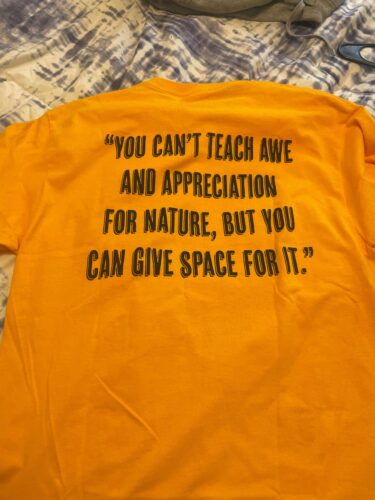
We always like to ask our People of PLT what suggestions they have for educators on how to incorporate PLT into their lessons. Tony shared some great advice at a workshop earlier this year with a group of middle school teachers. He said, “‘You can’t teach awe and appreciation for nature, but you can give space for it.’ They put it on the back of their camp t-shirts this year! I think PLT can help teachers build in more time for understanding of the world around them in their classes. My advice is to slow down and let there be time to notice.”
Start with one activity
Back in Tony’s classroom days, he loved using the outdoors as a way to get students more interested in the material he was teaching. “When I taught 7th grade math, I used to say, “You can draw a graph about anything!” I chose to teach outdoors and about our environment because my students were usually more engaged and more curious when learning about the natural world.
If you’re able to take your students outdoors safely, start small and try one lesson outside. See how things go and as you become more comfortable, increase outdoor time to once a month or once a week. “I believe everyone deserves to understand and love their place. I think that once you get kids looking closely at what is right outside their door, they quickly get curious and start asking questions and making connections.”
Teach language arts? Try the “Poet-Tree” activity from the Explore Your Environment: K-8 Activity Guide and encourage your students to get creative while writing about nature. Teach math? Collect, analyze and graph bugs you collect in the schoolyard during the “Birds and Bugs” activity from the K-8 guide. Whatever subject you’re teaching, there is a PLT activity you can do that uses nature as a learning tool.
Tony’s favorite PLT activity is “If You Were the Boss” from Explore Your Environment and Green Jobs: Exploring Forest Careers. “I love that the kids can make choices, then see how what they decided effects things like wildlife, how many trees are cut down, and how much money they will need to spend. I like giving everyone a chance to revise their choices if they didn’t like the outcomes the first time through. I think it gives kids a cool sense of agency.”
Get connected
Want to get meet other educators using PLT in your state? Interested in learning more about becoming a PLT facilitator to lead professional development events? Visit plt.org/yourstate to get connected with your local PLT Coordinator.
The post People of PLT | Getting to Know a True Force of Nature appeared first on Project Learning Tree.
]]>The post Fostering Social and Emotional Learning Through Nature Education appeared first on Project Learning Tree.
]]>But beyond those “testable” topics, most teachers and nonformal educators would also list other ways they hope their students grow.
- Are my students able to interact with their classmates in productive, positive ways?
- Do they know how to set goals, and achieve those goals?
- Do they have the ability to manage the sometimes difficult, often changing emotions that are part of growing up?
Teachers know that skills like these can be equally important—if not more so—than content knowledge when it comes to the learning outcomes of the young people in their care. These types of skills fall under the category of Social and Emotional Learning (SEL), and nature-based education can play a critical role in helping students grow in these ways.
Nature Education & SEL
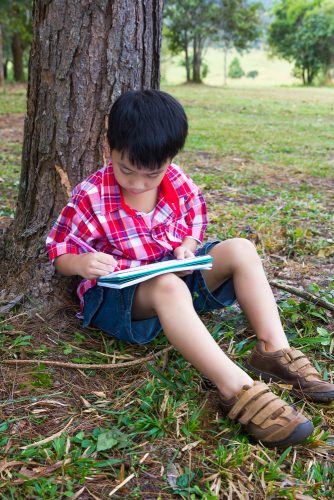
Let’s look at some examples from PLT activities to think about specific ways that nature education can contribute to K-12 students’ social and emotional learning.
Creative Connections
We’ll start with one of my favorite PLT activities, “Poet-Tree” from the Explore Your Environment: K-8 Activity Guide. In this activity, students have an opportunity to talk about a favorite wooded place and how they feel when they are there, followed by spending some time making close observations of an outdoor spot near their school, writing and sharing poetry about what they observed, and then creating a class poetry book that includes their work. In doing so, students are connecting with their emotions, expressing themselves, listening to their classmates, and contributing to something for their classroom community—all foundations of SEL—while also learning about grammar, literature, and ecosystems.
You can also practice poetic reflection with your family with PLT’s Connecting Kids to Nature activity page for Poet-Tree.
Collaboration & Communication
Now let’s consider a high school example from a lesson rooted in natural science and forestry skills— “Monitoring Forest Health” from the Green Jobs: Exploring Forest Careers guide (with a variation also found in Focus on Forests Guide). I love this lesson because students collect “real world” qualitative and quantitative data about a forest study plot. But in my opinion, the best part comes near the end, when students share their data with the class, and then discuss and debate together while they analyze the data to come to conclusions about the health of that forest.
In this process students are considering diverse opinions, practicing self-control, and resolving conflict, not to mention the cooperative work that was required to gather the data in the first place. That’s some powerful opportunity for social and emotional growth!
Check out PLT’s “Monitoring Forest Health” activity for yourself!
Practice Incorporating SEL
 I could go on to give more examples of how PLT and nature education support SEL in students, but instead I am going to challenge you to explore on your own.
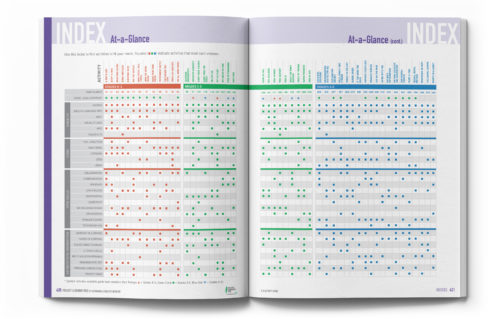
Flip through your favorite PLT guide or other nature-based curriculum and look for places where students are working together, expressing themselves, reflecting on how nature makes them feel, or thinking about what it takes to make responsible decisions. Check out the “At-a-Glance” index on pages 420-421 of the Explore Your Environment: K-8 Activity Guide. Under STEM Skills you can find key skills connected to SEL (i.e., collaboration, communication, creativity)! And then keep those activities in mind as tools for helping grow well-rounded students that become responsible and successful adults.
We’d love to hear about your favorite PLT activities you’ve used for social and emotional learning! Share them with us on social media, tagging @ProjectLearningTree on Facebook and Instagram.
The post Fostering Social and Emotional Learning Through Nature Education appeared first on Project Learning Tree.
]]>The post Berry Song appeared first on Project Learning Tree.
]]>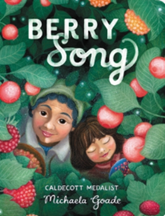 Berry Song
Grades: PreK-3
Written and Illustrated by: Michaela Goade
Published by: Little, Brown and Company, 2022
ISBN-13: 978-0-316-49417-5
Recommended Reading
In her beautifully illustrated book, Berry Song, author and illustrator Michaela Goade celebrates the gifts of the forest with wisdom, gratitude, and kinship with the land. In Berry Song, a young girl and her grandmother go to the forest in search of tléikw (berries), just as their Tlingit ancestors have always done. As they pick berries, they sing to the land, to the berries, and to their ancestors, offering gratitude for the gifts of the forest.
Nature nurtures us
While foraging, the grandmother shares wisdom with her young granddaughter, teaching her to listen to the forest because we are a part of the land, and the land is a part of us. Berry Song’s delightful illustrations will take you deep into the magical coastal rainforest of Goade’s ancestral lands, while its joyful prose celebrates Indigenous values of treating the land and its beings with great reverence and gratitude.
Celebrating Indigenous Peoples’ relationship with the land
Readers from all cultures can learn valuable lessons from Goade’s “note from the author” at the end of the book, which celebrates and shares Indigenous Peoples’ reciprocal relationship with the forest and land. Goade thoughtfully explains:
“I layered in different themes – the importance of traditional food gathering activities, the passing on of ancestral knowledge and values, the cycle of life, our intertwining relationship to each other and to the land rooted in respect, reciprocity, and balance. In the end, I wanted to communicate love and gratitude for the land that raised me while inviting readers to nurture their own relationship to the land.”
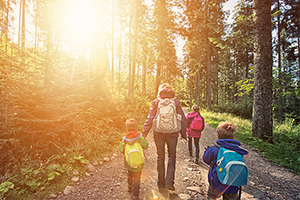
Gratitude Walk
Take children on a walk through a forest or community park with trees and consider all the different parts of the forest that we can be grateful for. Encourage children to express their gratitude aloud.
See Appendix F “Traditional Knowledge and Gratitude Walk” in Trees and Me: Activities for Exploring Nature with Young Children for more.
PLT Activities
Consider using this book to highlight the gifts from the forest and the relationships between the forest and all beings. We’ve listed activities taken from various PLT products that Berry Song can help enhance.
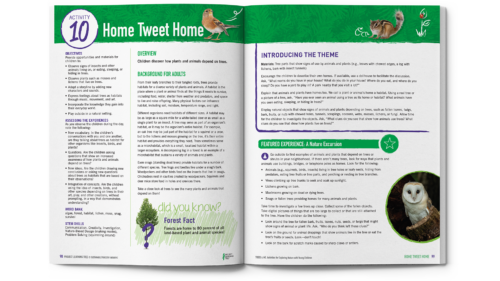
Ages 1-6
Use this book with the following activities from PLT’s Trees & Me: Activities for Exploring Nature with Young Children:
- Follow Your Nose
- My Tree and Me
- Home Tweet Home
Grades K-5
Use this book with the following activities from PLT’s flagship curriculum Explore Your Environment: K-8 Activity Guide:
| Grades K-2 | Grades 3-5 |
|
|
Families
Try a few of our free and simplified family activities, perfect for families!
The post Berry Song appeared first on Project Learning Tree.
]]>The post Show Love for Nature With Eco-Friendly Recycled Valentine’s Crafts appeared first on Project Learning Tree.
]]>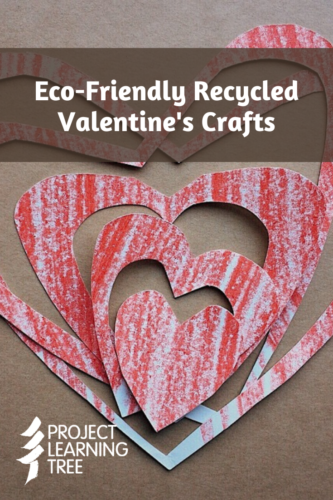 Valentine’s Day can be more than cards and candy! The holiday of love can be a great time to teach students to foster their love for the planet too. Let your loved ones know how much you care about them with Valentine’s craft made with recycled materials.
We’re sharing ideas for crafts that are eco-friendly, sustainable, and still fun for kids. We’ll include traditional fare like heart-shaped crafts and cards for arts activities they can bring home.
Heart-Shaped Decorations
Classic heart-shaped decor is a must around Valentine’s Day. These activities use materials like newspaper, old magazines, cereal boxes, and strings of leftover fabrics to create lovely garlands, ornaments, and hanging decorations to add a little whimsy to the holiday.
The top arts craft in this list is made even better with magazines featuring fun images of wildlife, flowers, and other nature scenes. It’s a great way to incorporate lessons about other themes they may be learning about across their curriculums.
Heart Wreaths
Wreathmaking doesn’t have to stop after the winter holidays are done. These heart-shaped wreaths are all made out of recycled materials like scrap paper, twine, fabric pieces, toilet paper rolls, even old sets of playing cards that may have a few suits missing out of the deck. Choose the activities that include materials you know you can easily get your hands on, or task students with bringing leftover materials to the classroom.
The first link in the list is a roundup of four unique crafts that includes a heart-shaped hanging birdseed wreath to allow students to show their love for wildlife in their neighborhood. Students will need adult supervision for the boiling water involved, but it otherwise comes together with items that are readily available in most kitchens.
Heart-Themed Crafts
There’s no shortage of heart-themed activities for teachers who want to celebrate Valentine’s Day in the classroom. These activities embrace the most popular symbol of the holiday — hearts! — with collages, cutouts, stamped cards, and sensory-based play that are interactive for all students.
The first craft may be fun with an older group of students, as it uses the ancient Japanese art of origami to fold paper into hearts and give as gifts. Any recycled paper will do, but a sturdier variety may be easier to work with for beginners who may need to fold and then refold their attempts. It’s truly one of the most adaptable activities out there.
Valentine Card Holders
These activities repurpose items like milk jugs, empty tissue boxes, paper bags, and shampoo bottles into colorful receptacles for students’ cards and treats.
The top activity turns old cardboard and cereal boxes into mailboxes for Valentine’s cards, complete with a little flag to announce mail. Adjust these activities as needed based on the adult support in your classroom and how hands-on you’d like to be as students decorate their crafts.
Valentine’s Cards
Little ones love exchanging cards on Valentine’s Day, but they don’t have to be store bought. Help them create beautiful cards that speak to their personalities and use up old fabric, paper, and tissue scraps from old art projects. The top craft uses scraps of holiday gift wrap to create Valentine flowers on paper. It’s a great way to help families use up wrapping paper scraps that are too small for the next round of presents. If you have extra time, try the Make Your Own Paper activity from Explore Your Environment: K-8 Activity Guide. It’ll make your cards even more special!
Roses are red, violets are blue…nothing says love like a sweet poem. With older kids, encourage them to be creative with our Poet-Tree activity from the Explore Your Environment: K-8 Activity Guide.
DIY Seed Bombs
Show Mother Nature some love with these DIY seed bombs that serve the dual purpose of keeping hands busy and growing something beautiful once they’re planted, or “bombed.” Seed bombs are more than a craft. They’re essentially seed pods that include completely compostable materials that can be planted into the ground to allow something to grow where it’s placed. They’re very much on trend with environmental movements and easy to create with recyclable materials on hand; just make sure you’re selecting seeds that are native to your area! In the case of these crafts, they’re heart-shaped for Valentine’s Day, too!
Love Bugs
These cute crafts are a great replacement for sugary sweets on Valentine’s Day. Create “love bugs” out of recycled corks or toilet paper rolls that show off your students’ creativity. The top activity goes a step further and turns those love bugs into a fruit cup, complete with googly eyes on top of all of that jiggling. You’ll keep the mess factor down by keeping the fruit cups safe in their packaging as students decorate the outside.
Recycled Fabric Gifts
Help students get creative with their Valentine’s gift-giving, or prep gifts of your own to give your class as a special treat. These crafts use recycled fabrics for beautiful (and sweet-swelling!) lavender bags, denim gift bags, and warming accessories for students.
We’ve already included the top pin in this list thanks to its idea for a heart-shaped birdfeeder. If you kept reading, you may have been inspired by the DIY Valentine’s Day shirts just below. Show students that you don’t need to go shopping every time a holiday rolls around. Have each bring in an old shirt or sweater and help them attach a red felt heart with a needle and thread or a simple safety pin for the perfect new top.
Recycled Gifts
Upgrade readily available materials like egg cartons, cardboard, and bits and pieces of old crayons to create fast and easy Valentine’s gifts that are much cuter than the treats in the dollar bin. The top craft repurposes old maps or atlases to create a bouquet of roses that would rival any live bunch of flowers. This project does require quite a few fine motor skills between the cutting and folding, so it likely works best with an older group.
All of these crafts are easily adjustable based on the learning needs of your students, and could even turn into small group activities if you’re short on supplies. The point is simple: Guide your students in celebrating Valentine’s Day as a day where they can give a little back to their communities and their natural environments.
The post Show Love for Nature With Eco-Friendly Recycled Valentine’s Crafts appeared first on Project Learning Tree.
]]>The post Hands-on Activities & Advice for New Environmental Educators appeared first on Project Learning Tree.
]]>Not only does PLT provide easy-to-teach, hands-on activities suitable for a variety of settings—PLT also offers a range of resources to support and mentor new environmental educators.
January is National Mentoring Month, a time to recognize the importance of mentoring and the impact it can have. For new educators, drawing on others’ wisdom and experience helps lead to more successful and rewarding teaching. PLT’s cadre of State Coordinators serve as mentors to educators in their state by providing ideas and tips for incorporating environmental education and outdoor learning into their teaching.

Getting Started
A good place to start is with one of PLT’s fun, flexible, student-centered activities that invite students to explore the world around them. With step-by-step directions, background information, academic standards, and student pages, PLT activity guides can save you time—and make teaching easier.
Get started with a list of sample activities from PLT’s Trees & Me: Activities for Exploring Nature with Young Children, Explore Your Environment: K-8 Activity Guide, and more.
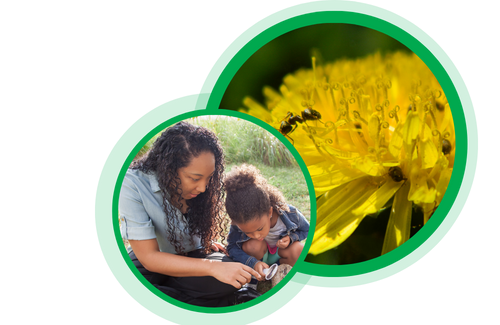
In addition to a whole suite of activity guides, PLT has a highly engaged and geographically diverse network of educators with an enormous collective wealth of knowledge and expertise that can provide support and encouragement on your teaching journey. This network allows you to connect with others in your area to ask questions and share resources, providing informal mentoring to new educators.
PLT also offers in-person and online trainings to help strengthen teaching skills and enhance student learning. Educators often rate PLT trainings as the best professional development experiences.

For information about these and other PLT resources and events, your State Coordinators are always happy to answer your questions and to help you connect to mentor teachers in your area.
 PLT Activities for New Environmental Educators
All PLT activities are tested and proven effective. The following work well with many learners and settings – and practically teach themselves!
For Grades K-2:
Use these activities from PLT’s Explore Your Environment: K-8 Activity Guide to get started teaching students:
- Have Seeds, Will Travel – Students learn about plant reproduction and seed dispersal by observing, collecting, and classifying seeds. This STEM activity can be done either inside or outside the classroom. See Explore Your Environment for details.
- The Closer You Look – In this art-based activity, students draw a tree from memory and compare it to their observations of a real tree, helping them to identify characteristics of tree parts.
- Trees as Habitats – Students make “telescopes” out of paper tubes to help them observe a tree, and then play a game of Bingo to look for signs of plants and animals living in or around it.
Use these activities from PLT’s Trees & Me: Activities for Exploring Nature with Young Children to get started teaching young children ages 1-6:
- The Shape of Things — Children search for the shapes and colors that define both our natural and built environments.
- Sounds Around — Children explore the sounds of nature and imitate them using their voices and instruments that they make together.
- Home Tweet Home — Children discover how plants and animals depend on trees.
For Grades 3-5
Use these activities from PLT’s Explore Your Environment: K-8 Activity Guide to get started teaching students:
- Discover Diversity – Students imagine they are visitors from outer space, viewing life on Earth for the first time. They describe all the living things they find in a small outdoor plot and become more aware of the abundance and diversity of life.
- Poet-Tree – After observing nearby trees, students create and share poetry to express their thoughts, feelings, and beliefs about trees and forests.
- Web of Life – Students research forest plants and animals to learn what they eat and what eats them, and then use a ball of yarn to model a food web and show how the species are connected.
For Grades 6-8
Use these activities from PLT’s Explore Your Environment: K-8 Activity Guide to get started teaching students:
- Field, Forest, and Stream – Students conduct a field study of three different ecosystems to learn about their similarities and differences.
- Nature’s Skyscrapers – In this math-based activity, students measure a tree’s height, girth, and crown spread, and compare their findings to the largest known living tree in the world.
For Secondary and Post-Secondary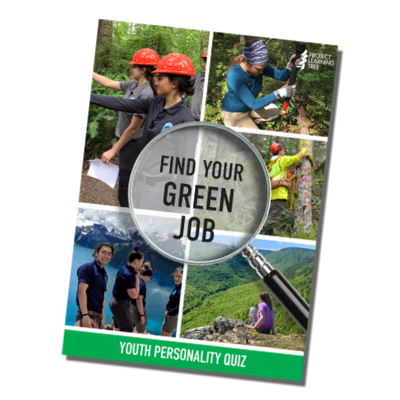
- Who Works In this Forest? – Students are introduced to different forest sector careers and research to learn what it takes to perform these jobs. Explore PLT’s Green Jobs: Exploring Forest Careers guide to learn more.
- Monitoring Forest Health – Students conduct a forest health checkup of a local forest area to learn about the ecological services forests provide. While seven forest health indicators are provided, you may focus on just one to start. Explore PLT’s Green Jobs: Exploring Forest Careers guide to learn more.
- PLT Green Jobs Quiz – Students can take a quiz to learn about their personality and some green job opportunities that might suit them best. Take PLT’s Green Jobs Quiz.
- PLT’s Forest Literacy Framework – PLT’s Forest Literacy Framework translates the language of forests and sustainable forest management into concepts for everyone at any age. The framework offers 100 forest concepts for grades K-12, organized into four themes.
Advice for Bringing Classes Outdoors
Exploring the outdoors is invaluable for learners as it expands understanding and deepens connections to the natural world. Time outside strengthens not only academic learning, but also promotes mental, social, and physical health.
That said, many new environmental educators are daunted by the idea of taking students outside to learn. Here are some tips from Lena Ives, PLT Maine Coordinator, and Michelle Youngquist, PLT Idaho Coordinator:
- Think of the outdoors as simply an extension of indoor teaching spaces.
- Your biggest goal should be a positive experience.
- Start small.
- Practice skills with students inside before doing them outdoors.
- Don’t be afraid to adapt the lesson as go.
- Remember that you don’t have to know all the answers.
- Tap into local resources: get a fellow teacher or resource professional to help with your first excursions.
- Enlist students to help with class management (helping identify boundaries, manage equipment and timing, report questions to the teacher, and so on).
- Take along a tote with cut-up pieces of old yoga mats or camping pads to sit or kneel on when the ground is wet, cold, or pokey.
Mentoring the Next Generation
Mentoring creates opportunities to share tips and resources, transfer skills, and boost the confidence of mentees and mentors alike! Mentorship enables educators and forestry professionals to be more engaged and more effective.
PLT is committed to supporting and mentoring the next generation of environmental educators and forestry professionals through free programs and green career pathway resources, including:
- Green Jobs Quiz – Students discover green jobs best suited to their personality through this online quiz. Sign up for a free trial at PLT.org/GreenJobsQuiz.
- Green Jobs: Exploring Forest Careers –This guide is the perfect tool to help young people ages 12-25 learn about green jobs in forestry and natural resource management. It can be used in a range of settings, from community youth programs and school classrooms to college and career prep. Explore forest careers.
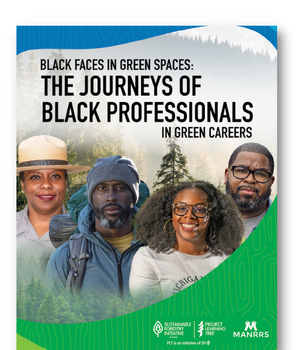
- The Journeys of Black Professionals in Green Jobs – A recent U.S. Census Survey indicates that less than 3% of foresters and conservation scientists identify as African American. This new guide can help young Black Americans discover opportunities for rewarding careers in forestry and conservation. Learn more at plt.org/journeys.
- PLT Green Mentor Program –This program connects young people ages 18-30 with forest professionals across Canada and the United States to build their forest and conservation knowledge and career goals—and gain new perspectives. Learn more at plt.org/mentorship.
The post Hands-on Activities & Advice for New Environmental Educators appeared first on Project Learning Tree.
]]>The post Winter Break Family Outdoor Advent-ure Calendar appeared first on Project Learning Tree.
]]>If you live in polar and temperate zones, before venturing outdoors, monitor weather conditions and ensure children dress appropriately before heading out.
1. Play I Spy
Get outside and use your nature-spotting eyes! Play a game of I Spy with your kiddos, encourage them to look for the big and little parts of nature, and then ask questions about what they’ve spied. “I spy something green” could turn into a conversation about the type of tree your child sees. Unsure what type of tree it is? Check out our Name That Tree activity and download a free mobile app to make identifying trees fun and easy.
2. Take a Walk
Yep, it’s that easy! If everyone’s getting a little antsy being cooped up inside, grab jackets and sweaters, put on comfy shoes, and head out for a family walk. Whether you go for a loop around the neighborhood or a two-mile nature hike, getting outside has its health benefits – both mental and physical. It lets you release whatever energy is built up, plus you enjoy the beauty of nature and get some fresh air and vitamin D.
3. Urban Birdwatching
Just look up! Birds are everywhere around us. Urban birdwatching is an easy activity to open kids’ eyes to the natural environment around them and how incredible birds are at making homes wherever they land.
4. Make Nature-Based Gifts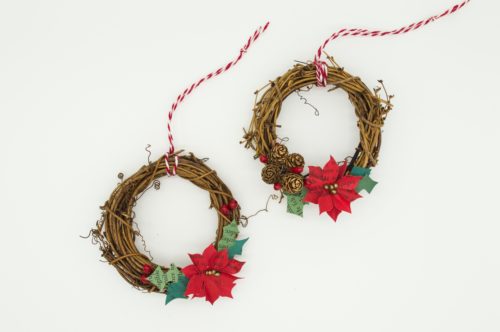
The best gifts are those that come from the heart. Encourage your kids to make gifts for family and friends by using materials they can find in nature or by reusing materials from something else. Create a cool art piece using recycled cardboard and glue on leaves or rocks you find on your walk. Draw or take a picture of whatever you see around you and frame it for a family member. Be creative and get inspired by nature (and our Pinterest page that’s full of fun arts and craft activities)!
5. Visit a Park
Make a plan to get outside and play in nature! Maybe it’s spending the afternoon at a neighborhood park, or if you live close to a regional, state, or national park, these are beautiful locations that can truly take your breath away. Be sure to check out the visitor center where you can chat with park rangers, learn more about trees, plants, animals and geology, and access maps for hiking trails. Don’t live close to a park? Check out local nature preserves, outdoor museums, or botanical gardens.
6. Enjoy Nature’s Symphony
Have you ever noticed how the stillness of winter amplifies the sounds around you? Step out into your backyard, have everyone close their eyes, and just listen. What do you hear? Are there birds chirping? Can you hear the sound of leaves rustling in the breeze? What does the snow crunching beneath your feet sound like? Check out our Sounds Around activity.
7. Park/River/Beach Clean-Up
Don’t be a litterbug…be a clean-up bug! A great way to teach your kids about the importance of caring for our planet is to pick up litter. There are lots of benefits, including that it helps to improve water quality and critters don’t mistake trash for food. All you need are some gloves to keep your hands clean and a trash bag. Start small – clean up litter in your neighborhood or favorite park. If you live near water, help clear trash from the beach. If there’s an organized event happening near you, that’s another great way to get involved and meet others in your community!
8. Adopt a Tree
Find a tree in your yard, neighborhood or a nearby park that intrigues your family. Invite your kids to “adopt” their favorite tree and use their senses of sight, touch, hearing, and smell to describe the tree. Check out our free family activity and download the Adopt a Tree Journal so your family can revisit this tree throughout the seasons.
9. Start a Nature Collection
One of the things my own kiddos love to do is collect items from nature when we’re out hiking or walking on the many trails in our town. From finding a tiny pebble and an acorn to leaves that have fallen off trees and bird feathers found on the ground, this is a fun way for kids to learn about different types of trees, plants, rocks, and animals. Be mindful of where you’re taking items from – check with rules and regulations for where you visit.
10. Make the Most of Winter Weather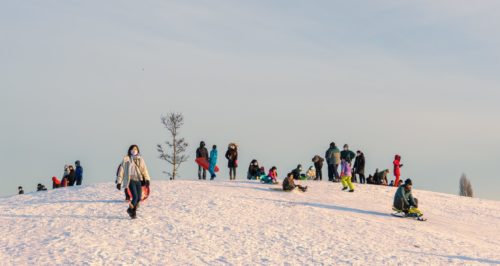
If you live somewhere it snows, take advantage of playing in the snow! From skiing, snowshoeing, sledding, and ice-skating to building a snowman or snow castle, get outside to enjoy the wonders of winter weather. Rain in the forecast? Have everyone put on raincoats and shoes, and channel your inner child by jumping in puddles or digging in the mud and dirt! It’s ok to get dirty; in fact, it’s a great way for kids to learn about nature. There are all sorts of stories that soil can tell us!
11. Have a Picnic
Who says picnics are only for spring and summer? If there’s some good weather in your winter break forecast, pack a snack or meal (and weather appropriate clothing!) and head outdoors with your family. Use this opportunity to enjoy some bird watching or talk with children about what they see and hear around them, whether you’re in your backyard or at a park.
12. Follow the Animal Tracks
If it’s recently snowed or rained, take a walk and see if you can find animal tracks. Put on your detective hat and look for clues. Is it a deer, squirrel, or bird? Is there scat nearby? A feather? Some fur? Was the animal heading to a creek to drink water or to a tree to scratch its back? Whatever the wild animal, always use caution and leave plenty of space if you come upon one! Remember, we’re visitors in their home.
13. Star Gaze
Bundle up and head outside on a clear night to gaze up at the skies. It’s a great way to introduce children to astronomy, plus looking at stars sparkling in the night sky helps us realize just how small we are in comparison to our planet. It’s pretty awe-inspiring!
14. Nature Journaling
On your next outdoor adventure, encourage everyone to grab a piece of paper or journal and a pencil. Our activity, The Closer You Look, helps children understand the structure of a tree through observation and art. Nature journaling is a fun, creative outlet for kids and adults – and you don’t have to be the next Claude Monet! Maybe you prefer writing poet-tree and your child loves drawing. There are no rules when it comes to creating a nature journal, other than find what inspires you and let your pencil do the rest!
Looking for more ways to explore nature with your family or great gifts to give this holiday season?
Check out Trees & Me: Activities for Exploring Nature with Young Children, Pocket Guide: Seeds to Trees, and Nature Activities for Families. You can find these books and more on the PLT Shop!
The post Winter Break Family Outdoor Advent-ure Calendar appeared first on Project Learning Tree.
]]>The post PLT’s Newest Activity Collection: Connecting for Health and Planet appeared first on Project Learning Tree.
]]>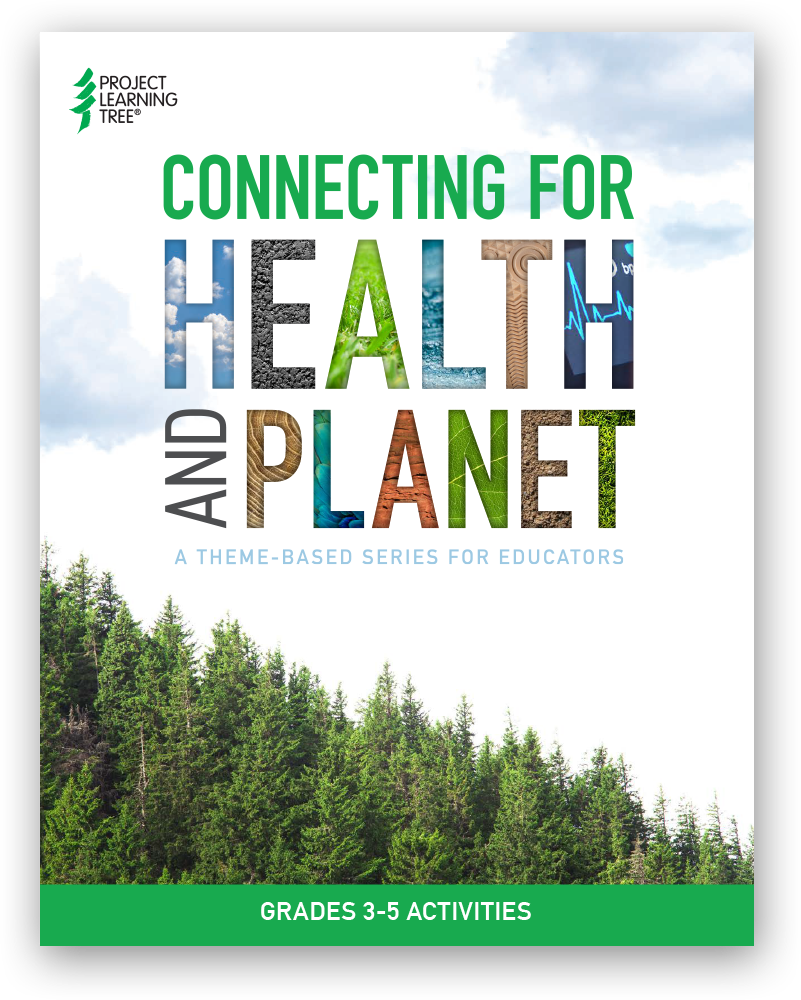 Project Learning Tree recently launched a new theme-based activity collection!
The Connecting for Health and Planet Activity Collection is our latest release featuring three PLT activities for educators of students ages 8-11 and grades 3-5. And if you work with older students, the activities also contains age-appropriate adaptations for educators working with grades 6-8.
Designed to be flexible, the activities can be used as stand-alone lessons, or all together as a cohesive unit of instruction using a storyline technique.

Connecting for Heath and Planet: Grades 3-5 Activities
The three downloadable activities were developed with support from Nice-Pak and invite students to investigate how being outside—and among trees, specifically—provides people with many different physical, emotional, social, and learning benefits:
-
- Get Outside!: Students investigate the physical and emotional benefits of working or playing outside.
- Poet-Tree: Students explore the benefits of being outside as they make observations of how trees make them feel. This activity also incorporates traditional knowledge with a gratitude walk.
- Helping Hands: Students plan and carry out a project to improve a shared, local outdoor space.
How do trees connect with human and environmental health?
A growing body of research confirms that children are healthier, happier, more creative, and have better knowledge retention when they consistently play and learn outdoors. Some benefits of time outdoors for youth include:
- Increased attentiveness and better recollection of information, even after they go back inside.
- Improved performance on tests and other external measures of knowledge gains.
- Greater feelings of competence and motivation to learn.
- Elevated mood and better ability to regulate emotions.
- Decreased stress and anxiety.
- More physical activity and improved physical health.
- Improved balance, coordination, and problem-solving skills through less structured play.
- More frequent and more effective conflict management, communication, and peer cooperation.
While much of the research focuses on children, there is also evidence that being outdoors is good for adults as well. Plus, an additional benefit of spending time outdoors is an increased investment in these places and spaces by the people who experience them.
Learning Progressions
Storylines provide connectedness and continuity to individual activities and can serve as the instructional glue that holds areas of knowledge and skills together. The activities in Connecting for Health and Planet may be linked together into a unit of instruction using a storyline technique, such as the one that follows.
Guiding Question: How does being outside benefit people?
Storyline: Being outside and among trees provides people with many different physical, emotional, social, and learning benefits.
The sequence of individual activities supports this storyline:
1. Get Outside!
Investigate the physical and emotional benefits of working or playing outside; encourage students to design and plan the investigation and analyze their results.
2. Poet-Tree
Explore the benefits of being outside and make observations about how trees make us feel. Invite students to gather “tree impressions” and to use these impressions to write poems centered around trees.
3. Helping Hands
Challenge students to describe the feelings a local area evokes and what they wish were different about it. Plan and carry out a model project to improve the site, and reflect on the environmental, community, and personal benefits of the project.
New Features Within Each Activity
In addition to the typical elements that educators have come to rely on from PLT, the following new features in our theme-based series will further help educators adapt the activities for specific groups and settings.
Academic Standards
Classroom educators and nonformal educators alike need to ensure that instruction helps diverse learners meet rigorous academic benchmarks. Each PLT activity displays explicit connections to practices and concepts mandated by the following national academic standards. Here’s an example from the first activity in the collection, Get Outside!:
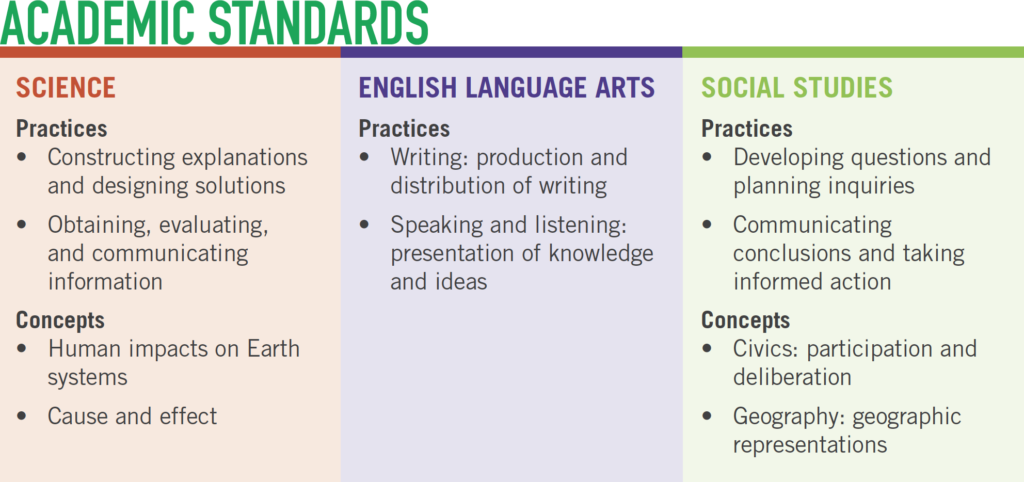
Take It Outside!
Describes how to extend student learning into the outdoors.

Differentiated Instruction Strategies
-
-
- Cooperative Learning
- Literacy Skills
- ELA Skills
- Hands-On Learning
- Higher-Order Thinking
- Multiple Solution Pathways
- Nonlinguistic Representations
- Personal Connections
- Student Voice
-
Did You Know?
Forest Facts present interesting insights into forests as global solutions for environmental, economic, and social sustainability.

Career Corner
Introduces youth to forest-related careers.
Purchase Connecting for Health and Planet now from PLT’s Shop for $5.95
Like what you see? Check out our other low-cost, downloadable activity collections:
- Sensational Trees for grades K-2
- Biodiversity Blitz for grades 3-5
- Trillions of Trees for grades 3-5
- Nature of Fire for grades 6-8
- Discover Your Urban Forest for grades 6-8
This collection is supported by Nice-Pak.
The post PLT’s Newest Activity Collection: Connecting for Health and Planet appeared first on Project Learning Tree.
]]>The post Fatima’s Great Outdoors appeared first on Project Learning Tree.
]]>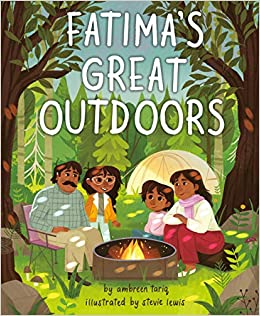 Fatima’s Great Outdoors
Grades 3-5
Written by: Ambreen Tariq
Illustrated by: Stevie Lewis
Published by: Kokila, an imprint of Penguin Random House, 2021
ISBN-13: 978-1984816955
Recommended Reading
Do you remember your first ever camping trip? Are you still planning it? Fatima’s Great Outdoors follows the story of Fatima and the Khazi family, comprised of a father, mother, and an older sister in their first tent camping trip together. This story underscores the many ways in which the natural world offers a loving home to us all.
This endearing book for young readers also offers an introduction to the experiences of immigrants in the United States. Venturing into camping for Fatima and her family is a step into the unknown, just like immigrating to another country can be as well. Throughout the 40 vibrant and colorful pages, readers find themselves rooting for the little girl and her adventurous family.
Readers of all ages will enjoy this story as they remember memories of trips taken with their own kin.
Use Fatima’s Great Outdoors to:
Explore Cultures
The Khazi family introduces readers to some diverse cultural perspectives. Enjoy learning about them through Fatima’s eyes. For example, readers get insight into:
- Living in India – These experiences are conveyed by juxtaposing the parents’ upbringings with the confidence Fatima builds through camping.
Readers see depictions of Mama’s rural hometown and are introduced to the music of Rafi, a famous singer in India.
- Practicing Islam – Though the text does not explicitly name the family as Muslim, naming conventions and cooking practices offer clues that support this religious background. Try to discern what and how these practices connect to the beliefs of the nearly 2 billion practicing Muslim people worldwide.
- Speaking Urdu – The Khazi family speaks Urdu, a language that is related to Hindi. Readers are introduced to Urdu words that are not defined in the text or with a glossary. This prompts readers to rely on context clues to discern meanings.
Terms include Nani (maternal grandmother), Apa (older sister), shabash (word of encouragement), roti (bread), shami kebabs (pan-fried beef patties), samosas (savory fried pastry), aanda (fried egg), and ghee (clarified butter).
- Growing up Brown – In addition to authoring Fatima’s Great Outdoors, Ambreen Tariq is the founder of the social media initiative @BrownPeopleCamping. The last page spread of her book illustrates a group of campers with a sign carrying the same name. The Brown People Camping initiative seeks to use storytelling to promote diversity in the outdoors.
Learn About America’s Parks
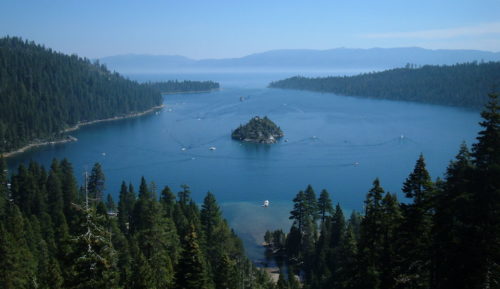
While not explicitly named in the text, Fatima and her family visit Emerald Bay State Park. Emerald Bay is located in the state of California, inside Lake Tahoe, near the Nevada-California border. While National Parks are America’s largest and most renowned, the park system operates other entities under a variety of names, including state parks, national and state forests, national grasslands, landmarks, monuments, historic sites, scenic rivers, fish hatcheries, wildlife areas, and more. Use the findyourpark.com website to search by state and discover a park near you.
Create Storyboards
A four-paneled, comic-style spread is used at the beginning and end of Fatima’s Great Outdoors to reflect Fatima’s feelings of distress at school, as well as feelings of freedom, happiness, and belonging that she finds in nature. Fold a single sheet of paper into four quadrants and use your own experiences and creativity to depict an event or series of emotions in a four-paneled storyboard spread of your very own. If you like this exercise, explore more fun you can have with storytelling using a storyboard approach.

Meet the Author
The Outdoors Alliance for Kids (OAK) is a national strategic partnership of businesses and organizations with a common interest in connecting kids and families with the outdoors. In celebration of Earth Month this year, OAK hosted Ambreen Tariq for a FacebookLIVE event that featured a read-aloud of Fatima’s Great Outdoors, followed by a question-and-answer session. Check out the entire 60-minute installment on Facebook, or fast forward to the read-aloud near timestamp 4:30.
Plan a Camping Adventure
In the United States, the National Parks Service offers helpful resources on “How to Camp.” Visit their website to review what to bring, what to do once you get there, visitor etiquette, and safety concerns, among lots of other great information. In Canada, a program called Learn to Camp is offered by Parks Canada. Learn to Camp presents at libraries and other organizations to instruct potential campers on how to plan, organize, and do everything related to camping.
Consider using this book with the following activities from PLT’s Explore Your Environment: K-8 Activity Guide to explore the benefits of outdoor recreation and storytelling:
- Get Outside!
- My Green Future
- Poet-Tree
- Trees for Many Reasons
- Our Federal Forests
The post Fatima’s Great Outdoors appeared first on Project Learning Tree.
]]>