The post Five Hands-on Activities to Celebrate National Bird Day appeared first on Project Learning Tree.
]]>1. Together for Birds
In PLT’s activity collection, Together for Birds, learners in grades K-5 investigate how birds and other living beings depend on their habitats to survive. From exploring the environment where birds live to channeling creativity and inspiration through poetry, these activities will spark curiosity and instill an appreciation for the natural world.
2. View Birds in Real Life

There’s no better way to learn about birds than to head outdoors and view them in real life! Bring binoculars and head into nature to spot birds in action. Don’t have binoculars? Have some fun making your own out of recycled materials (see “The Shape of Things” activity in PLT’s Trees & Me: Activities for Exploring Nature with Young Children).
Too chilly to head outside? Check out Cornell Lab’s Bird Cams, where you can watch live cams from all over the world. You can also download the Merlin Bird ID app from Cornell Lab to record birdsongs and upload photos that help identify the birds you’re hearing and seeing!
Here are some additional tips to get started with urban birdwatching!
3. Build Like a Bird
Birds are quite the engineers when it comes to building their nests! Go full S.T.E.A.M. ahead and encourage little learners to engineer the perfect bird nest using items you can find outside (and inside). Check out the “Tree Textures” activity in PLT’s Trees & Me guide for a how-to on making a nest. Take it one step further and make a yummy edible nest as a special treat – you can find the recipe in the “Home Tweet Home” activity from Trees & Me!
4. Play Bird Bingo
Print out these fun bingo cards and get ready to put your bird spotting eyes on!

5. Participate in the Great Backyard Bird Count
Every February, people around the world count birds in their neighborhoods to help scientists better understand and protect birds. Learn more about this annual event and how you can get involved.
More Ways to Learn
Check out these children’s books about birds from our Recommended Reading list:
Watch this webinar by American Bird Conservancy, Project Learning Tree, and North American Association for Environmental Education to learn how to begin environmental investigations using birds to hone the practices of observation, discovery, and reflection.
Looking for more hands-on activities to bring nature into the classroom or take learning outdoors? Find inspiration at www.plt.org.
The post Five Hands-on Activities to Celebrate National Bird Day appeared first on Project Learning Tree.
]]>The post See You at the 2026 Green Schools Conference! appeared first on Project Learning Tree.
]]>
Educators and students are shaping the future of education and green schools to build a more sustainable world. The Green Schools Conference, organized by the U.S. Green Building Council, is at the heart of this movement. It brings together educators, advocates, and professionals from across the country to advance green schools and sustainability in education.
This energizing two-day event will explore bold, practical solutions to advance green schools, focusing on environmental impact, health and well-being, sustainability literacy, and systemic change at every level of education.
With inspiring keynotes, expert-led sessions, hands-on workshops, and powerful networking
opportunities, GSC equips attendees with the tools, strategies, and community support needed
to lead the charge for healthier, more sustainable learning environments.
Explore Key Conference Themes:
- Environmental Impact: Strategies to conserve resources, reduce emissions, and restore ecosystems
- Health and Well-Being: Creating learning spaces that support the physical and
emotional health of students and staff - Environmental and Sustainability Literacy: Integrating systems thinking and placebased
learning across curricula - Whole School/District Sustainability: Embedding sustainability across culture,
operations, and education for long-term change
Coming together from across the country
The Green Schools Conference is the only national event that brings together people who lead, operate, build, and teach in U.S. green schools. That’s a big reason why I’m thrilled to represent Project Learning Tree and the Sustainable Forestry Initiative at the conference. I’m looking forward to connecting with people to learn from them and share PLT resources like our Green Schools Program, Forest Literacy Framework, and the K-8 Activity Guide.
Supporting Green Schools Nurtures the Next Generation
For me, supporting the green schools movement isn’t just about the physical infrastructure of a school—it’s also about nurturing the values of the next generation. By promoting green building practices, we can ensure that students are learning in spaces that not only inspire but also serve to protect the natural world.
Join me at the Green Schools Conference
Register for the Green Schools Conference today! A variety of registration packages are available, with special rates for employees of PreK–12 schools and districts, as well as government and non‑profit employees. I can’t wait to meet and talk more about how sustainably managed forests can benefit communities and kids!
The post See You at the 2026 Green Schools Conference! appeared first on Project Learning Tree.
]]>The post Fall in Love with Nature-Based Education appeared first on Project Learning Tree.
]]>PLT Fall Faves
The fall is a wonderful time of year to introduce learners to seasonal changes, especially with leaves changing color and falling from trees, while fulfilling academic and learning standards. Check out some of our favorite fall PLT activities.

Fall for Trees (Ages 3-6)
In this multi-sensory activity from Trees & Me: Activities for Exploring Nature with Young Children, little learners go on an outdoor adventure looking for signs of autumn. From collecting fallen leaves and nuts for art and math projects to pretending to be dancing leaves and making pressed leaves, there are so many ways for children to learn about the changes that happen in nature each fall.

Have Seeds, Will Travel / Ten Semillas, Viajarán (grades K-2, with variations for grades 3-5)
Autumn is the perfect time of the year to collect seeds, which means it’s a great time for this activity from Explore Your Environment: K-8 Activity Guide / Explora tu Ambiente: Guía de Actividades K-8. Head outside with learners to gather seeds—from acorns to pinecones and even those pesky ones that stick to your clothes like burdock! Together, students will examine the seeds they find, classify them, and discuss how the seeds are dispersed by things like wind, animals, and falling from trees.

Signs of Fall / Señales de Otoño (grades 3-5, with variations for grades 6-8)
In this activity from Explore Your Environment: K-8 Activity Guide / Explora tu Ambiente: Guía de Actividades K-8, learners get outside to observe the signs of autumn. They’ll collect a variety of leaves from evergreen and deciduous trees and conduct an experiment to help them investigate how and why leaves change color. The best part of the experiment? (Spoiler alert) Actually seeing the leaves’ colors separate out between chlorophyll and carotenoid pigments.

Start Composting
If you have a garden at your school or center, fall is an excellent time to start composting because there will be plenty of leaves to add to your compost pile.
Teach young people about the benefits of composting and waste reduction with some of these activities from Explore Your Environment / Explora tu Ambiente—Reduce, Reuse, Recycle / Reduce, Reutiliza, Recicla and Improve Your Place / Mejora tu Lugar and GreenSchools Investigations – Waste & Recycling Investigation. Creating a compost pile allows you to teach myriad lessons throughout the year—from understanding the properties of soil to learning about decomposition. Plus, in the spring, you can use that incredibly nutrient-rich soil to plant some vegetables in the garden.
We hope you FALL in love with these fun PLT activities!
P.S. Don’t forget to get your 15% discount at checkout for all PLT digital products. Use coupon code FALL15 (promotion good through October 31, 2025).
The post Fall in Love with Nature-Based Education appeared first on Project Learning Tree.
]]>The post Celebrate the Holidays with Red Fir, Green Jobs, and the U.S. Capitol Christmas Tree appeared first on Project Learning Tree.
]]>In 2025, the People’s Tree is coming from the Silver State, AKA Nevada. When you think about Nevada, an arid, desert climate or the bright lights of Las Vegas might be the first things that come to mind. However, the Humboldt-Toiyabe National Forest, covering a whopping 6.3 million acres, is the largest national forest in the U.S. This massive forest spans the state and into eastern California.
This year’s Christmas tree, a 53-foot-tall red fir, will come from the Carson Ranger District in the heart of the Sierra Nevada mountain range. Fun fact: Red fir trees can grow from 80 to 150 feet tall.
Named the Silver Belle, this year’s tree represents the first time Nevada has had the opportunity to be the home state of the Capitol Christmas Tree. To celebrate, people from across the state have hand-crafted 10,000 beautiful ornaments that will adorn the tree, along with other trees inside the Capitol building.
Celebrate the U.S. Capitol Christmas Tree in your neck of the woods
 To help you celebrate, PLT created, in partnership with the USDA Forest Service, a free Activity Collection for those working with learners ages 10–16. The activity collection features four activities from PLT’s Learn About Forests and Explore Your Environment: K-8 Activity Guide, and highlights key facts about Nevada’s Humboldt-Toiyabe National Forest. You can also attend a PLT training, as some states in the tree route will be organizing themed workshops celebrating the U.S. Capitol Christmas Tree.
One of the most exciting things about the People’s Tree is the journey the tree takes to Washington, D.C. Want to catch a glimpse of the tree as it heads east? Here’s the schedule and route.
Schedule and Route
November 2 – Lovelock & Elko, NV
November 3 – Ely, NV
November 4 – Las Vegas, NV
November 7 – Flagstaff, AZ
November 8 – Albuquerque, NM
November 9 – Amarillo, TX
November 11 – Lenexa, KS
November 12 – St. Louis, MO
November 14 – Paducah, KY
November 15 – Lexington, KY
November 20 – Joint Base Andrews, MD
A holiday tradition since 1964
Massachusetts Senator John McCormack planted a 24-foot-tall Douglas fir on Capitol grounds in 1964. This was the first tree that started the ritual tree lighting on the West Lawn. Sadly, the tree died after three years from wind and root damage. In 1970, the Monongahela National Forest supplied the first People’s Tree.
Today, Jim Kaufmann, Director of the Capitol Grounds for the Architect of the Capitol, chooses the People’s Tree. The USDA Forest Service assesses the environmental impact of harvesting the tree by investigating if the tree is close to any endangered species or water sources and if it provides shelter for wildlife.
Green jobs key to delivering holiday magic

Dozens of people working in forestry and other green jobs are responsible for making this wonderful holiday tradition happen.
“Green jobs represent a wide diversity of career paths for people. From surrounding yourself in nature as a forester, getting your hands dirty as a soil scientist, or exploring the tech side of green jobs as a GIS specialist, there is literally something for everyone. It’s great to see the Society of American Foresters talk about working in forestry and other green jobs as part of their US Capitol Christmas Tree Forestry FAQs,” said Josh Brankman, PLT VP Education.
The SAF FAQ describes how green jobs offer a wide variety of career opportunities based on interest areas and skill sets. Green jobs include positions like foresters, park rangers, wildland firefighters, wildlife biologists, policymakers, public outreach professionals, recreation managers, loggers, and lumber mill workers. Jobs can be seasonal or full-time in both indoor and outdoor settings.
“We were also really pleased to see SAF reference Project Learning Tree’s Green Jobs: Exploring Forest Careers guide. It features four hands-on, minds-on activities to help young people learn about forestry jobs and practice managing and monitoring forest resources,” said Brankman.
The growth of green jobs has outpaced jobs in other employment categories by almost 250% over the last decade. Green jobs are defined by the Bureau of Labor Statistics as jobs that produce goods or services that benefit the environment or conserve natural resources, or jobs that use more environmentally friendly processes or fewer natural resources.
Tools, info, and activities to learn about green jobs
PLT activities also include details about different green jobs. It’s our goal to introduce students to the green job possibilities out there, and we’d love your support!
Explore green jobs that support forests and learn more about career readiness supports through PLT. You can also take a one-time free trial of the PLT Green Jobs Quiz.
For additional inspiration, get a copy of Black Faces in Green Spaces: The Journeys of Black Professionals in Green Careers.
The post Celebrate the Holidays with Red Fir, Green Jobs, and the U.S. Capitol Christmas Tree appeared first on Project Learning Tree.
]]>The post Everything is Here for a Reason – Celebrating Biodiversity appeared first on Project Learning Tree.
]]>Let’s celebrate the variety of trees, other plants, fungi and countless animals, from bears to beetles, that contribute to our biodiverse planet.
Why Biodiversity Matters
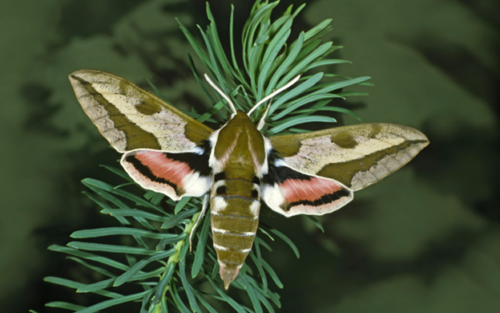
Sometimes my kids ask me why certain insects, like pesky mosquitoes, are around. My first response usually is, “Well, that’s a great question! I’m glad you asked!”
The answer is: Biodiversity matters. A lot! Every plant and animal, including insects, is a strand in the vast and complex web of life. Every species that exists today is connected to and dependent upon countless other species. Every ecosystem relies on constant interactions between living and non-living elements. Human well-being literally depends on the diversity of life.
Just think about it.
Plants need soil for water and nutrients, plus sunlight which allows them to manufacture food through photosynthesis. Those plants rely on animals like birds and bees to pollinate their flowers and disperse their seeds. They rely on decomposers like beetles and worms to cycle nutrients and keep soil fertile. In turn, the birds and bees need those plants for food and shelter. We rely on those animals and plants. We are all interdependent!
The loss of just one species can set off a chain reaction that affects all the others in an ecosystem. Whether species decline occurs due to habitat loss, disease, climate change, the introduction of invasive species, or something else, it’s important to do what we can to maintain Earth’s biodiversity.
Activities to Learn All About Biodiversity
Build a Bottle Biosphere
What better way to inspire future engineers than to design a model biodome using a bottle! In this STEM-based activity, students learn how living and non-living components impact one another in an environment.
Plant a Garden
Starting a garden is a great way to teach learners of all ages about biodiversity. We all know plants need air, water, and nutrients found in soil to sprout and mature. But what insects and animals rely on those plants? This activity is a fun way to get your hands dirty and investigate the biodiversity your garden supports. Are there certain types of bugs that flock to your tomato plants but leave strawberries alone? Do you tend to find hummingbirds in one specific area of the garden? Which pollinators are attracted to which plants?
Nature Journaling
Encourage students to be creative and channel their inner artist through nature journaling. This is a great way for learners of all ages and abilities to discover biodiversity. Spend some time outdoors—whether it’s your backyard, a schoolyard, or a park. Invite learners to draw what they see, from the variety of plants to birds, squirrels, bugs, and more that live there.
Watch a TED-Ed Video
Watch this short video, it’s a great primer to help learners understand why biodiversity is so crucial.
Be a Community Scientist: Take a Biodiversity Inventory
Free apps like iNaturalist, Seek, or Merlin Bird ID make it fun to identify various species of flora and fauna near you. Learn about the interconnectivity of native species and head outdoors for a nature walk to take photos or record birdsongs and then upload – it’s super simple! Not only can the app help you identify the species you document, but you are also adding to the data scientists use to understand biodiversity and how it is changing.
PLT Activities to Celebrate Biodiversity
Grades K-2
You can find these activities in Explore Your Environment: K-8 Activity Guide / Explora tu Ambiente: Guía de Actividades K-8
- Backyard Naturalist / Naturalista del Patio
- Trees as Habitats / Los Árboles como Hábitats
Grades 3-5
Find these three activities in Explore Your Environment / Explora tu Ambiente and in our digital activity collection, Biodiversity Blitz.
- Charting Biodiversity / Graficando la Diversidad
- Discover Diversity / Descubre la Diversidad
- Web of Life / Telaraña de la Vida
PLT’s e-unit Energy in Ecosystems is another incredible compilation of activities that investigate the ways in which organisms depend on each other to survive in ecosystems.
Grades 6-8
These activities for older learners are also in the Explore Your Environment / Explora tu Ambiente guides.
- Field, Forest, and Stream / El Campo el Bosque y el Arroyo
- Forest in the City / Bosque en la Ciudad
- If You Were the Boss / Si Fueras el Jefe
- Invasive Species / Especies Invasoras
- Life on the Edge / La Vida al Límite
Whatever activities you do, have fun exploring and celebrating biodiversity!
The post Everything is Here for a Reason – Celebrating Biodiversity appeared first on Project Learning Tree.
]]>The post A Day in a Forested Wetland appeared first on Project Learning Tree.
]]>Grades K-3
Written by: Kevin Kurtz
Illustrated by: Sherry Neidigh
Published by: Arbordale, 2018
ISBN-13: 978-1628559125

Recommended Reading
A continuation of Kevin Kurtz’s award-winning “A Day In” series once again delights readers with a rhythmic, scientifically-sound look into a typical day for the animals that call the soggy forest home.
This nonfiction picture book takes readers on a field trip through the aquatic habitat of a forested wetland. Forested wetlands, also known as swamps, are found across North America. Readers of this book will see which animals are active in the day in a forested wetland and which ones come out at night.
As with other books by Arbordale, this story contains a Creative Minds section that includes factual information to provide points of discussion for parents and lesson options for teachers. Arbordale also offers a Spanish translation of this title to support ELL, ESL, and dual-language programs. The interactive ebook reads aloud in both English and Spanish. Chinese and French translations are available as well!
Lesson Ideas
Use the following ideas to practice and reinforce grade-level appropriate science concepts.

Play Habitat Spy
As many as a dozen different animal species can be found on a single 2-page spread. Challenge youth to identify not only the different species but also to identify what elements of the forested wetland habitat help them to achieve food, water, shelter and space.
This house template can help children understand that a habitat is like a home. Children can draw an animal that belongs in the environment and under the flaps of the house panels, they can draw or write about how each of the needs are met for that animal.
Click on the picture for a free template of the house and labels.
Diurnal vs. Nocturnal
As readers are introduced to the many species that can thrive in a forested wetland, consider which are diurnal (active in daytime) and which are nocturnal (active in nighttime). What clues can you collect about an animal’s appearance or other physical characteristics that support this kind of daytime or nighttime activity?

Inter-species Interactions
Forested wetland inhabitants do not live in isolation. The book offers instances of species interaction. Challenge readers to find examples of inter-species interactions. What happens? Were you surprised? Why or why not?
Animal Adaptations
Forested wetland inhabitants are suited to the place in which they live. This book creatively details specific species adaptations. Challenge readers to find one and explain how that specific adaption allows that species to thrive in a forested wetland area.
Explore New Vocabulary
Snags, camouflage, mandible, predators and prey are all scientific vocabulary terms introduced within this book’s rhyming text. Can readers use context clues to understand and define these new science words? How many more can you find and define?

Connections to PLT Activities
Consider coupling this picture book with the following PLT activities to deepen student understanding of biodiversity, particularly in habitats like forested wetlands.
PreK-8 Environmental Education Activity Guide:
#7 Habitat Pen Pals
#9 Planet Diversity
#22 Trees as Habitats
#26 Dynamic Duos
#45 Web of Life
#71 Watch on Wetlands
#88 Life on the Edge
The post A Day in a Forested Wetland appeared first on Project Learning Tree.
]]>The post Recommended Summer Reading for Forest Lovers appeared first on Project Learning Tree.
]]>From informative nonfiction reads to entertaining tales, these books focused on forests will help keep curious minds sharp over the summer months. Our recommended reading list includes picture and chapter books for kids, teens, and adults so that everyone in the family can connect with forests and trees.
- Educators will find riveting reads for students and parents to supplement environmental education and Project Learning Tree US and Canada lessons.
- Sustainability and natural resources professionals will discover new books to help classrooms and communities care about and for trees, encouraging and emphasizing the need for forest literacy in every environment.
- Green job seekers and mentors will uncover incredible human accomplishments and the essential role of trees through research and personal stories to help their green jobs journey.
These must-reads focused on forests and trees are a mix of new favorites and classics, with something for every age and type of reader!
Plus, by buying titles utilizing PLT and the Sustainable Forestry Initiative’s Amazon Smile account, you also help to support environmental education, forest literacy, green career pathways support, and advance our efforts to support the next generation of conservationists.
Happy reading from PLT!
GRADES:
GRADES K-2 (Ages 5-8)

1) The Hike
Grades PreK-K
Three young girls set out to explore the nearby woods. On their adventure, they realize hiking can be unpredictable. They spot wildlife, take detours, and enjoy the natural world. The book features illustrations of many plants and animals along with scientific terms to help young readers with learning. Get a copy of the book.

2) The Memory Tree
Grades PreK-K
Teaching young children about the loss of a loved one can be a difficult topic. In this picture book, a fox lives a long and happy life in the forest, but he is now ready to sleep and closes his eyes forever. As the fox’s friends begin to share memories and tell stories, a tree starts to grow taller and stronger with every memory. Get a copy of the book.

3) A Log’s Life
Grades PreK-3
Many animals rely on this oak tree, but it is struck down during a large storm and becomes a log. Children discover numerous changes the tree undergoes until it finally becomes part of the soil. Learn about tree life cycles and get outside to investigate trees and logs at home or school! Get a copy of the book.
4) Who Will Plant a Tree?
Grades PreK-3
This book describes the various ways seeds can spread and the roles different creatures play in the process. It’s a great book to introduce lessons on the anatomical features of seeds and how they help with distribution. The full-page illustrations in this book are detailed and have an old-world feel about them. Get a copy of the book.

5) Pablo’s Tree
Grades PreK-3
Each year on his birthday, a young Mexican-American boy looks forward to seeing how his grandfather decorated the tree planted the day the boy was adopted. Authored by Pat Mora, this book embraces new traditions and values, as well as exhibits familiar family relations that are warm and heartfelt. Get a copy of the book.
 6) My Forest is Green
Grades PreK-3
A young boy, who loves art and poetry, explores an urban forest near home and interprets what he sees with his art. He creates rhythmic language to describe the seasons and colors, but decides his forest is mostly green. The picture book will bring out the artist in every child and encourage a closer look at nearby nature. Get a copy of the book.
7) We Planted a Tree
Grades PreK-3
We Planted a Tree is a short poetic story about two families in different parts of the world that plant a tree. The book explains theoretical concepts and the many benefits of planting with engaging cartoon-style illustrations. Get a copy of the book.
 8) I Can Name 50 Trees Today! – All About Trees
PreK-3
A great book to read aloud with beginner readers and to introduce young learners to important basic concepts. In this picture book, readers explore some of the world’s trees, learning how to identify species from their leaves, seeds, fruit, and more. Get a copy of the book.
Try these books in conjunction with the following PLT activities:
Explore Your Environment: K-8 Activity Guide
A Tree’s Life
Adopt a Tree
Trees as Habitats
Here We Grow Again
Have Seeds, Will Travel
Trees & Me: Activities for Exploring Nature with Young Children
Activity 7: Best Buds
Activity 8: My Tree and Me

Trees & Me: Activities for Exploring Nature with Young children
Grades PreK-2 (ages 1-6)
Experience trees throughout the summer and help children ages 1-6 connect with their community! PLT’s latest resource, Trees & Me: Activities for Exploring Nature with Young Children, helps families and teachers connect young kids to nature through outdoor and indoor activities.
Families, childcare providers, and early educators can easily adapt activities as necessary to meet each child’s unique needs, the environment where they live, and the materials available. Learn more or purchase the guide.
GRADES 3-5 (Ages 8-11)
 1) The Apple Tree
Grades K-3
This story is about a young boy who plants an apple seed, and as soon as it sprouts, the boy can see what the apple tree is meant to be. The little apple tree isn’t so sure and becomes frustrated and begins to doubt its calling. The story is presented in both English and Tsalagi (the language of the Kituwah People).
Get a copy of the book.
 2) A Day in a Forested Wetland
Grades K-3
This nonfiction picture book takes readers on a field trip through the aquatic habitat of a forested wetland. Readers of this book will see which animals are active during the day in a forested wetland and which come out at night. This story contains a “Creative Minds” section that includes information to provide points of discussion for parents and lesson options for teachers. Get a copy of the book.
3) Tall Tall Tree
Grades K-4
Tall Tall Tree begins with a letter from a wise and respected northern spotted owl. The beautiful and scientifically-accurate illustrations take children on a virtual field trip into the dense redwood forest. Not only will readers experience incredible redwood trees, but they will also get a sneak peek into the hidden world of the forest canopy–which readers will learn is abundant with life. Get a copy of the book.
 4) The Tree Lady
Grades K-5
In this picture book, readers will learn how the first woman to graduate from the University of California with a degree in science transformed San Diego into the green, garden-filled oasis it is today. Get a copy of the book.
5) Can You Hear the Trees Talking?
Grades 3-5
Young readers will discover the secret life of trees in this nature-inspired science book. The story shares what trees feel, how they communicate, and how they take care of their families, along with simple activities for kids to try on their own. Get a copy of the book.
 6) The Magic of Trees
Grades 3-5
In this illustrated nature and science book, readers will learn about the complex “wood wide web” of roots and the important role every part of the tree plays in its own growth and the habitat of the whole forest or woodland. Get a copy of the book.
Try these books in conjunction with the following PLT activities:
Explore Your Environment: K-8 Activity Guide
Web of Life
Tree ID
Charting Biodiversity
Discover Diversity

Pocket Guide: Seeds to Trees
Grades PreK-2 (ages 3-6)
Trees start small but pack a big wallop—and so does PLT’s Pocket Guide: Seeds to Trees!
Pack the guide with you on your trip to the park, schoolyard, camping, or daycare—at just 4 by 6 inches, the Guide is small enough to fit into a pocket or backpack.
The Guide has activities for you to do with ages 3-6 in convenient settings and with the materials you have at hand. We ensure that kids find the activities fun to do while you can feel confident that you are providing factual, age-appropriate information.
GRADES 6-8 (Ages 11-14)
1) Wishtree
Grades 3-5 and 6-8
This book’s narrator is a “two hundred and sixteen rings old” oak tree named Red. Red is a community wishing tree—and every May 1, adults and children alike bring their wishes written on pieces of colorful paper or fabric to tie to Red’s branches—hoping they come true. Red has overheard many conversations and has lots of stories to tell. Get a copy of the book.
 2) Song of the Trees
Grades 6-8
Song of the Trees is the first book in a series detailing the Logan Family saga. This 80-page short novel tracks the tough choices of the Logan family in rural Mississippi and how they make decisions about the things they own and care about in the face of the Great Depression. Get a copy of the book.
3) Forest World
Grades 6-8
This novel tells the story of a young Cuban-American boy. Though separated by only 90 miles, Miami and the small island country of Cuba couldn’t seem further apart. At 11 years old, Edvar’s mom puts him on a plane headed for the remote forests of Cuba to meet a father he has never known and a sister he never knew existed. With no phone, no internet, and a family of strangers, Edvar is in for one long summer. Get a copy of the book in English or en Español.
 4) Ellie’s Log
Grades 6-8
After a large tree crashes to the ground during a winter storm, a young girl and her new friend explore the nearby forest. Together, they learn how trees provide habitat for plants and animals, both high in the forest canopy and low among mossy logs.
Get a copy of the book.

5) The Boreal Forest: A Year in the World’s Largest Land Biome
Grades 6-8
Author L.E. Carmichael explores the boreal forest wilderness on a tour of the forest throughout the four seasons. The book combines lyrical storytelling with research to provide a year-long tour of the planet’s largest biome. Get a copy of the book.
Try these books in conjunction with the following PLT activities:
Explore Your Environment: K-8 Activity Guide
Decisions, Decisions
If You Were the Boss
Life on the Edge

Sensational Trees Activity Collection
Grades K-2 (ages 5-8)
Sensational Trees is one of three PLT activity collections for educators. It features three PLT activities for educators of students in grades K-2 that invite young learners to investigate trees using their senses.
Buy Sensational Trees or explore Biodiversity Blitz and Trillions of Trees for grades 3-5.
TEENS AND ADULTS
 1) The Man Who Planted Trees
This book shares the inspiring story of a man’s quest to reforest the world by cloning the oldest, largest trees on the planet—and create a Noah’s ark of tree genetics. Many said it was impossible, but twenty years later, the team successfully closed some of the world’s oldest trees—among them giant redwoods and sequoias. Get a copy of the book.
2) The Hidden Life of Trees
Peter Wohlleben shares his deep love of woods and forests and their amazing processes of life, death, and regeneration. Readers will learn about trees sharing nutrients with those who are sick, creating an ecosystem that mitigates the impact of extreme heat and cold, and more. Get a copy of the book.
 3) American Canopy: Trees, Forests, and the Making of a Nation
This novel takes readers on a story of the relationship between Americans and trees across history. Learn about the Liberty Trees, the creation of New York’s Central Park, spotted owls and the old-growth forests they inhabited, and more.
Get a copy of the book.
4) A Life in the Bush
A 22-year-old headed off into the largest tract of preserved bush in the world: Ontario’s Algonquin Park. When he got there, he found what he would call home for the rest of his life. This is a story of a family raised in the woods, the tough physical demands, and the freedom that comes from living apart from town and city.
Get a copy of the book.
5) Kiss the Ground
Readers will discover how incredible the soil beneath our feet is and how soil has the power to reverse climate change, feed the world, and benefit health and wellness. Get a copy of the book.
 6) Careers in Forest, Wildlife, Fisheries, and Range Resources
This book offers inspiring natural resource professionals an introduction to the professions of forestry, fisheries, wildlife, and range management. The author helps readers transform their desire for an exciting and meaningful career into a purposeful and efficient path to obtaining the appropriate education, training, and experience. Get a copy of the book.
 7) A Guide to Green Jobs in Canada: Voices of Indigenous Professionals
A Guide to Green Jobs in Canada: Voices of Indigenous Professionals features first-person stories from 12 First Nations and Inuit leaders working in the forest and conservation and parks sectors across Canada. Indigenous role models describe what inspired them to pursue green careers and share lessons learned from lived experiences. Their stories reflect the values and perspectives of Indigenous professionals at various stages of their careers. The guide was developed in Canada by PLT Canada, but is a relevant and informative resource in the U.S. Download or order the guide for free.
Are you in Canada and interested in becoming a green career mentee or mentor?
Learn more about PLT Canada’s latest mentorship cohort.


 8) The Journeys of Black Professionals in Green Careers
Black Faces in Green Spaces: the Journeys of Black Professionals in Green Careers aims to inspire young Black Americans to pursue forest and conservation careers by telling the stories of the Black trailblazers who have taken the career path and who have advice and resources to share.
Download or purchase a printed guide and explore supporting resources, including: job training, mentorship and employment opportunities, access to networking webinars, and invitations to local events.

Do you have a favorite tree and forest-related read that we missed? Let us know in the blog comments at the bottom of the page and on social media!


The post Recommended Summer Reading for Forest Lovers appeared first on Project Learning Tree.
]]>The post Celebrating International Day of Forests & World Water Day appeared first on Project Learning Tree.
]]>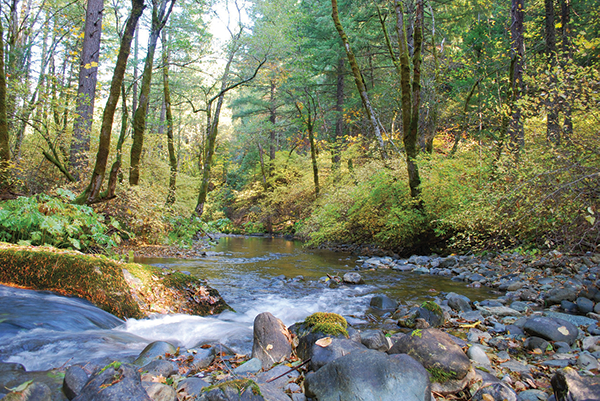
Have you ever stopped to think about how much you rely on forests? What about water? These natural resources support our everyday lives in so many ways.
That’s why we happen to think it’s no coincidence that International Day of Forests (March 21) and World Water Day (March 22) fall right next to each other on the calendar!
Trees & Water: A Mutually Beneficial Relationship
More than 80% of all terrestrial species of plants, animals, and insects call forests around the world H-O-M-E. Hello, rich biodiversity! But we humans also depend quite a bit on trees, too. Trees are our source of lumber, fuel, paper products, many foods, and some products you may have never guessed, like soap, cosmetics, cinnamon, and dyes.
And, of course, forests rely on water for obvious reasons – we all know plants and trees need water to grow. The wildlife, insects, fungi, and more that live in forests rely on the same water sources.
But did you know that forests aren’t just using up water? Trees give back – they are vital to the quality of our drinking water. They absorb rainfall, cool and cleanse water, reduce flooding, refill underground aquifers, and slow storm runoff. Nearly 80% of freshwater resources in the U.S. originate in forests!
 Activities to Explore Forests & Water
Here are some hands-on activities to celebrate International Day of Forests and World Water Day with the learners in your life.
Forest Literacy Framework
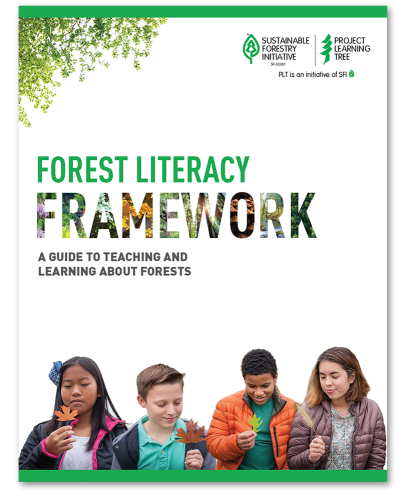
Check out PLT’s Forest Literacy Framework, a guide to teaching and learning all about forests, why they matter, how we sustain forests, and our responsibilities to forests. Organized by grade level, the framework lays out age-appropriate concepts and activities to do with learners.
Early Childhood / Elementary School
Gratitude Tree
Have students build a gratitude tree out of construction paper, twigs, and small branches, and display it in your classroom. Students can write why we need trees and water or why they are thankful for these critical natural resources on cut-out leaves and drops of water. For example, on a leaf, you could write, “Thank you for being an important part of the process to make my drinking water clean!” or “Thank you for being the source of this construction paper!” Pair this with PLT’s K-2 activity “We All Need Trees / Todos Necesitamos a los Árboles” from Explore Your Environment: K-8 Activity Guide / Explora tu Ambiente: Guía de Actividades K-8 as you explore the many products that come from trees. For the littlest of learners, this is a fun activity to pair with “Three Cheers for Trees” from Trees & Me: Activities for Exploring Nature with Young Children.
Every Drop Counts
In the “Every Drop Counts / Cada Gota Cuenta” activity from PLT’s Explore Your Environment / Explora tu Ambiente, students in grades 3-5 monitor how much water they use (and waste) daily. They’ll identify ways to save water (i.e., reduce your shower by 5 minutes, turn the water off while brushing teeth, etc.) and implement their action plan.
Pond Viewers
If you are near a pond or creek, this fun activity lets learners peek underwater to see all the organisms living there. Maybe it’s algae or little bugs dancing on the water’s surface. This is a great learning opportunity to explain what you might see on and in stagnant water (like a pond) versus moving water (a creek or river) and how forests contribute to cleaner water quality.
Middle & High School
Field, Forest, and Stream
How do nonliving elements influence living elements in different ecosystems? In the “Field, Forest, and Stream / El Campo el Bosque y el Arroyo” from Explore Your Environment / Explora tu Ambiente, students in grades 6-8 conduct a field study of three different environments to understand how living organisms interact with non-living components like sunlight, moisture, and wind.
 Forests, Water & People Activity Collection
Last fall, we released our newest activity collection for high school students (with variations for grades 6-8). Featuring three investigation-based activities, students explore how communities rely on trees and water sources. Students use GIS technology, map community changes over time, and more!

You really can’t go wrong with any of PLT’s activities! There is something for every age to explore and celebrate International Day of Forests and World Water Day. Just get out there and have fun learning!!
The post Celebrating International Day of Forests & World Water Day appeared first on Project Learning Tree.
]]>The post Earth Day 2025 appeared first on Project Learning Tree.
]]>
Earth Day this year is held April 22, 2025 and the theme is Our Power, Our Planet.
To celebrate, we’ve compiled stories and resources to help educators and youth learn about sustainability issues, climate science, and actions they can take this #EarthDay2025 and every day.
 Guide to Curriculum for Teaching About Climate Change
PLT teamed up with Earth Day Network, Project WET, and Project WILD to produce a guide that lists all available education resources to help you teach about climate science and the impacts of climate change. Use our “Teaching About Climate Change: Water, Trees, and Wildlife” guide to help plan a series of lessons that fit with your teaching situation to teach about the impacts of climate change on water, forests and biodiversity.

Student Worksheet
TACKLING CLIMATE CHANGE—TOGETHER
Learn about the United Nation’s Sustainable Development Goals with our guiding questions. Young people will explore how the Goals are interconnected and address the global challenges we face.
Free Activities for Families and Educators:
 TREES AS HABITATS
From their leafy branches to their tangled roots, trees provide a habitat for a host of plants and animals. Take inventory of the life in, on, and around trees to discover how plants and animals depend on trees in many ways (available in English and Español.)
 RENEWABLE OR NOT?
Children often do not know which resources are renewable and nonrenewable. Use this activity (in English and Español) to learn what these terms mean and discover why sustainable use of natural resources is so important.
 REUSE AND RECYCLE AT HOME
Learn how to analyze waste and whether items being thrown away could be reused, recycled, or composted. Bookmark our handy chart (available in English and Español.)
 EARTH DAY ACTIVITIES TO INSPIRE YOUR STUDENTS AND MAKE A DIFFERENCE
Earth Day is about raising awareness about the importance of protecting our planet and taking action. Use these activities to inspire your students to take action this Earth Day and every day.
 ARTISTS FOR THE EARTH (EarthDay.org)
Celebrate the many sights, sounds, and textures of the natural world by becoming an artist for the earth. Filled with creative exercises for children and adults, alike, this webpage contains ideas and inspiration for sustainable creative expression.
 LEARN ABOUT FORESTS
Engage middle school aged youth in learning about trees, forests, and sustainable forest management with PLT’s 12 free, ready-to-use, hands-on activities. Each 50-minute activity offers simple suggestions for leading learners ages 10–16 in themes related to sustainable forest management, stewardship, and green careers.
Free Teacher Stories and Resources:
 12 NATURE WALK ACTIVITIES FOR EARTH DAY (OR ANY DAY!)
Getting outside can be one way to boost our resilience. Try these activities to ensure your walks are an engaging and enriching learning experience.
 13 YOUNG ENVIRONMENTALISTS MAKING A DIFFERENCE
Young students don’t need to wait until they’re older to make a difference! Share these inspiring stories that show what’s possible when young environmentalists take action.
ENVIRONMENTAL HISTORY TIMELINE (EarthDay.org)
The big events that shaped our environmental history can fascinate kids. These printable timelines (in English and Español) can be used as a research activity for students.
 BECOME A CITIZEN SCIENTIST
From tackling plastic pollution to supporting the global food supply to observing local bird species and more—this article is your go-to guide to classroom community science.
 SOIL EROSION: WHY IT HAPPENS AND WHAT WE CAN DO ABOUT IT
Soil erosion is a natural phenomenon caused by water and wind, but can become more of a problem as humans inhabit and develop more of the planet.
 TIPS FOR PLANTING TREES WITH KIDS
Express your appreciation for trees this Earth Day (or any day!) by planting a tree at your school or in your community. Here’s some inspiration and a few tips to get you started.
 HANDS-ON ACTIVITIES TO EXPLORE THE MANY USES OF TREES
If you’re brainstorming ideas for outdoor lessons, trees are a great place to start! Bookmark a few of these fun and engaging outdoor activities to explore how trees and forest products are used every day!
 CREATING A ZERO-CARBON FUTURE ON EARTH DAY (AND EVERY DAY)
In recent years there has be an increased urgency to implore policymakers to make a change for a zero-carbon future. Celebrate this Earth Day by exploring ways you and the young people you work with can become advocates for the planet.
 SUBSCRIBE TO THE PLT MONTHLY BRANCH NEWSLETTER
Access more resources, tips, and free activities every month when you sign up for PLT’s monthly Branch newsletter.
The post Earth Day 2025 appeared first on Project Learning Tree.
]]>The post All About Invasive Species appeared first on Project Learning Tree.
]]>Native vs. Non-Native Species
A native species is a plant or animal that naturally occurs in a certain area. The ecosystem is balanced because the plants and animals that live there have evolved with each other so they can coexist and maximize the resources that are available to them. Non-native species are organisms that are introduced to an area outside their natural range, but this doesn’t mean they necessarily cause harm to the ecosystem. Invasive species, on the other hand, are non-native species that spread rapidly, outcompete native species, and disrupt ecosystems.
For example, in an oak woodland area, you might find oak trees, native grasses, deer, burrowing animals, bats, various birds, and insects. But when an invasive species is introduced, for example non-native annual grasses, competition for resources increases creating an imbalance in the ecosystem. The presence of non-native grasses could create a lack of water for oak trees. If there are fewer oak trees because they’re dying from lack of water, acorn production decreases, meaning less available food sources for birds, squirrels, and other animals that rely on oak trees.
 This is why it’s so important to avoid planting non-native species in your garden. That creeping bellflower might look pretty, but it’s actually a noxious weed – a species that is so harmful to the ecosystem that although it may be out of control, it must be eradicated wherever it is found. For this weed, its extensive root system essentially chokes out the other plants around it.
Just think…if the wind picks up and blows some seeds from invasive plants in your garden, those could spread to your neighbor’s yard or down to the creek near your neighborhood, disrupting the entire ecosystem!
 You may have seen signs like these at beaches or waterways reminding boaters to check for aquatic invasive species like zebra mussels. Or perhaps you’ve spotted signs at trailheads asking hikers to check their boots, clothing, and backpacks for any invasive species that may have latched on from a prior hike (i.e., plant seeds or insect eggs).
Certain invasive animal species, like gray squirrels or American Bull Frogs – both of which are native to eastern North America but have spread much farther west all the way to the Pacific – carry diseases that can cause native species to get sick or die.
That’s why it’s so important for people to be aware of the impact invasive species can have and the role we play in preventing them from spreading.
Activities to Explore Invasive Species with Students
Pair the activities below with the “Invasive Species / Especies Invasoras” activity from PLT’s Explore Your Environment: K-8 Activity Guide / Explora tu Ambiente: Guía de Actividades K-8, perfect for learners in grades 3-8. You can also do the “Forest Invaders” activity from Focus on Forests with high school students.
Wildlife Wipeout Invasive Species Game
This game, using candy, a cup and dice, helps students understand just how quickly an invasive species can overtake native species in an ecosystem.
Invasive Species Desert Food Web Game
Roll the dice again with this fun activity that shows how losing just one connection in the food web due to an invasive species causes a chain reaction.
Meet the Invaders Game
In this activity from the USDA Forest Service, students learn, through a series of three simulation games, how invasive plants compete with native plants and overtake an ecosystem.
Help Remove Invasive Species
There are many organizations that host community service events to remove invasive species. Contact local tree foundations, plant societies, and other nonprofits to find out how to participate. You can also visit your state’s Department of Fish and Wildlife website to learn more about invasive species in your area. The National Park Service has some wonderful educational resources as well!
Invasive Species STEM Strategies
Check out PLT’s suggestions on how to engage students in STEM while they learn about invasive species.
The post All About Invasive Species appeared first on Project Learning Tree.
]]>