The post Sustainably Managed Forests & Wildlife Conservation appeared first on Project Learning Tree.
]]>Now, think about our environment. If a forest is not managed properly, natural resources might become depleted and overused and ecosystems can get out of balance, leading to habitat loss, or invasive species.
That’s why sustainable forest management and conservation – defined as “a careful preservation and protection of something (especially: planned management of a natural resource to prevent exploitation, destruction, or neglect)- are so vital to the health of forest ecosystems, especially when forests are home to 80% of the world’s terrestrial biodiversity!
And it’s never too late to celebrate Wildlife Conservation Day (December 4)! You can help young people and the community better understand conservation through Project Learning Tree hands-on activities, like “Monitoring Forest Health” from Green Jobs: Exploring Forest Careers.
In this activity for older students, learners will explore just what goes into keeping forests healthy so the plants, animals, and insects that rely on these diverse ecosystems can thrive. It’s a great way for learners to see how soil scientists, wildlife biologists, foresters, and other natural resource professionals monitor forests and work together to create a forest management plan.
A forest management plan addresses any health issues and ensures the long-term sustainability of the forest. (Check out the “If You Were the Boss / Si Fueras el Jefe” activity from PLT’s Explore Your Environment: K-8 Activity Guide / Explora tu Ambiente: Guía de Actividades K-8 to learn more about all the factors and impacts considered when creating a plan.)
Wildlife conservation is a key piece of this multi-faceted plan.
Here’s an over-simplified example:
 Let’s say a massive forest fire came through an overly dense forest and destroyed 90% of the trees in a forested area. That equates to a significant loss of habitat for wildlife like birds, bats, raccoons, deer, and bears that rely on mature living trees for food and shelter. Some of those animals perished in the fire, while others were displaced. They may migrate to another nearby forest (or a heavily populated area), and now, that area has more animals than the habitat can support, and there is not enough food to go around.
Had that forest been better managed (i.e. controlled burning or thinning of overgrown stands), the fire might have been less devastating and could have been beneficialto wildlife by creating more shelter and boosting berry growth (like huckleberry!).
Had that forest been better managed (i.e., through controlled burning or thinning of overgrown stands), the fire might have been less devastating and could have been beneficial to wildlife by creating more shelter and boosting berry growth (like huckleberry!).
Sustainable forest management is an important way to retain and restore ecological balance that allows wildlife to thrive even in the face of catastrophes like wildfire.
Looking for more resources to learn about conservation, sustainable forestry, and our environment? Visit shop.plt.org to access Project Learning Tree’s hands-on instructional materials.
The post Sustainably Managed Forests & Wildlife Conservation appeared first on Project Learning Tree.
]]>The post See You at the 2026 Green Schools Conference! appeared first on Project Learning Tree.
]]>
Educators and students are shaping the future of education and green schools to build a more sustainable world. The Green Schools Conference, organized by the U.S. Green Building Council, is at the heart of this movement. It brings together educators, advocates, and professionals from across the country to advance green schools and sustainability in education.
This energizing two-day event will explore bold, practical solutions to advance green schools, focusing on environmental impact, health and well-being, sustainability literacy, and systemic change at every level of education.
With inspiring keynotes, expert-led sessions, hands-on workshops, and powerful networking
opportunities, GSC equips attendees with the tools, strategies, and community support needed
to lead the charge for healthier, more sustainable learning environments.
Explore Key Conference Themes:
- Environmental Impact: Strategies to conserve resources, reduce emissions, and restore ecosystems
- Health and Well-Being: Creating learning spaces that support the physical and
emotional health of students and staff - Environmental and Sustainability Literacy: Integrating systems thinking and placebased
learning across curricula - Whole School/District Sustainability: Embedding sustainability across culture,
operations, and education for long-term change
Coming together from across the country
The Green Schools Conference is the only national event that brings together people who lead, operate, build, and teach in U.S. green schools. That’s a big reason why I’m thrilled to represent Project Learning Tree and the Sustainable Forestry Initiative at the conference. I’m looking forward to connecting with people to learn from them and share PLT resources like our Green Schools Program, Forest Literacy Framework, and the K-8 Activity Guide.
Supporting Green Schools Nurtures the Next Generation
For me, supporting the green schools movement isn’t just about the physical infrastructure of a school—it’s also about nurturing the values of the next generation. By promoting green building practices, we can ensure that students are learning in spaces that not only inspire but also serve to protect the natural world.
Join me at the Green Schools Conference
Register for the Green Schools Conference today! A variety of registration packages are available, with special rates for employees of PreK–12 schools and districts, as well as government and non‑profit employees. I can’t wait to meet and talk more about how sustainably managed forests can benefit communities and kids!
The post See You at the 2026 Green Schools Conference! appeared first on Project Learning Tree.
]]>The post Celebrate the Holidays with Red Fir, Green Jobs, and the U.S. Capitol Christmas Tree appeared first on Project Learning Tree.
]]>In 2025, the People’s Tree is coming from the Silver State, AKA Nevada. When you think about Nevada, an arid, desert climate or the bright lights of Las Vegas might be the first things that come to mind. However, the Humboldt-Toiyabe National Forest, covering a whopping 6.3 million acres, is the largest national forest in the U.S. This massive forest spans the state and into eastern California.
This year’s Christmas tree, a 53-foot-tall red fir, will come from the Carson Ranger District in the heart of the Sierra Nevada mountain range. Fun fact: Red fir trees can grow from 80 to 150 feet tall.
Named the Silver Belle, this year’s tree represents the first time Nevada has had the opportunity to be the home state of the Capitol Christmas Tree. To celebrate, people from across the state have hand-crafted 10,000 beautiful ornaments that will adorn the tree, along with other trees inside the Capitol building.
Celebrate the U.S. Capitol Christmas Tree in your neck of the woods
 To help you celebrate, PLT created, in partnership with the USDA Forest Service, a free Activity Collection for those working with learners ages 10–16. The activity collection features four activities from PLT’s Learn About Forests and Explore Your Environment: K-8 Activity Guide, and highlights key facts about Nevada’s Humboldt-Toiyabe National Forest. You can also attend a PLT training, as some states in the tree route will be organizing themed workshops celebrating the U.S. Capitol Christmas Tree.
One of the most exciting things about the People’s Tree is the journey the tree takes to Washington, D.C. Want to catch a glimpse of the tree as it heads east? Here’s the schedule and route.
Schedule and Route
November 2 – Lovelock & Elko, NV
November 3 – Ely, NV
November 4 – Las Vegas, NV
November 7 – Flagstaff, AZ
November 8 – Albuquerque, NM
November 9 – Amarillo, TX
November 11 – Lenexa, KS
November 12 – St. Louis, MO
November 14 – Paducah, KY
November 15 – Lexington, KY
November 20 – Joint Base Andrews, MD
A holiday tradition since 1964
Massachusetts Senator John McCormack planted a 24-foot-tall Douglas fir on Capitol grounds in 1964. This was the first tree that started the ritual tree lighting on the West Lawn. Sadly, the tree died after three years from wind and root damage. In 1970, the Monongahela National Forest supplied the first People’s Tree.
Today, Jim Kaufmann, Director of the Capitol Grounds for the Architect of the Capitol, chooses the People’s Tree. The USDA Forest Service assesses the environmental impact of harvesting the tree by investigating if the tree is close to any endangered species or water sources and if it provides shelter for wildlife.
Green jobs key to delivering holiday magic

Dozens of people working in forestry and other green jobs are responsible for making this wonderful holiday tradition happen.
“Green jobs represent a wide diversity of career paths for people. From surrounding yourself in nature as a forester, getting your hands dirty as a soil scientist, or exploring the tech side of green jobs as a GIS specialist, there is literally something for everyone. It’s great to see the Society of American Foresters talk about working in forestry and other green jobs as part of their US Capitol Christmas Tree Forestry FAQs,” said Josh Brankman, PLT VP Education.
The SAF FAQ describes how green jobs offer a wide variety of career opportunities based on interest areas and skill sets. Green jobs include positions like foresters, park rangers, wildland firefighters, wildlife biologists, policymakers, public outreach professionals, recreation managers, loggers, and lumber mill workers. Jobs can be seasonal or full-time in both indoor and outdoor settings.
“We were also really pleased to see SAF reference Project Learning Tree’s Green Jobs: Exploring Forest Careers guide. It features four hands-on, minds-on activities to help young people learn about forestry jobs and practice managing and monitoring forest resources,” said Brankman.
The growth of green jobs has outpaced jobs in other employment categories by almost 250% over the last decade. Green jobs are defined by the Bureau of Labor Statistics as jobs that produce goods or services that benefit the environment or conserve natural resources, or jobs that use more environmentally friendly processes or fewer natural resources.
Tools, info, and activities to learn about green jobs
PLT activities also include details about different green jobs. It’s our goal to introduce students to the green job possibilities out there, and we’d love your support!
Explore green jobs that support forests and learn more about career readiness supports through PLT. You can also take a one-time free trial of the PLT Green Jobs Quiz.
For additional inspiration, get a copy of Black Faces in Green Spaces: The Journeys of Black Professionals in Green Careers.
The post Celebrate the Holidays with Red Fir, Green Jobs, and the U.S. Capitol Christmas Tree appeared first on Project Learning Tree.
]]>The post SFI/PLT Partners with Texas A&M Forest Service to Increase Forest Literacy with Free Online Learning appeared first on Project Learning Tree.
]]>“This free online course will introduce learners to the many values of trees and forests—and the importance of managing them sustainably,” said Josh Brankman, VP of Education at the Sustainable Forestry Initiative (SFI). “By creating an interactive learning resource that anyone can access, we will inspire forest conservation and green infrastructure, expand pathways to green careers, and produce advocates that help ensure forests remain a positive force for environmental, economic, and community well-being.”
Developed by Texas A&M Forest Service and Project Learning Tree (PLT), an award-winning educational initiative of SFI, with support from the USDA Forest Service, the course offers practical knowledge to deepen understanding and engagement around the values and benefits of forests. The course was built in collaboration with the foundation of PLT’s Forest Literacy Framework and the Texas Forest Literacy Plan.
“Forest literacy is fundamental for navigating our interconnected world and building a sustainable future. We are thrilled to introduce a course that will strengthen learners’ ability to engage, educate, and advocate for forests through informed action and shared understanding,” said Melanie Villegas-Portillo, Conservation Education Program Specialist at Texas A&M Forest Service.
 The self-paced course takes approximately two hours to complete and is broken into six short modules.
Participants will explore:
- Values and benefits of forests
- Basics of sustainable forest management
- How forests support communities, economies, and ecosystems
- Real-world examples of forest conservation and ways to share forest knowledge with others
The course supports the next generation of green leaders and both formal and informal education efforts to teach about trees and the environment, aligning with the goals of SFI’s new 2025-2030 Strategic Direction.
Start learning today and help grow forest literacy in your community at bit.ly/forestliteracycourse.
The post SFI/PLT Partners with Texas A&M Forest Service to Increase Forest Literacy with Free Online Learning appeared first on Project Learning Tree.
]]>The post Building Partnerships for Sustainability – 2025 PLT Conference appeared first on Project Learning Tree.
]]>
What do you get when you bring over 120 people together to talk about environmental education and growing effective forest partnerships?
Magic.
Last month, we held our 39th annual Project Learning Tree (PLT) conference in picturesque Clemson, South Carolina. PLT State Coordinators, facilitators, educators, and partners in the forest and conservation sector came together to build relationships, design the future of environmental education, and collaborate on ways to introduce more children to nature.
 The week started with a special pre-conference workshop created for nearly 100 local South Carolina educators to receive hands-on PLT training. Supported by the International Corrugated Packaging Foundation (ICPF), the workshops delivered professional development tailored for three tracks: Early Childhood, Kindergarten through Grade 8, and Green Jobs. Attendees learned how to lead PLT activities and incorporate them into their programs.
Keynote speaker Dr. J. Drew Lanham, Distinguished Professor and Master Teacher of Wildlife Ecology at Clemson University (who is also featured in the SFI-PLT-MANRRS guide Black Faces in Green Spaces: The Journeys of Black Professionals in Green Careers) kicked off the conference with an inspiring speech.
“Environmental educators are wonder weavers,” Dr. Lanham shared. If you’ve ever looked at a child’s face when they first explore nature, you know this to be true. Watching as a sense of awe and wonder fills their eyes.
 Environmental education is needed now more than ever. And as Dr. Lanham said, “This is not the work of becoming rich, but becoming enriched.” Nature is something that enriches us all. It enriches our minds, fills our cup, sparks creativity, and nourishes our souls. His words set the tone for the rest of the conference and left us inspired.
From learning how to use PLT activities to certify as an Arbor Day Foundation K-12 Tree Campus to best practices for delivering theme-based professional development to educators, attendees were inspired to bring their knowledge back to educators in their state. And a special field excursion to the Sustainable Forestry Initiative (SFI)-certified Clemson Experimental Forest capped off everyone’s experience!
We heard from local wildland firefighters and learned how they use prescribed burns to manage the forest and remove fuel ladders. We saw the damage that invasive insects can cause to trees, which harm forest health. We also visited a working forest, seeing regeneration in progress at a recently harvested site with replanted trees thriving. It was incredible to learn from experts in the field!
 When educators discover how a sustainably managed forest operates and how it benefits our communities, economy, and environment, it opens the eyes and minds of entire communities. Educator forest tours like these are available in many states, and we highly recommend attending one! It opens up so many new ways to teach and brings the forest to life in the classroom.
During the week, celebrated several individuals for their contributions to PLT over the years, honoring our Leadership in Education awardees: Butch Bailey, Mississippi; Angela Bartholomay, North Dakota; and Susan Cox, New York.


We also gave two incredible PLT State Coordinators, Ted Stevens of Texas and Ashley Hoffman of Kentucky, our PLT Gold Star awards. If you’ve ever had the chance to meet either of them, consider yourself lucky! Ted and Ashley embody the meaning of PLT champion. They consistently show up with gratitude, passion, and a love of environmental education.

Ashley is the Executive Director of the Kentucky Association of Environmental Education (KAEE) and the PLT State Coordinator in Kentucky. She also serves on the SFI Board of Directors and PLT’s Education Operating Committee. Ted is the Education Director of the Texas Forestry Education and the PLT State Coordinator in Texas. His passion, hands-on approach, and unwavering dedication have left a lasting impact, ensuring that future generations understand and value the role of forests in our world.
The 2025 PLT Conference left us all inspired and refreshed (check out the full photo album on Facebook!), and we could not have done it without the help of our gracious hosts, South Carolina PLT! Matt Schnabel, South Carolina PLT State Coordinator, formed an incredible team of volunteers to help plan the conference alongside our national team, and we are so grateful for their hard work in making this such a successful week.

Thank you to all our amazing sponsors, speakers, and attendees for celebrating another impactful year with Project Learning Tree. We can’t wait to see everyone again in 2026 for our 50th anniversary and conference in Nebraska at the Arbor Day Farm Lied Lodge!

The post Building Partnerships for Sustainability – 2025 PLT Conference appeared first on Project Learning Tree.
]]>The post Earth Day 2025 appeared first on Project Learning Tree.
]]>
Earth Day this year is held April 22, 2025 and the theme is Our Power, Our Planet.
To celebrate, we’ve compiled stories and resources to help educators and youth learn about sustainability issues, climate science, and actions they can take this #EarthDay2025 and every day.
 Guide to Curriculum for Teaching About Climate Change
PLT teamed up with Earth Day Network, Project WET, and Project WILD to produce a guide that lists all available education resources to help you teach about climate science and the impacts of climate change. Use our “Teaching About Climate Change: Water, Trees, and Wildlife” guide to help plan a series of lessons that fit with your teaching situation to teach about the impacts of climate change on water, forests and biodiversity.

Student Worksheet
TACKLING CLIMATE CHANGE—TOGETHER
Learn about the United Nation’s Sustainable Development Goals with our guiding questions. Young people will explore how the Goals are interconnected and address the global challenges we face.
Free Activities for Families and Educators:
 TREES AS HABITATS
From their leafy branches to their tangled roots, trees provide a habitat for a host of plants and animals. Take inventory of the life in, on, and around trees to discover how plants and animals depend on trees in many ways (available in English and Español.)
 RENEWABLE OR NOT?
Children often do not know which resources are renewable and nonrenewable. Use this activity (in English and Español) to learn what these terms mean and discover why sustainable use of natural resources is so important.
 REUSE AND RECYCLE AT HOME
Learn how to analyze waste and whether items being thrown away could be reused, recycled, or composted. Bookmark our handy chart (available in English and Español.)
 EARTH DAY ACTIVITIES TO INSPIRE YOUR STUDENTS AND MAKE A DIFFERENCE
Earth Day is about raising awareness about the importance of protecting our planet and taking action. Use these activities to inspire your students to take action this Earth Day and every day.
 ARTISTS FOR THE EARTH (EarthDay.org)
Celebrate the many sights, sounds, and textures of the natural world by becoming an artist for the earth. Filled with creative exercises for children and adults, alike, this webpage contains ideas and inspiration for sustainable creative expression.
 LEARN ABOUT FORESTS
Engage middle school aged youth in learning about trees, forests, and sustainable forest management with PLT’s 12 free, ready-to-use, hands-on activities. Each 50-minute activity offers simple suggestions for leading learners ages 10–16 in themes related to sustainable forest management, stewardship, and green careers.
Free Teacher Stories and Resources:
 12 NATURE WALK ACTIVITIES FOR EARTH DAY (OR ANY DAY!)
Getting outside can be one way to boost our resilience. Try these activities to ensure your walks are an engaging and enriching learning experience.
 13 YOUNG ENVIRONMENTALISTS MAKING A DIFFERENCE
Young students don’t need to wait until they’re older to make a difference! Share these inspiring stories that show what’s possible when young environmentalists take action.
ENVIRONMENTAL HISTORY TIMELINE (EarthDay.org)
The big events that shaped our environmental history can fascinate kids. These printable timelines (in English and Español) can be used as a research activity for students.
 BECOME A CITIZEN SCIENTIST
From tackling plastic pollution to supporting the global food supply to observing local bird species and more—this article is your go-to guide to classroom community science.
 SOIL EROSION: WHY IT HAPPENS AND WHAT WE CAN DO ABOUT IT
Soil erosion is a natural phenomenon caused by water and wind, but can become more of a problem as humans inhabit and develop more of the planet.
 TIPS FOR PLANTING TREES WITH KIDS
Express your appreciation for trees this Earth Day (or any day!) by planting a tree at your school or in your community. Here’s some inspiration and a few tips to get you started.
 HANDS-ON ACTIVITIES TO EXPLORE THE MANY USES OF TREES
If you’re brainstorming ideas for outdoor lessons, trees are a great place to start! Bookmark a few of these fun and engaging outdoor activities to explore how trees and forest products are used every day!
 CREATING A ZERO-CARBON FUTURE ON EARTH DAY (AND EVERY DAY)
In recent years there has be an increased urgency to implore policymakers to make a change for a zero-carbon future. Celebrate this Earth Day by exploring ways you and the young people you work with can become advocates for the planet.
 SUBSCRIBE TO THE PLT MONTHLY BRANCH NEWSLETTER
Access more resources, tips, and free activities every month when you sign up for PLT’s monthly Branch newsletter.
The post Earth Day 2025 appeared first on Project Learning Tree.
]]>The post Inspired Journeys appeared first on Project Learning Tree.
]]>SFI and PLT have been working alongside Auburn University to foster the next generation of green leaders and environmental stewards. On this anniversary, we wanted to celebrate by sharing some stories – those of Auburn University leaders and Junior MANRRS students who have been inspired by the journeys of others.
Michelle Cole
Academic Administrator, Auburn University College of Forestry, Wildlife and Environment
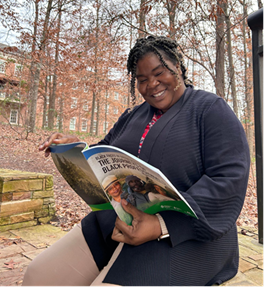 Growing up in a middle-class home, Michelle Cole dreamed of becoming an accountant. “I must be honest, a green career was not my first choice.” But thanks to her mentor, she ended up finding her green path.
Ron Smith, who now works for Tuskegee University, used to work for the USDA Forest Service. He shared with Michelle that organizations like the Forest Service need accountants, too. He encouraged Michelle to attend a forestry camp in Florida. “I really liked the camp and all the things it had to offer; however, I still wanted to be an accountant.” It wasn’t until Ron convinced Michelle to take an introductory forestry course in college that everything changed.
“I got an A and never looked back. The next thing I knew, I had an internship in Sheffield, Pennsylvania, and boom! Green career, here I am! I landed one forestry job after the next and finally carved out where I was always supposed to be.”
In Michelle’s work, she has seen the direct impacts of The Journeys of Black Professionals in Green Careers. “The most inspiring thing about the guide for me was seeing all the people who looked like me, people that I knew who had careers in the green industry, and they were doing what they were passionate about. As I turned the pages, I said to myself, ‘I taught him in that class; I worked with her on this project.’ It brought me full circle in my career, and I love it. We are a small niche, but we are here for each other. I was in awe of the guide and was thankful that someone took the opportunity to feature natural resource professionals.”
Michelle is an urban forestry expert and academic administrator in the College of Forestry, Wildlife and Environment at Auburn University and advises all the forestry and natural resource management students, the Auburn community, and beyond through MANRRS (Minorities in Agriculture Natural Resources and Related Sciences). “I am most hopeful that we will continue to create the next generation of natural resources scientists. Working with MANRRS helps create those connections in professional development.”
Michelle’s advice to the next generation is this: “Take the leap of the unknown. Think outside the bark. Have an open mind about a green career path. My green career has taken me to some pretty amazing places, opportunities, and spaces that I thought were out of my reach. Trust and believe that there is an opportunity out there that has your name on it. It may not be what you thought you would be doing, but everything that you needed! Take that leap!”
Amari Parker and Hannah Padgett
High School Students

 Just like Michelle’s mentor pointed out, a green job doesn’t mean you have to be working in the forest. Whether you want to pursue a career in communications, human resources, accounting, or law…your job can still be green! There are so many organizations within the forest and conservation sector needing your talents!
Amari Parker, Vice President of the Junior MANRRS program at Auburn University, is planning to pursue law school. “I’ve always wanted a career in the legal industry where I could assist others.”
Hannah Padgett, President of the Junior MANRRS program at Auburn, is following her dream of going into medicine, where she hopes to become a dermatologist and eventually own her own practice.
Through being a part of Junior MANRRS, both Amari and Hannah learned about green jobs. But after reading The Journeys of Black Professionals in Green Careers, both students discovered just how many more green career opportunities there are.
For Amari, “The most inspiring thing about the Journeys guide was being able to read and learn about the different people who look like me and have found happiness inside their green careers.” Hannah felt “The most inspiring thing to me was seeing all of the African Americans working in this field.”
Amari hopes that more people in his generation “will be open to learning more about green career paths and pursuing careers they are passionate about and love.”
And even if students don’t pursue a green career, they can still be inspired to take care of our planet. Hannah hopes her generation “will do all we can to make the earth a safer and better place.”
Janaki Alavalapati, Ph.D.
Emmett F. Thompson Endowed Dean of the College of Forestry, Wildlife and Environment at Auburn University
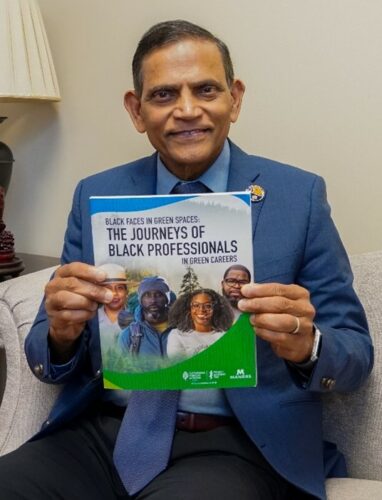
Dr. Janaki Alavalapati was born and raised in a rural community where he developed a passion for farming and natural resources. He went on to obtain master’s degrees in botany and forestry, getting his first job working for a state forest service agency in India. “After moving to North America, I continued my efforts in advancing higher education related to forestry, wildlife and the environment.”
Today, Dr. Alavalapati leads the world-class College of Forestry, Wildlife, and Environment at Auburn University in Alabama. He is helping develop the next generation of natural resources professionals. “The future of the environment lies in sustainable management and conservation of agricultural and forested landscapes. The youth, considered as our next generation, will significantly influence the ways we produce, consume, and distribute goods and services. These activities will have direct implications for conservation of natural resources.”
He is hopeful that more young adults will choose green careers. “Anyone who is interested in and passionate about natural environments, green career paths [such as] forestry, wildlife conservation, environment-society interface offer a great promise. The importance of these areas for social, economic, and environmental well-being at local, state, national, and global is growing leaps and bounds. Youth in these career paths would be in the front and center of analyzing complex issues and finding practical solutions.”
Resources like The Journeys of Black Professionals in Green Careers guide help increase the visibility of these types of careers, opening a whole new world of possibilities for students and young adults. “The Journeys guide provides youth with valuable information about green career pathways. More importantly, the featured stories in the guide inspire youth to embrace green jobs. Since governmental, non-governmental, and private organizations are increasingly seeking professionals from minority groups, I am very hopeful that the Journeys guide will stimulate the supply of minority professionals.”
 It’s up to us to have conversations with young people and expose them to various career paths. Find out what makes a person tick, what they’re passionate about, and what their strengths are.
- Do you love writing? Communications and marketing are green jobs!
- Do you love numbers? Accounting and finance are green jobs!
- Do you love wildlife? Biologists are green jobs!
- Do you love teaching? Educators are green jobs!
- Are you fascinated by building designs? Architects are green jobs!
Just think of the endless opportunities. As Dr. Alavalapati said, there are government, non-government, and private organizations that need the talent and passion of this next generation!
Let’s get those conversations started. Explore green careers with your students using PLT’s suite of career education resources, including Black Faces in Green Spaces: The Journeys of Black Professionals in Green Careers, Green Jobs: Exploring Forest Careers Educator Guide, and Find Your Green Job: Youth Personality Quiz
The post Inspired Journeys appeared first on Project Learning Tree.
]]>The post People of PLT | Becoming a Better Naturalist appeared first on Project Learning Tree.
]]> I’ve said it before, and I’ll say it again. When you first meet a PLT State Coordinator, there’s always something special about them. Warm, fun, full of life, enthusiastic, and welcoming. They’re excited to be with you and share their passion for environmental education.
This month, meet one of our newer PLT State Coordinators, Jonathan Smith, who leads the PLT program in Mississippi and embodies all these wonderful traits.
Jonathan is the Education and Outreach Coordinator for the Mississippi Forestry Association. His passion for nature began early in life, and he aspires to continue becoming a better naturalist each and every day. In high school he volunteered at the Mississippi Museum of Natural Science, and he then went on to earn his bachelor’s degree in Wildlife, Fisheries, and Aquaculture from Mississippi State University.
Now he gets to share his love of nature with others.
“Environmental-based outreach education is a passion of mine, and PLT provides an excellent avenue to conduct that education.” Jonathan leads professional development workshops where he shares how to lead PLT activities. For him, the best part is seeing educators realize how easy it is to incorporate PLT. “I get to see teachers express how they can use what is presented in the activity guide in their classrooms.”
What Engages Learners?
Jonathan says, “Find the best way to engage your students. Each student will respond differently to a PLT activity, so find out what engages your student or draws them in while you’re teaching, then use that by incorporating different PLT activities.” For one learner, they may love the hands-on component of an activity, and another enjoys being creative while learning about nature.
“My favorite PLT activity would have to be either ‘Birds and Bugs’ or ‘Web of Life’ (from Explore Your Environment: K-8 Activity Guide). They are my favorites because I get to incorporate different aspects of the ecology and the environment in fun and entertaining ways.” In these two activities learners are truly active participants – moving around the room or outdoor space – while learning!
It’s especially helpful to check out the At-a-Glance and Topic indices in the Explore Your Environment: K-8 Activity Guide. Depending on what your learners are interested in, you can find activities to meet those interests. Do some students love working together in teams? Are there a few students who love public speaking? Are there others who are tech wizards? Want to get learners physically active or help them get in touch with their inner artist?
The beauty of PLT activities is that there is something for everyone.
Find Your Inspiration
 For Jonathan, his inspiration comes in the form of nature and the others he works alongside.
While he inspires educators to bring nature to life in the classroom, Jonathan is personally inspired by the PLT facilitators he works with in Mississippi. “If I had to give a shoutout to someone, I’d pick Butch Bailey of the Mississippi State University Extension Service. He’s been a PLT facilitator since before I was brought on as the new state coordinator and has PLT workshops down to a science.”
Who inspires you? Is there another educator you work with who inspires you to incorporate different teaching methods or just always has a friendly smile on their face and makes you feel instantly at ease?
Personally, I’m inspired by our entire network of PLT State Coordinators. Getting to know Jonathan and spending time with him at last year’s PLT-WET-WILD conference was a lot of fun. He brings such positive energy, a welcoming spirit, warm smile, and laughter to every room he enters. In this photo from last year’s conference, Jonathan (pictured laying in the front) helped us get our silly and playful sides ready for an excursion in San Antonio. We’re lucky to have him leading the way with PLT in Mississippi!
Want to learn more about your state’s PLT program?
Visit plt.org/yourstate to get connected with a PLT State Coordinator near you!
The post People of PLT | Becoming a Better Naturalist appeared first on Project Learning Tree.
]]>The post Learning by Giving Back appeared first on Project Learning Tree.
]]>The start of a new year.
The opportunity to renew our commitment to growth, learning, and making a difference.
It also marks three commemorative dates where we can focus on these three things:
- National Mentoring Month
- Martin Luther King, Jr. Day (January 20, 2025 – National Day of Service)
- International Environmental Education Day (January 26, 2025)
The foundation of Project Learning Tree is learning by doing. It’s in the doing that we grow and can positively impact our environment, our communities, and each other. So, what better way to honor these special days than by giving back? We’ve compiled various activities and resources you can do and share with your learners to inspire them to make a difference.
Dream Big
 When you ask a student what they want to be when they grow up, what do you typically hear? Doctor, Lawyer, Engineer, or Police Officer? If these sound familiar, it’s time to introduce students to career paths they may have never imagined. How about Sustainability Officer, Urban Forester, Wildlife Biologist, or Environmental Educator?
PLT has multiple resources to inspire learners to explore careers where they can positively impact our environment. Check out Black Faces in Green Spaces: The Journeys of Black Professionals in Green Careers and Green Jobs: Exploring Forest Careers.
Take it a step further and invite individuals into your classroom or organization to speak with students about alternative career paths, especially those in the forest and conservation sector. We suggest reaching out to PLT’s network of State Coordinators as they often have local connections in these fields.
SFI also hosts an amazing Green Mentor program each year, encouraging seasoned professionals to mentor young adults just starting out in their careers. It’s a wonderful way for mentors to give back and for mentees to learn and grow!
Improve Your Place
When you give learners the opportunity to be creative, great things can happen! In the “Improve Your Place / Mejora tu Lugar” activity from PLT’s Explore Your Environment: K-8 Activity Guide / Explora tu Ambiente: Guía de Actividades K-8, students design a service-learning project that encourages them to make their community a better place. Here are just a few ideas to get the creative juices flowing!
Plant a Garden
Check out these inspirational ideas for creating a beautiful sense of place at your school or in your community. Gardens not only invite pollinators like bees and butterflies, but they are a wonderful way to teach about the life cycle of plants, what they need to grow (“Here We Grow Again / Aquí Volvemos a Crecer”), and even soil structure (“Soil Builders / Constructores de Suelo”) from Explore Your Environment: K-8 Activity Guide / Explora tu Ambiente: Guía de Actividades K-8. When you plant a working garden with vegetables, consider sharing the fruits of your labor with those in need. Connect with a local food pantry about donating fruits and vegetables from your garden.
 Plant Trees
Many communities have nonprofit organizations that host tree-planting events. Check out the Arbor Day Foundation’s network of organizations around the U.S. who are dedicated to making a positive impact on our environment by planting trees. This is also a great opportunity to green your schoolyard and create a calming, natural setting for students to enjoy.
Water Watchers
Depending on where you live, you may face different issues with water, including poor water quality or limited water sources. In the new activity collection for middle and high school, Forests, Water & People, students identify a possible forest-related or other “green” solution to a local watershed issue and develop an action plan to carry out such as organizing a river cleanup to protect water quality.
Paint a Nature-Themed Mural
Before putting paint on a wall, check first with your school, organization, or community leadership to see if there is an available wall or building that could use some beautification. Paint a picturesque forest or a babbling brook running through your schoolyard. Work with students to design the mural and bring it to life, watching creativity blossom! Check out Pinterest for some incredible ideas like these:
Design for the Future
Imagine if you could design a community for the next generation. In PLT’s “A Vision for the Future” from Exploring Environmental Issues: Places We Live, high school students develop and present a vision for the future of an area in their community. They identify current issues facing their community and work together to develop possible solutions.
Although this activity holds a mock community outreach event, consider contacting your local city council or town leadership to host a student-led community workshop. Young people are the voice of the future, and if we want more sustainable communities, we should involve them early on. You never know what innovative ideas may come out of this and into fruition!
We’re all presented with the opportunity to do good things. Now is the perfect time to make your resolution to positively impact your community and our planet by helping others learn and grow!
The post Learning by Giving Back appeared first on Project Learning Tree.
]]>The post People of PLT: Yasmeen Hossain, Oregon PLT State Co-Coordinator appeared first on Project Learning Tree.
]]> When you are teaching a group of students, you may or may not have insight into their backgrounds and experiences. But something we all have in common is that in one shape or form, we all have been touched by trauma. Everyone’s experience with trauma is different, which is why it is crucial to strive towards creating a supportive, safe space for people to learn.
This month’s People of PLT highlights the work that Yasmeen Hossain, Oregon PLT State Co-Coordinator and Associate Director of the Oregon Natural Resources Education Program, is doing to help educators incorporate a trauma-informed approach into environmental education.
What is Trauma-Informed Teaching?
Yasmeen shares, “In my experience there is no one whose life has not been affected by trauma in some capacity, whether their own experiences, those of loved ones, adversity impacting the community they live in, countries, regions or even the entire world (which was the case with the COVID pandemic). Trauma is pervasive. It is also often likened to an invisible wound. If someone has a broken arm that is in a cast, it signals to us that they are wounded. With trauma it is often not as noticeable. This is why it is important to apply a trauma-informed approach in all situations and in all interactions, including in educational settings.
Students, educators, staff, volunteers, students’ families–everyone can benefit from a trauma-informed approach.
In brief, trauma-informed education is a system-wide approach that recognizes the prevalence of trauma, how it impacts learning and teaching and aims to respond to trauma, prevent re-traumatization, and foster resilience.”
How Can Educators Better Support Learners Who May Be Experiencing Trauma?
This is an extremely complex and important topic, and while we’re only scratching the surface in this article, Yasmeen has a few helpful recommendations to get started.
“Often a trauma response stems from feeling overwhelmed, threatened, and that we have no control over our well-being. A trauma-informed approach aims to prevent and counteract this perception.”
A Language Shift
She suggests using inviting language instead of directive language.
With directive language, you’re telling, as though learners must do something and have no say. Examples of directive language include: “You should do this activity, you have to divide into groups, you will write an essay”.
Whereas, Yasmeen says, “Inviting language tells our brains that we have a choice in the matter. For example, “I encourage you to write an essay. I invite you to watch this documentary”. It is a small shift in language for the educator that can make a big difference for students.”
Expand Your Knowledge
The more you learn about trauma-informed teaching, the better you can support your learners.
In the PLT workshops that Yasmeen hosts, she utilizes a trauma-informed lens to not only plan the agenda but in the language and materials she uses to how she interacts with participants and leads activities. In certain workshops, such as ones about climate change or wildfire, Yasmeen incorporates the topic of trauma, sharing tools and strategies with educators to effectively lead these types of thematic lessons with their students.
We suggest checking out this free downloadable resource that Yasmeen created, Trauma-Informed Toolkit: A Resource for Educators. In it, she references PLT’s activity “Living with Fire / Viviendo con Fuego” from the Explore Your Environment: K-8 Activity Guide / Explora tu Ambiente: Guía de Actividades K-8 and the Nature of Fire activity collection as a case study of how to embed a trauma-informed approach into an existing lesson. You’ll also find helpful information about various types of trauma and toxic stressors, symptoms of trauma, trauma responses (i.e., fight or flight), and helpful ways to bring the nervous system back to normal (i.e., breathwork, being in nature, journaling, etc.).
Finally, we encourage you to seek out professional development workshops that specifically discuss trauma-informed approaches to education. The more you know and learn, the more empowered and comfortable you will be to bring those practices to your lessons or programs.
Additional Resources
Below is a (not exhaustive!) list of several resources to help you understand the various types of trauma and trauma-informed approaches to teaching.
- The National Child Traumatic Stress Network
- Tips for Addressing Climate Anxiety in Youth
- Trauma-Informed Practices
- What is Trauma-Informed Teaching and a Trauma-Responsive School?
The post People of PLT: Yasmeen Hossain, Oregon PLT State Co-Coordinator appeared first on Project Learning Tree.
]]>